


























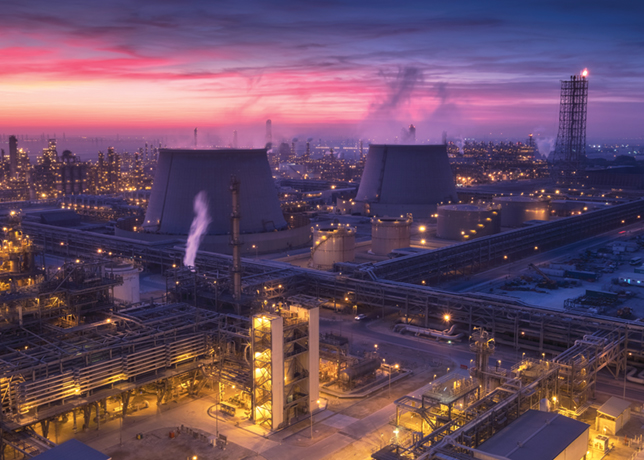


The world’s largest biofuel plant producing liquid natural gas from landfill gas has received a 2010 California Governor’s Environmental and Economic Leadership Award.
Recognised in the category of sustainable facility, the plant is located at Waste Management’s Altamont Landfill and Resource Recovery Facility near Livermore, California in the US. The plant, which produces up to 13,000 gallons a day of near zero carbon fuel is owned and operated by a joint venture between Linde North America, part of The Linde Group, a world leading gases and engineering company, and Waste Management, North America’s largest waste management company.
The award is California’s highest environmental honour and recognises exceptional leadership in conserving California’s precious resources, protecting and enhancing the environment, building public-private partnerships and strengthening the state’s economy.
Since Linde and Waste Management’s plant began operating in September 2009, it has produced over two million gallons of clean, renewable fuel from landfill gas generated through the decomposition of waste at the Altamont Landfill.
More than 300 of Waste Management’s liquid natural gas collection vehicles in California are powered daily by the fuel generated at the Altamont facility, displacing tens of thousands of tonnes of greenhouse vehicular greenhouse gas emission annually.
“We are closing the loop in the waste disposal business,” says Duane Woods, senior vice president for Waste Management’s Western Group. “Converting the landfill gas into a sustainable, clean alternative fuel source is the very essence of closed-loop recycling,” he adds.
“Our natural gas collection vehicles produce 97 per cent fewer greenhouse gas emissions than comparable diesel fuel vehicles. Creating a healthier environment through reduced emissions and improved air quality is the essence of green innovation. Waste Management is proud to be recognised for this achievement,” Woods adds.
Pat Murphy, president, Linde North America, says: “Linde is proud to improve air quality for millions of Californians. The ultra-low carbon fuel our plant produces already meets the California Air Resources Board’s 2020 low carbon fuel requirements and the goals of AB32. Receiving the Governor’s award confirms that our fully local, wells to wheels’ solution has hit the ball out of the park for the residents of California.”
“As usual, California is a leader in recognising and promoting alternative fuels that help clean the environment, reduce our dependence on foreign oil and boost the economy. We hope this plant, and California’s progressive thinking, can serve as a model for the rest of our country as we look to tap our unused biogas resources,” Murphy says.
By displacing 2.5 million gallons of diesel a year, the renewable biogas the plant produces eliminates over 30,000 tonnes a year of transportation greenhouse gases – the equivalent of removing over 5,000 passenger cars from the road. Nitrogen oxides (NOx) are reduced by nearly 200 tonnes and particulate matter emissions by over four tonnes a year.
Four California agencies contributed to this project, including the California Integrated Waste Management Board, the California Air Resources Board, the California Energy Commission and the South Coast Air Quality Management District.
 |
|
The world's largest liquefied natural |
Waste Management is the leading provider of comprehensive waste management services in North America. Its subsidiaries provide collection, transfer, recycling and resource recovery, and disposal services.
It is the largest recycler in North America as well as a leading developer, operator and owner of waste-to-energy and landfill gas-to-energy facilities in the US. Its customers include residential, commercial, industrial, and municipal customers throughout North America. Waste Management’s Bay Area operations are based in Oakland.
The Linde Group is a world leading gases and engineering company with almost 48,000 employees working in more than 100 countries worldwide. In the 2009 financial year it achieved sales of E 11.2 billion ($ 15.3 billion). The strategy of The Linde Group is geared towards sustainable earnings-based growth and focuses on the expansion of its international business with forward-looking products and services.
Linde acts responsibly towards its shareholders, business partners, employees, society and the environment – in every one of its business areas, regions and locations across the globe. Linde is committed to technologies and products that unite the goals of customer value and sustainable development.
WM TEAMS WITH TERASEN GAS
Waste Management and Terasen Gas have announced that some of the recycling and garbage trucks that serve Lower Mainland businesses will soon have a smaller carbon footprint, thanks to Waste Management’s new Vancouver clean air Initiative and funding from Terasen Gas.
“Waste Management understands that clean air is critically important to our community and provincial partners in BC,” says Rob Sherman, director of operations for Waste Management – Pacific Northwest. “This investment makes Waste Management part of the clean air solution as we partner with BC communities and businesses to advance green technologies and help meet important climate action goals.”
Waste Management will deploy 20 new “clean air” trucks in January 2011 to serve Lower Mainland businesses. The trucks will be powered by CNG as part of Waste Management’s broader efforts to improve air quality and help local and provincial governments meet aggressive new sustainability goals.
The contribution from Terasen Gas is from their Energy Efficiency and Conservation Programme, which will help offset the incremental cost of the compressed natural gas (CNG) powered trucks versus their traditional diesel counterparts.
“Terasen Gas is committed to helping address BC’s climate action goals by providing innovative energy solutions such as natural gas for the transportation sector,” says Doug Stout, vice president, energy solutions and external relations at Terasen Gas and FortisBC.
“As such, we are working to facilitate the use of natural gas, traditional low-carbon energy, in new ways within BC. This collaboration with Waste Management of Canada Corporation is one of the first steps towards achieving this goal,” he adds.
Trucks powered by natural gas are both economical and environmentally-friendly. Natural gas is also increasingly used as an alternate transportation fuel due to rising oil prices, tougher emission standards and growing public demand for environmentally-friendlier vehicles.
For example, comparing current prices for CNG and diesel, fuel costs for the new Waste Management trucks would be 40 per cent less. Maintenance costs are expected to be lower because natural gas burns cleaner than diesel, so engine parts stay cleaner.
Moreover, the clean-burning trucks will deliver distinct environmental benefits, including nearly zero air particulate, 23 per cent fewer greenhouse gas emissions, quieter engines and a smaller carbon footprint.
Waste Management operates the largest fleet of clean air CNG recycling and waste trucks in North America and is committed to using alternative fuels to reduce greenhouse gas emissions and air pollution. The announcement marks the beginning of the company’s programme to build a “green fleet” to serve the Lower Mainland.
This programme will also help contribute to Waste Management’s sustainability goal of reducing fleet emissions by 15 per cent and increasing fuel efficiency by 15 per cent by 2020.
Terasen Gas will also be seeking approval this fall from the British Columbia Utilities Commission (BCUC) to install a fueling station at Waste Management’s site in Coquitlam to provide CNG for the vehicles. Currently, Waste Management of Canada Corporation operates 100 diesel-powered vehicles out of Coquitlam and plans to gradually move toward operating an entire fleet powered by CNG, as vehicles are replaced over time.
Fleet use remains the largest market for natural gas vehicles (NGVs) as companies try to reduce fuel costs and lower emissions. For fleets that come home at night, such as transit and refuse fleets, natural gas creates a more attractive bottom line and a smaller environmental footprint. With more than 11 million NGVs in use around the world, NGVs are cleaner than, and as safe as their gasoline and diesel counterparts.
Terasen Gas is mainly composed of the operations of Terasen Gas and Terasen Gas (Vancouver Island), both indirect wholly owned subsidiaries of Fortis. Fortis, the largest investor-owned distribution utility in Canada, serves approximately 2,100,000 gas and electric customers and has total assets exceeding $12 billion.
Its regulated holdings include Terasen Gas and electric utilities in five Canadian provinces and three Caribbean countries. Fortis owns non-regulated hydroelectric generation assets across Canada and in Belize and upper New York State. It also owns hotels and commercial real estate in Canada.


