






































TATE upstream operator, Kuwait Oil Company (KOC) has launched a tender for the construction of new gas transit pipelines in the west of the country.
Twenty local contractors have been prequalified to bid for the estimated KD16 million ($57 million) contract. KOC will hold tender meetings with the firms.
The proposed pipelines will take sulphur-rich gas from a new booster station (BS-171) in west Kuwait to be treated at the acid-gas removal plant in the Mina Al Ahmadi refinery.
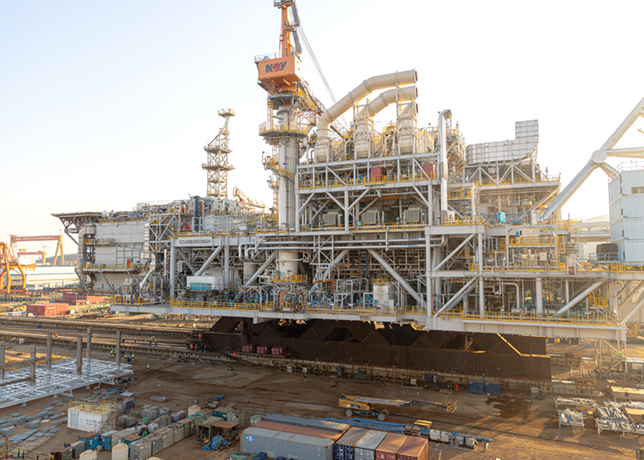
Booster stations are used to gather and compress gas produced as a by-product of oil production, before distribution to refineries for processing. In June 2010, Italy’s Saipem was awarded the $800 million engineering, procurement and construction contract to build station BS-171.
It includes three gas trains, which will produce 234 million cubic feet a day of gas and 69,000 barrels a day of condensate by 2013. The gas will come from the existing gathering centres 17, 27, 28 and the new gathering centre 16.
State-refiner, Kuwait National Petroleum Company (KNPC) is building a second $400 million acid-gas removal plant at the Mina Al Ahmadi refinery, which should be completed in 2014.
Meanwhile, Kuwait plans to increase oil production to 4 million barrels a day (mbpd) by 2020.
The bulk of the planned increase in output will come from state-owned upstream operator, Kuwait Oil Company (KOC) at 3.65 mbpd, says Sami Al Rushaid, chairman and managing director of KOC.
The remainder will come from Kuwait Gulf Oil Company’s operations in the divided zone with Saudi Arabia, Al Rushaid says.
Over the next five years alone, Al Rushaid expects KOC to spend some KD7 billion ($24.9 billion).
“We will have a number of challenges. Heavy oil is new to us. Another is EOR (enhanced oil recovery), so we will need assistance and cooperation from the international oil companies,” says Al Rushaid.
“We are open to suggestions that are applicable to us without contradicting our constitution,” says Al Rushaid. Under Kuwait’s constitution it is illegal for foreign companies to own any of its natural resources, making the traditional production sharing agreements usually employed by IOCs impossible to use. This leaves technical service agreements as the only way forward.
In October, French oil major Total has signed a technical services agreement worth $27.6 million with KOC to help develop its heavy crude oil deposits, which total some 13 billion barrels.
Kuwait is planning to produce between 250,000 to 270,000 bpd of heavy oil from its northern fields.
The scheme is described as a ‘gap-filler’ to ensure Kuwait reaches its 2020 target of 4 mbpd, since it is much more expensive to exploit than conventional oil reserves.
Pilot schemes are currently under way, but the first commercial production of about 60,000 bpd is not expected until after 2015.
Future production is also targeted for the stalled Al Zour Refinery, which state refiner Kuwait National Petroleum Company (KNPC) hopes to restart.