





















THE National Iranian Oil and Gas Company (NIOC) will invest $60 billion in the upper sector of the South Pars during the Fifth Development Plan (2010-2015) and the firm will issue bonds and use domestic banks’ sources to accelerate the development plan.
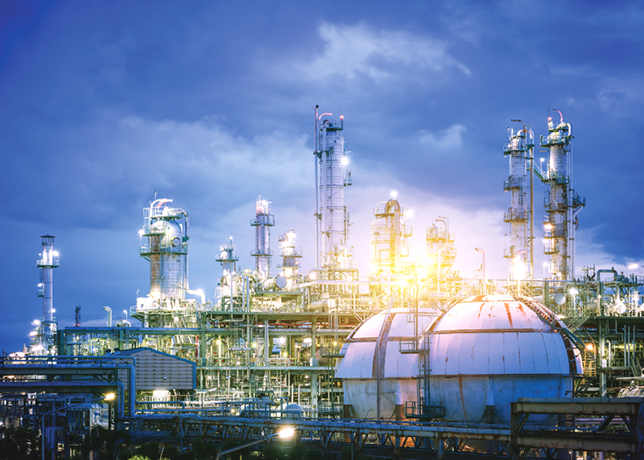
The South Pars oil and gas field is one of the largest in the world and is expected to produce up to $130 billion in revenues per year. The South Pars oil and gas field holds half of Iran’s gas reserves and covers an area of 3,700 sq km. It is located 3,000 metres below the seabed.
Iran also plans to invest $18 billion by 2015 to boost output the oil-rich south and expects its Yadavaran field to start production in a few months, the Iranian Oil Ministry says.
The majority of the $18-billion spending plan to 2015 will now be met by Iran, the country’s deputy oil minister says, adding that about $3 billion would be spent on southern projects by next March.
“Many plans are being implemented to accelerate development of shared oil and gas fields while the ministry aims to increase oil production in the oil rich region of the south to three million barrels per day,” deputy oil minister Mohsen Khojasteh Mehr says.
The Yadavaran oilfield being developed by Iran’s National Oil Company (NIOC) and China’s Sinopec will start production this autumn at around 20,000 barrels per day (bpd) and climb to its expected ceiling of 85,000 bpd over the next two years, he says.
Meanwhile, Iran’s new Oil Minister Rostam Qasemi says the country will need some $40 billion this year to spur the development of oil and gas fields it shares with neighbouring countries.
Qasemi, a Revolutionary Guards commander, was given a vote of confidence in parliament, vowing to prioritise jointly owned fields, notably the giant South Pars gas reservoir.
“In order to launch the announced development plans (on the joint fields) there is need for more than $40 billion in investment in the current (Iranian) year (ending late March 2012),” Qasemi says.
Qasemi, who formally began his new job, joined the government after heading Khatam Al Anbia, the Revolutionary Guards’ construction and engineering company, which has become increasingly active in Iran’s energy sector, stepping in to replace foreign companies that pulled out due to sanctions. While Iran might seek foreign capital to finance energy projects, it did not need foreign know-how, he says.
“There are currently very competent contractors domestically on which we can rely for the development of oil and gas can be done ... For the development of oil and gas fields we don’t need foreign contractors.”
One of those domestic companies is Khatam Al Anbia itself, which took over parts of the South Pars development when European firms Royal Dutch Shell and Total pulled out due to sanctions on Iran. Both Khatam Al Anbia and Qasemi himself are under US and European Union sanctions due to Western concerns about Iran’s nuclear programme which many countries fear is aimed at developing nuclear weapons, something Tehran denies.
 |
|
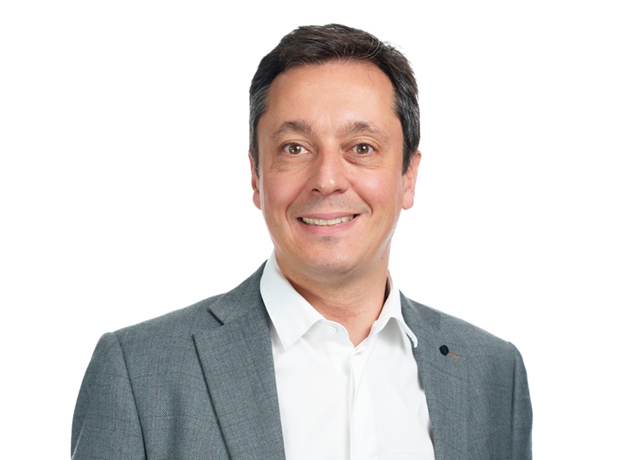
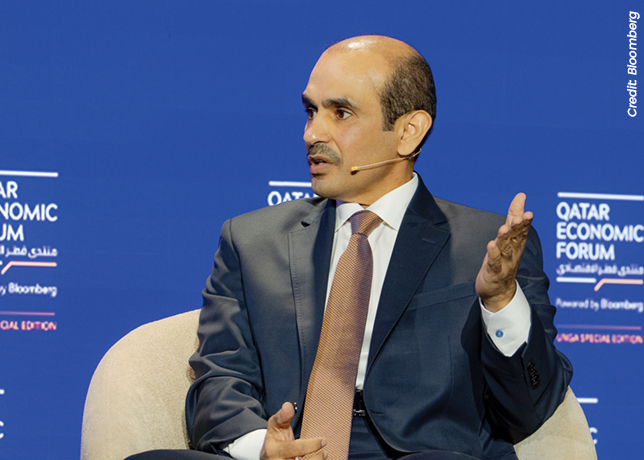
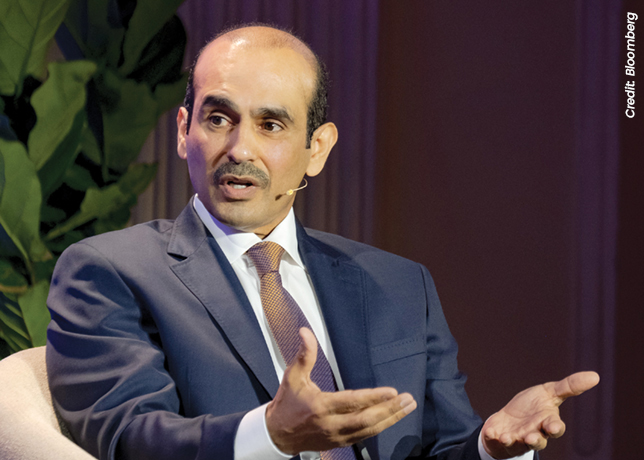
Qasemi ... Iran will seek foreign capital |
Qasemi says Iran would seek foreign capital, in the form of bonds, for the energy projects, as well as tapping the government’s general budget, Iranian banks and domestic bonds.
“There will be a great volume of various bonds issued during the current year,” he says referring to them as the “oil projects’ sure financial resource.”
“We will be pursuing an active diplomacy to absorb foreign capital as they form part of the required financial resources for the projects to be developed,” Qasemi says.
Qasemi’s figure of $40 billion for the development of shared fields is in line with the amount his predecessor, Massoud Mirkazemi, said was needed every year for the entire oil and gas sector. Mirkazemi said Iran must invest $200 billion in the period 2010-15. At the same time, Khojasteh says the value of Iran’s annual oil and gas production has reached $217 billion last year and will rise in the coming years because of the vast new investments in the sector.
“By 2010, Iran produced on average 4.2 million barrels of oil, 600 million cubic metres of gas, and 400,000 barrels of gas condensates per day,” Khojasteh says. Commenting on the details of investment plans in the upstream and downstream sectors of Iran’s oil industry during the country’s Fifth Five-Year Development Plan (2011-2016), he says that if the financing programmes are completely implemented, Iran’s oil, gas, and condensate output will increase considerably by 2016.
So, the daily output of oil will increase to 4.4 million barrels, the output of gas condensates will rise to 1.1 million barrels, and the natural gas output will rise to 1.47 billion cubic metres in the next five years.
“Through the implementation of these plans, the value of Iran’s oil and gas production will rise from $217 billion in 2010 to $350 billion in 2015,” says Khojasteh.
He adds that in 2011, Iran plans to invest $15.8 billion for the development of the untapped phases of the South Pars gas field, $4.5 billion for joint oilfields, $3.7 billion for domestic oilfield, and $6.5 billion for other domestic gas fields.
The director of National Iranian Petrochemical Company (NIPC) Abdolhossein Bayat says that Iran exported 2.8 million tonnes of petrochemical products which worth $2 billion in the two-month period from March 21 to May 20. The value of Iran’s petrochemical exports is expected to reach $14 billion in the current Iranian calendar year that ends on March 20, 2012.
Bayat notes that Iran produced more than 40 million tonnes of petrochemical products in the last Iranian calendar year that ended on March 20, 2011. The country also exported 18 million tonnes of petrochemical products worth up to $11.6 billion in the last Iranian calendar year, showing a 26-per cent increase compared with two years ago.
National Iranian Gas Company managing director Javad Oji says Iran’s oil and gas output has risen considerably in recent years, despite the Western sanctions.
Iran’s current daily gas output is 600 million cubic metres, which will be doubled to 1.2 billion cubic metres in the coming years, Oji says.
Oji states that despite the harsh sanctions imposed on the Iranian oil sector, Iran is now self-sufficient in the oil industry and capable of domestically manufacturing any equipment needed by the oil industry. Iran has the world’s second largest gas reserves after Russia but has struggled for years to develop its oil and gas resources.
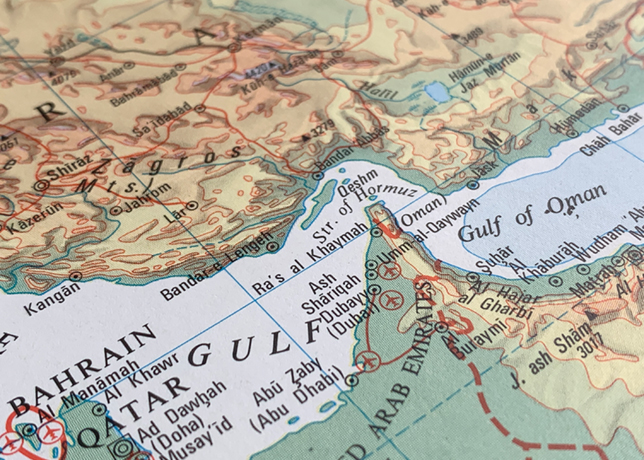
The South Pars/North Dome field is a natural gas condensate field located in the Persian Gulf. It is one of the world’s largest gas fields, shared between Iran and Qatar. According to the International Energy Agency, the field holds an estimated 50.97 trillion cubic metres of in-situ gas, or some 50 billion barrels of condensate.
As one of the members of the Organization of the Petroleum Exporting Countries (Opec), Iran is also the world’s fourth- largest exporter of crude oil but imports considerable amounts of domestic gasoline needs.
Iranian officials have reiterated that the western sanction have had no impact on Iran’s transactions with its customers.
Meanwhile, the giant South Pars gas field produced at about one-half its processing capacity in June, raising questions over the performance of production and treatment facilities completed in recent years under local supervision. Official figures released by the Oil Ministry say that in the Iranian month ending June 21, the processing facilities at Bandar Assaluyeh produced 4.83 billion cubic feet per day (bcfd) of sweet gas for local consumption. A total of 241,551 barrels per day of condensate were also produced.
In addition to the sweet gas, another 413 million cubic feet per day of sour gas was piped through the 500-kilometre IGAT-5 trunkline to be injected into the ageing Aghajari oilfield. The official figures show the giant gas field is producing at about one-half its nominal processing capacity. Officials are quoted as saying the low level is due to maintenance work at refineries in Bandar Assaluyeh.
The combined sweet and sour gas output of 5.24 bcfd is the equivalent of production from five phases of South Pars – whereas 10 phases are officially operating. Each phase at the giant field, which is being developed in an eventual 24 phases, produces 1 bcfd of gas and 40,000 bpd of condensate, in addition to quantities of LPG, sulphur and other products.
The oil ministry and its subsidiaries, which face tough US-led sanctions, last year awarded all remaining phases of the field to Iranian players, saying that the reservoir will be in full production by the middle of this decade. Experts and some parliamentary energy officials have dismissed the claim as unrealistic, saying that the middle of the next decade might be more feasible.
The first five phases of the field were developed earlier in the last decade by French and Italian majors Total and Eni working at, respectively, Phases 2 and 3 and 4 and 5, as well as by Petropars at Phase 1.
Phase 1 suffered delays and subsequent problems, but the other four phases were capable of producing at higher than nominal levels and helped maintain South Pars gas output at or near the 5 bcfd level. Petropars subsequently built, with the offshore help of Statoil, Phases 6-8, and Pars Oil and Gas Company presided over the construction of Phases 9 and 10 by South Korean contractors.
However, all five of these phases have suffered from various technical and other difficulties. Phases 6-8 can produce 3 bcfd but do not have sweetening facilities. Phases 9 and 10 have sweetening facilities, but are still unable to produce their own gas at incomplete offshore facilities.
As a result, some gas from the three phases is processed at Phases 9 and 10, with the balance of output pumped through the 500-km Igat-5 trunkline for injection into the once giant but now depleted Aghajari field.
The official figure of 413 million cubic feet per day shows that the Aghajari gas injection programme, designed to double crude output from about 150,000 bpd, is operating at well below capacity.


