




































IRAN has claimed a 30 per cent rise in its exports of refined and petrochemical products, as well as strong growth in its oil and gas exports, while the government also hopes to have completed the gas pipeline to the Pakistani border next year and make progress in talks about a gas pipeline to Syria over Iraq.
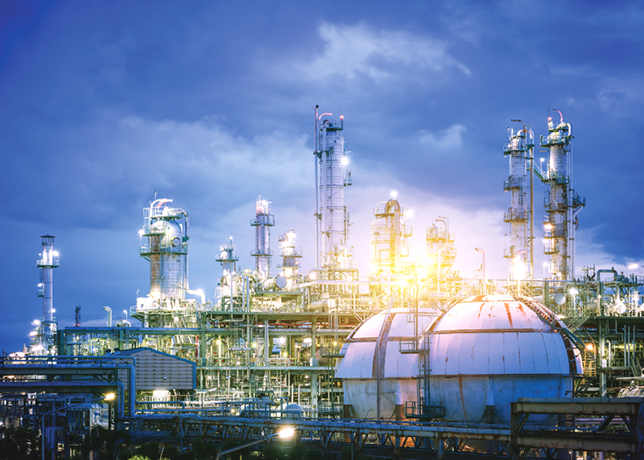
Iran’s claims are likely to even further deepen international suspicion about the reliability of its official statements, given that its oil production capacity seems to be declining and it continues to chronically import more gas than it exports, with project delays at its South Pars field, in particular, seemingly worsening. While its large petrochemical industry continues to function – and provide exports – growth is likely to suffer very significantly from international sanctions, making financing very hard.
Iran’s bullish official assessments have looked out of touch with reality for some time, as the government tries to shake off any acknowledgement of international sanctions creating a significant cost to the economy and pushing regional gas export ventures – even though its partners seem wary of investing in them – as an important facet of that strategy.
Hamid Hosseini, head of the Union of Exporters of Oil and Gas, says Iran’s exports of oil, gas and petrochemical products have increased by 30 per cent so far this current Iranian year (which started on March 21), compared to last year. Parts of Hosseini’s statement are in line with the bullishness exuded by official Iranian pronouncements, although it is not in line with the picture of Iran’s achievements spreading among its trading partners.
Nevertheless, the language of the report seems to suggest that he claims that oil and gas production have risen, although his involvement in the industry seems to be more in the downstream and petrochemical side, suggesting he has been partly misquoted. Iranian oil and gas production is closely reported by the Oil Ministry and the National Iranian Oil Company (NIOC) and for the moment Iran is very clear on its commitment not to raise oil production within Opec, while it is hoping to add some significant gas production relatively soon, from projects due onstream previously but held up by financial and operational obstacles.
Still, while Iran’s large petrochemical industry might well be benefitting from a resurgence in global petrochemical product demand compared to 2009 and 2010 market weakness, a 30 per cent growth number looks very high if it is meant in actual volume and not monetary value, although even the latter looks a relatively high assessment.
While the global petrochemical industry has seen a significant recovery from the 2009 lows of the international recession, the sanction-caused financial constraints in Iran, together with the government’s – and related agencies’ – increased preponderance to under-report problems and exaggerate good news over the past years, makes the scale of the sector’s recovery seem too good to be true.
 |
|
Ahmedinejad ... positive on Iran’s ventures |
In addition to the reported good news from the petrochemical sector, Iran’s Fars news agency reported Iran’s gasoline (petrol) production capacity rising to 70 million litres per day (lpd), allowing the country to export more than 2 million lpd. “Given that gasoline production capacity has increased to around 70 million litres per day and its consumption has decreased to around 54 million litres per day, it would be possible to export 2.6 million litres per day”, Alireza Zeighami, managing director of the National Iranian Oil Refining and Distribution Company (NIORDC), says adding that, “at the moment, exports of gasoline are being made from gasoline stocks because the stocks are high”.
Zeighami’s comments raise several further questions with regard to official Iranian pronouncements. An early July report about domestic Iranian gasoline demand published by the Oil Ministry’s news agency Shana – and citing NIORDC statistics – put domestic demand at 63 million lpd. Meanwhile, the increase in Iran’s gasoline production capacity from 54 million lpd during the past 18 months has not been explained in much detail.
The Oil Ministry and its downstream companies have claimed that several refinery expansion schemes have come to fruition, although it has also said that the temporary – and rather expensive – production of gasoline in some of the country’s petrochemical plants has stopped.
The latter would naturally help explain part of the alleged growth in petrochemical production and exports, as several facilities would have been returned to petrochemical production, but the gasoline numbers supplied by Zeighami do still not add up.
While Iran might want to build its strategic gasoline stocks in the short term, if domestic demand is 64 million lpd and output 70 million lpd, there should be room for higher exports. Iran has so far failed to come up with anything more than symbolic gasoline export volumes, however, mainly because the quality of the gasoline it has tried to sell has been too low for most buyers.
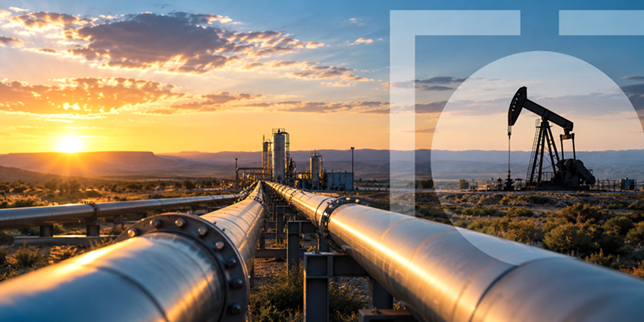
Iran has also released several optimistic statements about progress on gas export projects with its neighbours. Speaking about Iran’s efforts to hammer out a deal with Iraq and Syria about a pipeline connecting the three countries, Deputy Oil Minister and managing director for the National Iranian Gas Company (NIGC), Javad Owji, says: “At the moment, negotiations are being held with the officials of these countries to set a date for signing this agreement in Tehran.”.
Furthermore, he says: “With the signing of this draft, it will become possible to transit gas from new phases of the South Pars gas field via Iraq, Syria and Lebanon to the Mediterranean Sea”. The pipeline project is being envisioned as the Islamic Gas Pipeline and will stretch for 5,600 kilometres with a 110-mmcmd (3.88 bcfd) capacity, at a likely cost of $5-6 billion, Owji says. The deal still has a multitude of obstacles to face, however, including serious concerns about all three partners’ abilities to finance the projects, particularly since a previous Iran-Syria agreement to start supplying the latter with 2-3 bcm per year of gas from 2009 so far has come to nought.
Meanwhile, Iran’s president, Mahmoud Ahmadinejad, has hailed the progress on another Iranian gas export venture, saying that the completion of the Iranian part of the Iranian-Pakistan gas pipeline would be achieved next year. “Construction of the pipeline to export Iranian gas to Pakistan is under way, and we hope it will reach the frontier by the end of 2012”, Ahmadinejad was quoted as saying by Plus News Pakistan amid a visit to Iran by Pakistani president Asif Ali Zardari.
Iran’s gas export attempts over the past 15 years have almost all come to a halt, with the country’s continued failure to deal with spiralling domestic demand making it look unreliable as a long-term supply partner. The only gas export venture that actually has materialised is through its pipeline to Turkey, although Iran rarely has delivered the full volume of its export commitments and still only manages to uphold the deal through covering its own gas deficit by imports from Turkmenistan. Last year they reached 45 bcm per year, while it exported significantly less than the 30-bcm per year that the Turkey deal calls for, on lower Turkish demand.
The pipeline to Pakistan is still hoped by Iran to extend to India, which is the reason it once was conceived in the first place, given Pakistan’s inability to fund its part of the project and pay for the Iranian supplies.
In fact, while Iran’s part of the gas pipeline could be completed next year, there is little sign of progress on the Pakistani side of the border, where a long-time low-level insurgency in its Baluchistan province further complicates the project’s viability.
The same can be said for the Islamic Gas Pipeline project, with all three partners struggling to finance it over the coming years, especially considering the security risk involved in it passing through some of Iraq’s least stable regions and the good reason to doubt Iran’s capacity to build a domestic gas surplus fast enough.
While Iran’s subsidy cutting reform last year has unlocked some significant potential to reign in domestic demand – some of it already visible in its gasoline consumption – the country is still struggling to finance and execute upstream projects, with progress at the seemingly straightforward South Pars projects now running severely behind the phases’ different schedules.
While its petrochemical industry might have seen some of its production capacity restored from the emergency gasoline production, the general financing and operational progress malaise engulfing Iran makes all the obviously politically motivated sunshine stories about industrial progress look even more doubtful, and talk of potential expensive international pipeline ventures being negotiated, look like new batches of propaganda being released – at least until Iran can start showing increased gas and gasoline exports on a sustained basis and start reining in its gas imports from Turkmenistan to the effect of again being a net exporter rather than importer.


