
























OMAN’S biggest oil producer, Petroleum Development Oman (PDO), a joint venture between Oman and oil companies Shell, Total and Partex, is embarking on a $20 billion investment programme including four new exploration contracts and cutting edge-enhanced oil recovery (EOR ) projects.
The investment over the period of five years would cover primary, secondary and tertiary oil and gas recovery programmes.
According to the PDO officials the projects have moved on from being on the drawing table and today the company produces from Marmul using polymer injection, at Qarn Alam with steam and in Harweel with miscible gas. PDO has several more projects in design or execution stage and that the company is moving ahead with the construction of the Amal steam project and the ASP pilot in the Al Khalata reservoir in Marmul.
PDO is to invite tenders for two projects worth more than $2 billion at the end of 2012. Oil and gas deposits will be developed using the latest technology. At the same time, oil and gas company Oman Oil Company will speed up planning for a further refinery. The refinery will have capacity of 230,000 barrels per day (bpd) and there will also be a petrochemicals complex. The sultanate plans to increase oil output to about 900,000 bpd by the end of 2012 and maintain that level for years to come, Omani Oil Minister Mohammed Al Rumhy says.
 |
|
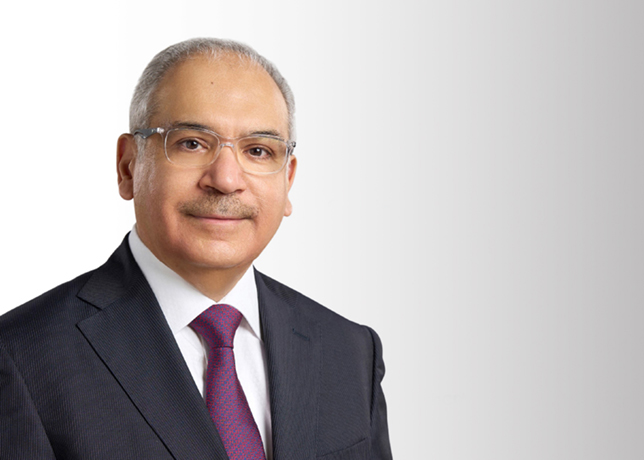
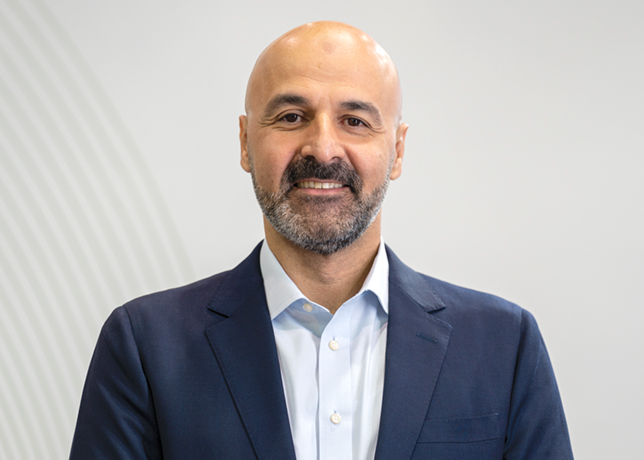
Rumhy ... there are ‘many challenges’ |
Al Rumhy’s comments suggest the country’s previous goal of hitting and maintaining production of 1 mbpd is out of reach, although the minister says he remained optimistic. Oman produced 884,900 bpd in 2011, including condensates.
PDO says that it expects to maintain current output rates of 540,000-560,000 bpd of crude oil over ten years. Al Rumhy says he expected Oman to maintain roughly 900,000 bpd over the same period by incorporating increasingly complicated recovery methods at challenging fields. Enhanced oil recovery (EOR) will play a big role in Oman’s upstream projects in the coming years.
Al Rumhy says EOR projects would make up 30 per cent if not more of total output by 2020 from a small fraction in 1990. But as Oman increases its production from the more difficult fields, producers have encountered unexpected problems.
Issues with the quality of the water used to generate steam for Occidental’s project at the Mukhaizna field are contributing to the US company’s struggle to meet its 150,000 bpd production target, the minister says.
“There are many challenges but one is the water issue – the ability to generate enough steam,” he says. “I think they may achieve their target, but it’s going to be touch and go.”
Al Rumhy says he expects the ministry to award two open blocks soon, although he did not say which acreage was under discussion. Late last year, Oman tendered four onshore blocks, although several more remained open from previous bid rounds or because companies relinquished some last year.
Oman is also contemplating developing increasingly difficult gas resources, with BP set to make a decision on whether its prospective 1 billion cubic feet per day development in Block 60 is commercial. Al Rumhy says that the gas price needed to make the development commercial depends largely on the number of wells necessary. “That’s the majority of the cost,” he says, noting that BP needed to establish stable production at the wells before determining the number of wells necessary.
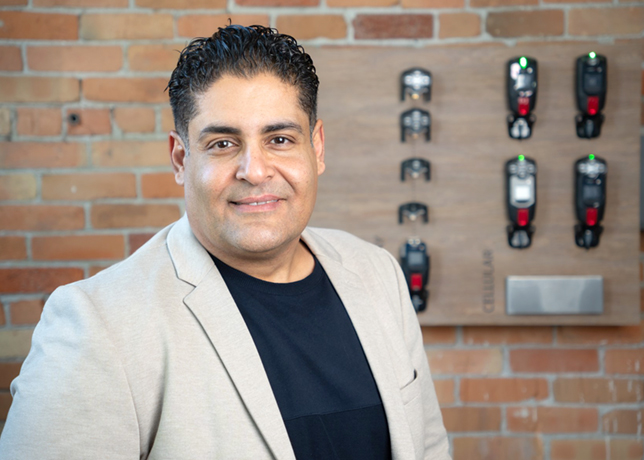
Meanwhile, PDO, is planning to buy more of its infrastructure and services locally, with local provision of services due to increase to 90 per cent of the total by 2020. According to PDO’s managing director, Raoul Restucci, the firm has budgeted $35 million to buy equipment from local firms, and identified work to be performed by local companies in order to promote Oman’s economic growth.
In 2011, 25 per cent of PDO’s $1.2 billion-worth of activity was spent with local companies, but this proportion is set to increase substantially. Over the next five years $800 million is to be spent on drilling nearly 140 exploration wells.
Restucci says that in 2011 the firm had achieved the second highest combined production of oil, gas and condensate in its history, of more than 1.2 million barrels of oil equivalent (boe).
 |
|
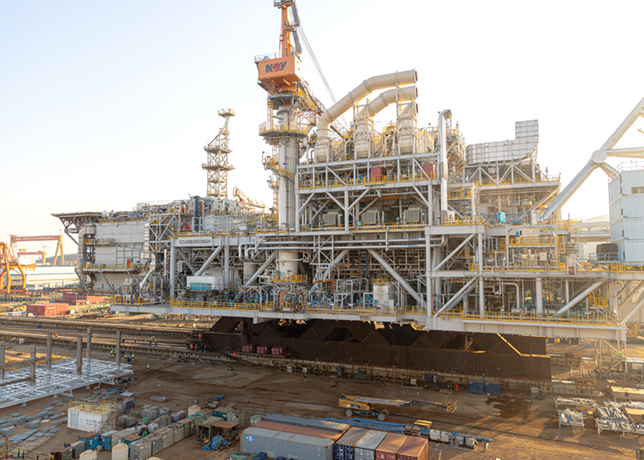
Qarn Alam ... finally on track |
Average daily crude oil production almost exactly hit the company’s target of 550,000 barrels, slightly down on the 2011 figure of 553,000 bpd.
He says that this small decline was primarily caused by strikes and protests which affected many companies in the first half of 2011. An additional 94,000 bpd of gas condensate and nearly 550,000 boe of gas were produced. PDO aims to maintain crude oil production at 550,000 bpd for the next ten years.
Restucci says ongoing enhanced oil recovery projects have gained something of an international reputation. Production at the Harweel miscible gas project started from April 2012. Restucci has said that production at the project, for which contracts were signed in 2005, was due to start in the second quarter of 2011, following delays due to technical challenges.
The Qarn Alam steam injection project has also experienced delays, but first production and first steam were achieved in late 2011, a few months later than previously announced. Both projects are expected to contribute an additional 40,000 bpd of oil at full production by the middle of the decade. Another steam injection project at Amal is on target for first production in 2013.
The Harweel miscible gas injection project was brought on line after years of delays, but the development highlights the delicate balance operator PDO faces between meeting its production goals and the political goals of its largest shareholder, the Omani government.
The EOR project at Oman’s Harweel field uses deadly sour gas for reinjection and took a full seven years to start up after Royal Dutch Shell-led PDO gave it the initial go-ahead. The most recent six-month delay, which pushed initial production from October of last year to April, was caused when locally supplied metallurgy, cladding and equipment failed to meet standards required for handling the field’s hydrogen sulfide. The miscible gas project now produces an additional 20,000 barrels per day and will gradually ramp up to 38,000 bpd over the next two to four years. PDO is responsible for 72.6 per cent of Oman’s 884,000 bpd of oil output.
PDO has long embraced local content and an Omani workforce for its projects, but so-called Omanisation efforts became more critical last year.
In the face of protests in which demonstrators called for greater political and economic opportunities, Oman’s aging ruler Sultan Qaboos, who has been at the helm since taking power from his father more than four decades ago, pledged to create 50,000 jobs. PDO, in turn, committed to provide 1,000 additional jobs both directly and through contractors.
Last year’s demonstrations hit PDO directly as well, when its contractors halted work last spring. Students also appealed PDO for employment opportunities in what Restucci called a “very difficult time of engagement.” “We had 80 young (recent graduates) coming into this room screaming for jobs immediately on Harweel tomorrow. I say, ‘I can’t do that. I myself can’t go into Harweel unless I do some specialist training,’” he says. “We took those 80 and we’re training them. And they’ll become technicians or senior welders or constructors.” By the end of 2011, PDO had hired 787 Omanis and its contractors employed another 3,500, the company says.
Targets for local employment are common in Oman and other Mideast Gulf countries, which rely heavily on expatriate labour. PDO says its Omanisation rate – the percentage of employees who are citizens – has risen to an all-time high of 80 per cent, although this figure does not differentiate between skilled and unskilled workers. Still, PDO is sensitive to suggestions that it pads out its local employment figures by hiring people to fulfil routine roles – such as driving or basic administration – and touts training programs for both direct hires and contractors. By the third quarter of this year, PDO plans to double the percent of skilled Omanis employed at company holding facilities and through project delivery contracts to 30 per cent. And with the push for Omanisation gaining further ground, PDO plans to increase its spending in Oman from $1.4 billion today to $3 billion by 2020.
Hiring more local staff and contractors means more time and money spent on training, although the company is careful to say it does not expect slower lead times on projects simply from using more local content. For instance, a PDO spokesperson notes that Omanisation efforts did not directly contribute to the latest in a series of delays at Harweel.
“Harweel is a highly complex, world-scale EOR project,” the spokesperson says. “Notwithstanding delays, the plant project timeline compares favorably with projects of similar complexity.” Nevertheless, presentations given to local contractors and posted on PDO’s website articulate a concern of “fragmented project delivery” and say contracted firms that fail to meet deadlines will be put on notice and can be barred from prequalification on future projects.
The renewed emphasis on local content comes as PDO turns toward increasingly complex methods of production to maintain its oil output between 540,000 and 560,000 bpd over ten years – the range it has produced in since 2007. EOR will play a pronounced role, moving from 3.5 per cent of PDO’s production mix in 2011 to 25 per cent by 2020, according to a company spokesman.
A recent outline of projects presented in March shows that, of the 4.23 billion barrels of oil contained in 50 “key” current and future projects, 3.35 billion barrels will require EOR techniques, the use of sour gas injection or both to extract.
PDO also has something to prove as it works to maintain output, with the Omani government re-awarding some 10,000 sq km of acreage previously under PDO’s wing to other companies in a bid to up investment in some of its more difficult assets. The most dramatic success has come at the Occidental-operated steam injection project at Mukhaizna, where production rose from negligible amounts to an average of 116,000 bpd last year, ministry figures show.
The Oil and Gas Minister says that there is misunderstanding among citizens in two important issues: rising of oil and gas production and oil and gas agreements, stressing the sultanate’s keenness to continue increasing the production of oil and gas, taking into consideration the circumstances and challenges in this regard. He says that cost of production has increased in comparison with previous periods.
He adds that “oil is not a lake that we can draw off any time we like as there are technical and technological challenges in this regard and many international companies investing in oil and gas never venture and in the manner expected by many people and there are companies that quit digging for oil in the sultanate because they found less -cost options in other parts of the world”.
He says that production period of an oil well last no less than ten years, including exploration digging and production, and this is not a short period as it exhausts a lot of time, efforts and money, adding that cost of oil production will rise in the coming period.
He adds that there are already accomplished projects in this regard and others under study and the attitude is still on increasing the production in the coming five years, with observance of balance between increasing oil reserve and avoidance of exhaustion, keeping in mind the right of coming generations, stressing that the best option is to continue rising the production in the long run, as many countries are facing decrease in their oil production, giving examples from previous century as there were countries stood on top of oil exporters, but today they are no more in the oil market and have even withdrawn from Opec.
Dr Al Rumhy says that the sultanate’s oil reserves are assuring and what has been exploited up to now represents only 16 per cent of the reserves and the ministry is keen on exploiting every well that could support production unless there are compelling reasons that hold us up from using the well.
Reviewing the oil agreement between the government and investing companies, he says that there are two kinds of these companies: one is connected with PDO and the other is linked to other companies and each has its own share in these agreements.