




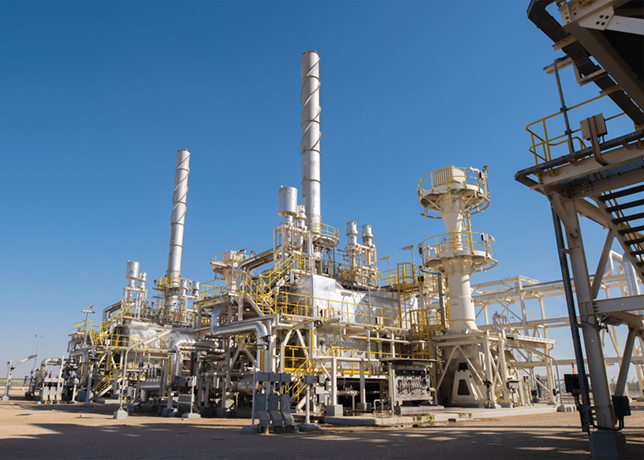













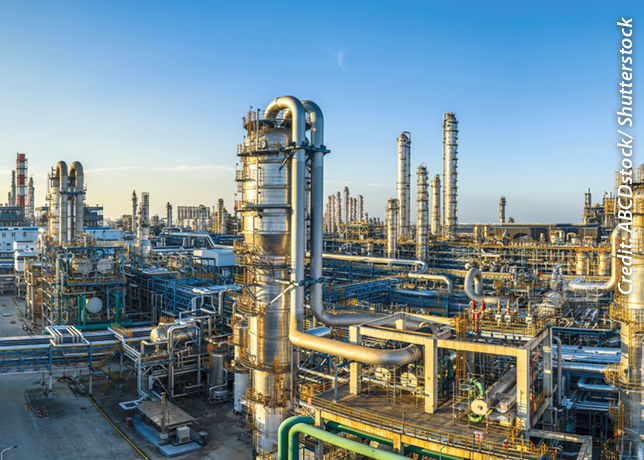

















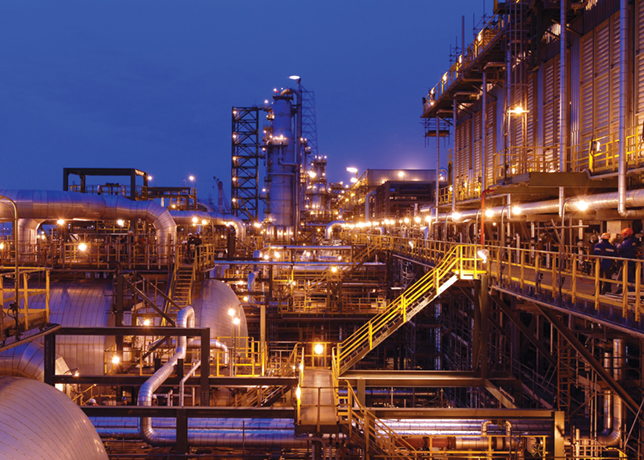
Libya's announcement that it plans to bring the 220,000 barrels per day (bpd) Ras Lanuf refinery back online after more than a decade of inactivity has been widely reported as a sign of the country’s downstream ambitions for domestic supply.
What has perhaps attracted less attention though, is the wider challenge of restarting and effectively operating an asset that was built more than four decades ago and has sat idle for 13 years.
It points to the challenge that many operators face across the Gulf and beyond, even for those assets that have run close to continuously for many years, and their ageing nature.
Many refining facilities were built decades ago for very different operating conditions, yet expectations around throughput and efficiency have only intensified.
With little tolerance for prolonged outages or unplanned shutdowns, reliability is now both an operational priority and a commercial necessity.
With increased output targets across the Gulf and ambitions to accelerate rebuild from any impact felt by the Iran war, attention is firmly on optimising existing capacity.
A MINDSET SHIFT
Across the Middle East, refining assets today are expected to run under more intensive conditions.
As feedstocks evolve and production demands increase, equipment is often exposed to more aggressive environments than originally planned for.
This can typically lead to faster internal corrosion rates.
Recent AMPP industry reporting continues to cite corrosion as one of the leading causes of equipment failure in refining operations.
Plus, corrosion carries a major price tag, with annual costs exceeding $2.5 trillion globally.
And among the most susceptible to it? Ageing assets.
Today, refiners face a situation whereby older existing assets need to be performing better than ever while facing major corrosion issues, which if not tackled, can hamper asset integrity and cause costly unplanned downtime.
In fact, recent IGS research into ageing assets across Saudi Arabia and the UAE found that 65 per cent of oil and gas operators reported significant production or throughput losses due to unplanned downtime, while in one regional facility potential losses from an emergency shutdown were estimated at $2.5 million per day.
As a result, while the importance of maintenance has long been in focus for operators, there is a mindset shift required.
Moving from reactive to proactive strategies is essential, and positively, this is something we’re already seeing starting to take flight.
Historically, many strategies focused heavily on reactive maintenance, with equipment only repaired after problems were identified during inspections or following operational failures.
This approach often led to repeat outages and prolonged shutdowns because underlying causes were not fully resolved.
In the worst-case scenario, treating symptoms and not the underlying cause can lead to catastrophic failure that can take an asset offline for much longer.
By moving away from reactive fixes and towards proactive, planned maintenance across specific equipment lifecycles, asset integrity in these challenging conditions becomes a lot more reliable.
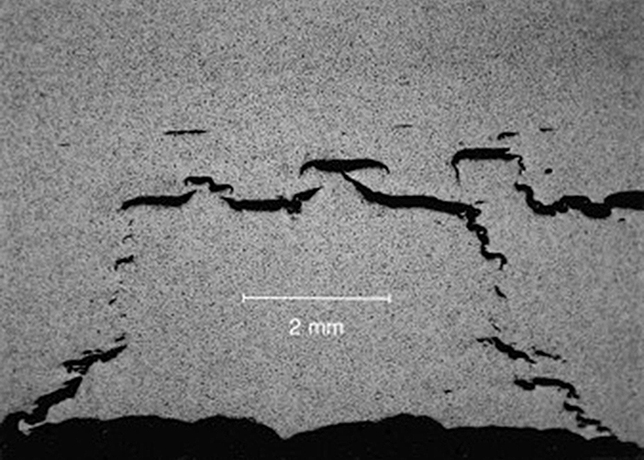
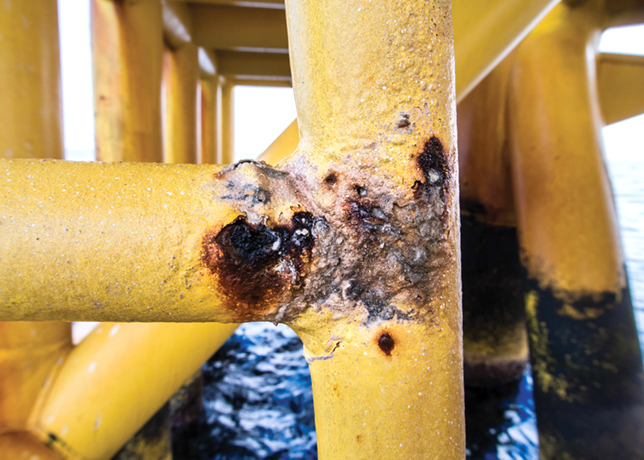
Hydrogen induced cracking
TURNAROUND EXECUTION AS A RELIABILITY LEVER
This conversation couldn’t be happening at a more important time. Where tolerance for unplanned downtime was already low, it has significantly tightened as geopolitical uncertainty has made supply reliability a matter of national interest.
Supply chain pressures are also adding complexity to turnaround planning, particularly as tighter shutdown windows leave less room for delays in sourcing critical components or repair systems.
In response, refiners are planning earlier and working more closely with suppliers and service partners to improve execution certainty once shutdowns begin.
Today, operators are increasingly adopting proactive asset protection strategies that identify and mitigate degradation risks before they affect operations.
Furthermore, operators are beginning to treat turnaround execution itself as a strategic lever for longer operational stability.
Driving this shift is the emergence of a different type of planning philosophy.
Asset integrity teams are becoming involved earlier in the maintenance cycle to assess critical equipment, prioritise high risk areas and develop targeted repair strategies ahead of shutdowns.
Predictive maintenance systems and condition monitoring technologies are reshaping how operators determine the timing, scope and sequencing of interventions too.
Using real-time asset condition data can help operators to prioritise high-risk equipment and flag potential issues earlier, can reduce unnecessary maintenance activity, reduce the number of unexpected findings during shutdowns, and build the confidence needed to extend run-lengths between major interventions.
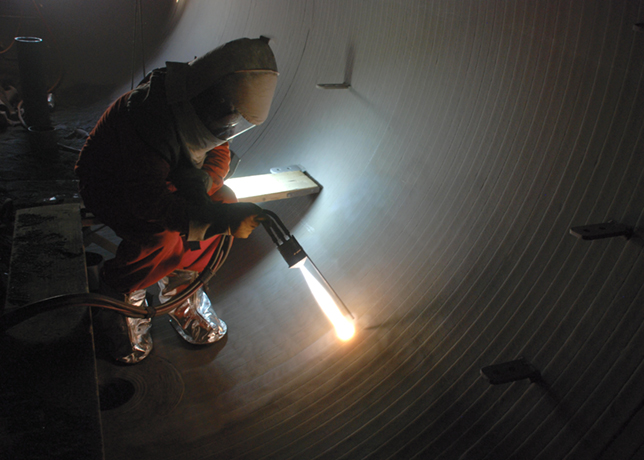
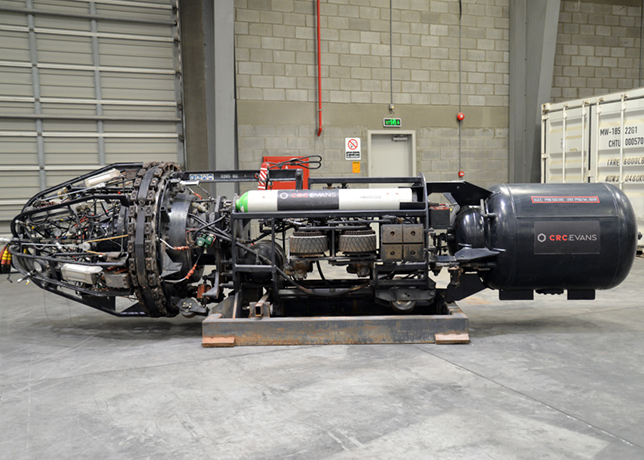
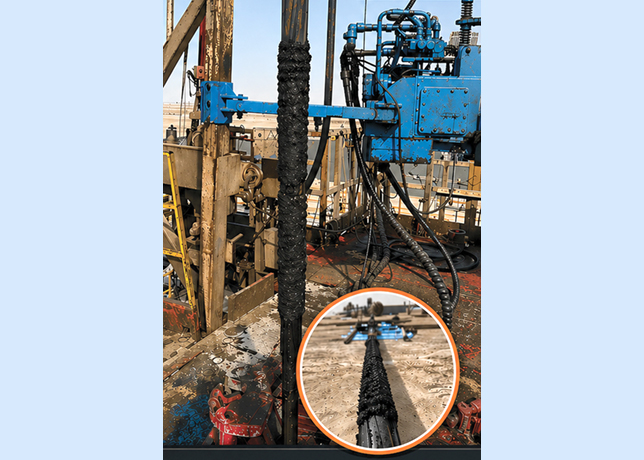
High velocity thermal spray used to apply a dense, corrosion-resistant alloy barrier directly to the internal surfac
A CASE STUDY IN PROACTIVE PLANNING
The conditions driving asset degradation across the Middle East are not unique to the region.
At the Tengiz field in Kazakhstan, one of the world’s largest and most complex sour gas processing environments, operators faced the same structural challenge of critical process vessels corroding faster than conventional repair or reactive maintenance approaches could address, with each turnaround resolving symptoms rather than causes.
Previous repair approaches had delivered only short-term improvements, resulting in recurring shutdowns and ongoing operational disruption.
To address the issue, the operator implemented a more comprehensive integrity strategy focused on long term reliability rather than temporary repair.
Ahead of the planned shutdown, detailed inspections were carried out to map degradation across the facility’s process vessels, identifying the specific equipment and weld zones most exposed to hydrogen-induced cracking and corrosive attack from the H2S-rich stream.
Rather than waiting for the turnaround window to define the scope, engineering and planning work was completed in advance so that repair activities could begin immediately once the shutdown opened.
Where organic coatings had previously been stripped, repaired and reapplied at each turnaround cycle without resolving the underlying integrity issue, the operator moved to a metallurgical approach.
A high-velocity thermal spray process was used to apply a dense, corrosion-resistant alloy barrier directly to the internal surface of affected vessels, mechanically bonding to the substrate rather than coating over it.
Critically, the process required no post-weld heat treatment and was largely insensitive to the ambient conditions that complicate organic coating application, which meant it could be executed within tight shutdown windows without the curing time and environmental controls that had previously extended critical path duration.
With the bulk of engineering decisions made before the shutdown began, execution on site was faster and more predictable.
Scope changes, which had historically caused delays and contractor coordination problems, were significantly reduced.
The facility cut execution time by approximately 50 per cent compared to field welding alternatives, shortened the turnaround critical path by 34 per cent, and delivered average operational savings of $1.2 million per outage.
Subsequent inspections carried out years later found the cladding more than 99 per cent intact, with previously critical-path vessels removed from turnaround scope entirely.
THE UPTIME RACE IS ON
The Middle East refining sector is entering a period where operational resilience will become increasingly valuable.
With global energy markets remaining volatile and supply chain and geopolitical pressures continuing to affect production strategies, the ability to maximise uptime and maintain reliable operations from existing assets is a clear competitive differentiator.
For operators managing ageing infrastructure, this means extending asset life safely and efficiently beyond original design expectations.
Achieving this requires a more integrated approach to turnaround planning, asset integrity, corrosion management and long-term reliability strategy.
The recent wave of long-term framework agreements taking shape across Saudi Arabia’s upstream and downstream base reflects this direction of travel.
Alongside the ambitions highlighted by the Ras Lanuf restart in Libya, there is a broader regional signal that brownfield investment and asset optimisation are becoming as strategically important as greenfield development.
Getting more from what already exists, reliably and with fewer interruptions, is the defining operational challenge for the next generation of Middle East refining.
The operators who move early and embed proactive reliability strategies into their planning will be best positioned when market conditions demand it.