































The demand for affordable, cleaner energy sources has presented both opportunities and challenges for equipment manufacturers.
Hydrogen is expected to play a crucial role in a variety of uses from transportation to power generation, and governments worldwide are investing in research and infrastructure for the hydrogen economy.
However, its success hinges on a new generation of critical machinery and advanced components that can operate beyond historical limitations.
A leading original equipment manufacturer (OEM) with expertise across the hydrogen value chain, including reciprocating compressor technology, recently took on the challenge of designing a compressor capable of operating in the high-pressure, non-lubricated environment required for hydrogen storage and mobility applications.
They turned to Cook Compression for assistance.
THE CHALLENGE
Hydrogen compression is challenging for several reasons.
First, hydrogen is a light gas with extremely small molecules, making it difficult to seal.
Preventing leakage requires advanced sealing technology, particularly in piston rings and packing cases, made from materials designed for this service.
Hydrogen leakage must be eliminated for safety purposes – the gas is highly flammable – and to prevent increased costs due to product loss and wasted energy.
Second, successful mobility compression requires high speeds to reduce unit footprint and very high pressures beyond established limits.
This extreme operating environment, combined with exposure to pure hydrogen gas, causes traditional materials to lose some of their critical properties.
Advanced metallic materials that can resist embrittlement and newly developed polymeric grades that can counteract degradation and high wear rates are key to meeting the challenges of transitioning to hydrogen energy.
Finally, some applications require a high degree of gas purity.
For example, in mobility applications where hydrogen is used as a fuel, any trace of oil or other solid contaminant can damage fuel cells.
To prevent this, hydrogen compression must be lubrication-free; however, existing oil-free compressors were limited to a lower operating pressure range of around 100 bar.
To expand its application scope and enable hydrogen compression for mobility applications, this OEM entered new territory: Designing an oil-free compressor that could operate at 450-500 bar discharge.
The search for a partner to develop components that could withstand these extreme conditions led to Cook Compression for its vast expertise in sealing technologies and significant investment in materials research and development.
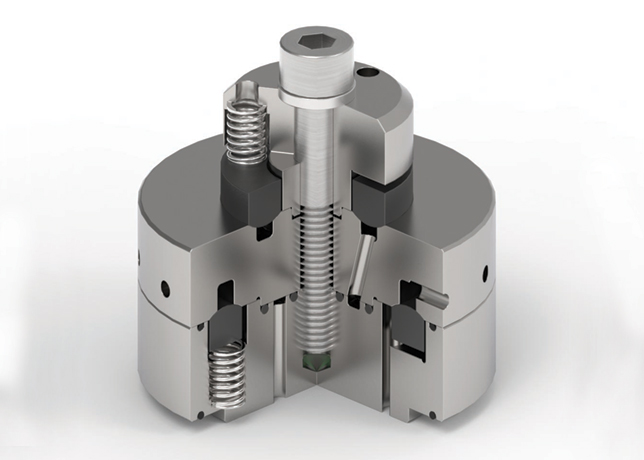
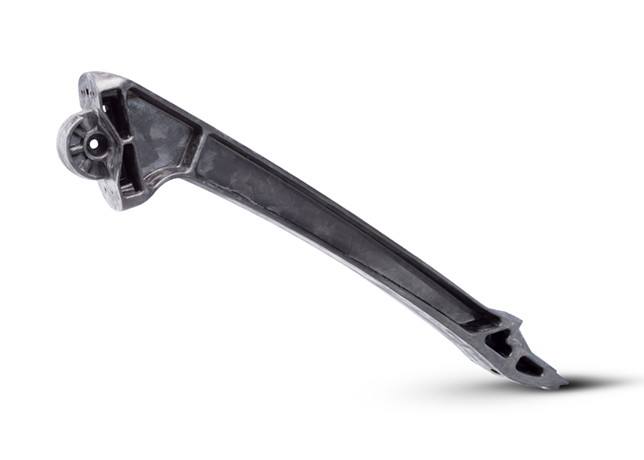
A Manley valve
THE SOLUTION
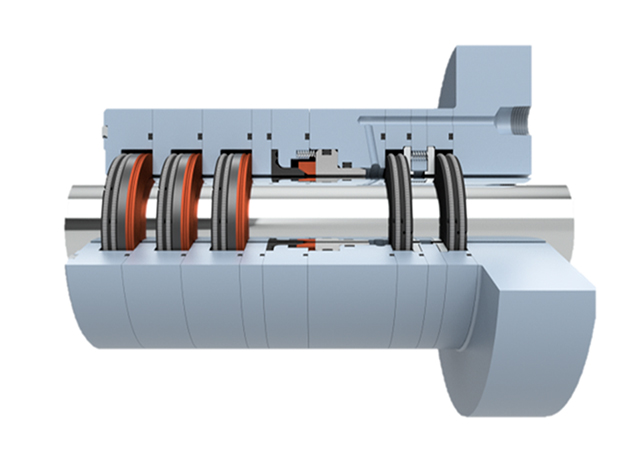
Cook Compression engineers and materials scientists collaborated with the OEM’s product development team to develop sealing components that minimise hydrogen gas leakage.
They soon realised that this task would require a rethinking of sealing systems, including specific ring geometries and an integrated approach for component materials to perform at higher pressures.
Leveraging its experience in creating solutions for optimising compressor performance, Cook Compression designed specialised proprietary piston rings with innovative geometries to create complicated flow passages that prevent leakage.
To prevent excessive or premature degradation, the rings were constructed using TruTech® engineered polymers formulated for hydrogen compression.
The sample parts tested at the OEM’s facility showed early success, proving the new ring designs could cope with high pressure loads.
Initial wear rates were low enough to progress to full endurance testing with hydrogen.
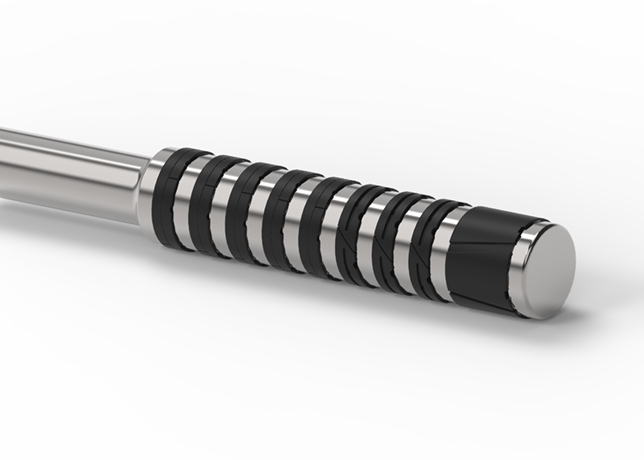
A hydrogen piston rings stack
THE RESULTS
Following an extensive testing program, the new compressor was brought successfully to market and selected for use in a green hydrogen production plant in Western Europe.
Field based endurance testing was conducted initially on closed loop hydrogen to allow simulated variations in pressure and flow rate.
The same unit was then re-configured to operate in place of an existing lubricated unit in the plant, supplying bottle-fill hydrogen.
This allowed for long-term endurance testing and periodic reviews of component wear rates. Tests are ongoing in this environment.
Due to the success of the piston rings, the OEM asked Cook Compression to supply additional components, namely high pressure Manley® mini-disc valves and COOK CLEAN® sealing systems.
Using best-in-class technology, such as the LF Purge Pac® assembly and Vortex® cooling packing, COOK CLEAN systems are designed to reduce fugitive emissions to near-zero levels.
Cook Compression continues to partner with equipment manufacturers and aftermarket partners to design new technologies that enable equipment to operate beyond known application limits and overcome the challenges of transitioning to hydrogen energy.