















Aramco's carbon-management programme is being developed alongside a domestic gas expansion that reached new construction and operating milestones during H1 2026.
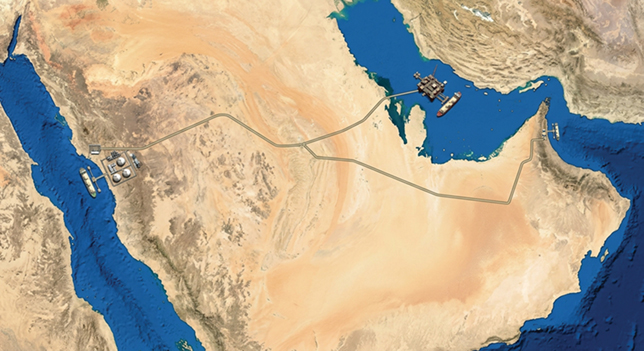
The planned Jubail carbon capture and storage hub is the largest disclosed element of Aramco’s carbon-management programme.
The joint venture with Linde and SLB has a target completion date of 2028.
Phase one is expected to store about 9 million tonnes of carbon dioxide annually from Aramco gas plants and other industrial facilities.
Aramco’s stated 2035 target is to capture up to 11 million tonnes a year.
The company has identified saline aquifers as part of a Kingdom-wide carbon-storage evaluation programme.
Its 2025 Sustainability Report states that it has developed high-performance models for underground carbon dioxide storage, completing more than 1,800 simulation scenarios intended to improve the reliability of storage-site modelling and carbon dioxide injection strategies.
Aramco also reported an evaluation with Carbon Clean and Samsung E&A of a carbon-capture pilot at its Hawiyah NGL facility.
The project is designed to capture carbon dioxide from natural-gas-turbine exhausts, with future plans for storage.
Aramco said the technology is expected to be half the size and cost of traditional systems and to reduce energy requirements by 20 per cent.
In March 2025, the company acquired a 50 per cent interest in Jubail-based Blue Hydrogen Industrial Gases Company from Air Products Qudra.
The venture targets hydrogen production, including lower-carbon blue hydrogen made from natural gas with carbon dioxide capture and storage.
Aramco said commercial operations are expected to commence in coordination with its Jubail carbon capture and storage activities.
Methane management remains a reported operational component of Aramco’s emissions programme.
During 2025, the company expanded its satellite methane-monitoring programme with GHGSat from 30 to 45 operational facilities.
Aramco is also testing technologies to replace emissions estimates derived from the American Petroleum Institute compendium with direct measurement.
The company tested six methane-detection and quantification technologies in 2025 and stated that deployment across upstream operations is intended between 2026 and 2028.
Aramco said in its Q2 2026 interim report that it and venture-portfolio company Insilico Medicine developed and tested a porous metal-organic framework material for direct-air carbon-dioxide capture.
Aramco and Repsol also continued construction of a synthetic lower-carbon e-fuels demonstration plant in Bilbao, Spain.
The plant is intended to assess the commercial viability and technical readiness of converting captured carbon dioxide and renewable hydrogen into sustainable aviation fuel, diesel and naphtha. Completion is targeted by 2026-end.