




























































Energy operators face a difficult balancing act; they must improve reliability, efficiency and performance while reducing their environmental impact, protecting workers and continuing to use ageing infrastructure.
Achieving these goals requires precision, which starts with a clearer understanding of process conditions.
Yet in combustion processes, visibility is often limited by where measurements are taken.
Location can be as important as the technology you use, and even the best analyser can only reveal what is happening within its field of view.
If that view does not represent the wider process, unsafe or inefficient combustion conditions can remain hidden behind unacceptable average readings and stay undetected.
This creates false confidence when informed actions matter most.
AVERAGE MEASUREMENTS CREATE BLIND SPOTS
Many industrial combustion systems still rely on extractive or point-sensor measurements that give an averaged view of process conditions.
Readings are typically taken from a single point in the flue or stack, downstream of the combustion process.
They may appear acceptable at the point of measurement while concealing significant variation elsewhere.
Combustion conditions can vary considerably in large heaters, reformers, boilers and crackers.
Localised oxygen (O2) imbalances, temperature variations and incomplete combustion near the burners may have little effect on an aggregate reading from an analyser located on a common flue or far away from the site of combustion.
As a result, critical variations can remain hidden, creating blind spots that affect safety, efficiency and control.
Too little O2 can elevate carbon monoxide (CO) levels, soot formation and flame instability, and too much can reduce combustion efficiency and increase fuel consumption.
Uneven temperature profiles can also create damaging hot spots, thermal stress and poorer performance.
In-situ process analysis measures gases directly within the combustion environment, often across a defined optical path rather than at a single point.
This provides a faster, more representative view of process changes, helping operators identify issues earlier and respond before they escalate.
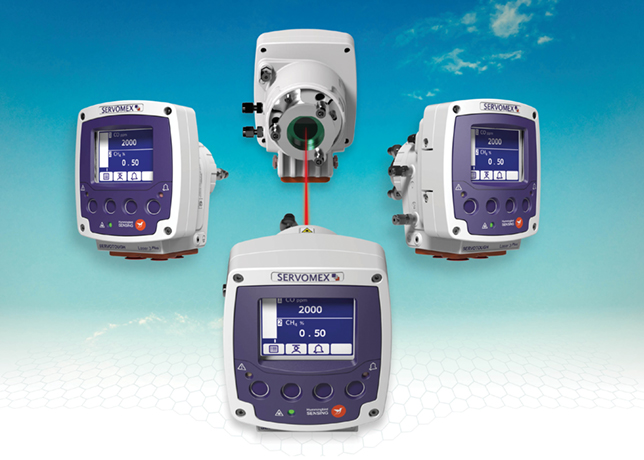
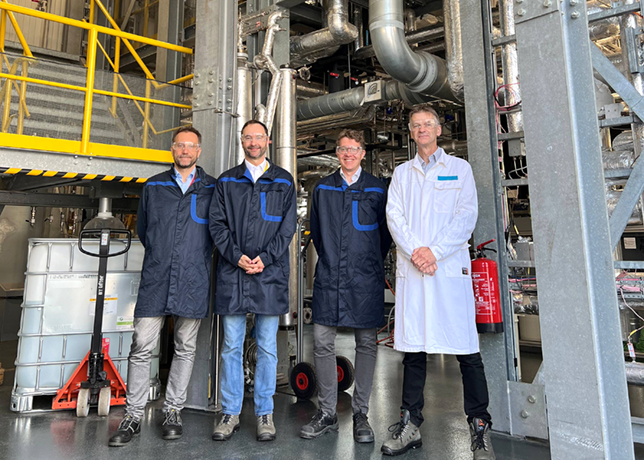
Servomex gas analysers measure gases all from an intuitive display simple enough for a single engineer to operate in situ
WHY IN-SITU ANALYSIS IS BECOMING MORE IMPORTANT
Refineries and processing plants increasingly handle changing crude oil grades and gas mixtures to maximise margins, secure supply and respond to market demands.
This drives greater variability in combustion behaviour, process conditions and product composition, making consistent performance more difficult to maintain.
At the same time, tightening environmental requirements demand closer monitoring of sulphur, volatile organic compounds, and other regulated emissions.
Continuous monitoring is also essential for protecting workers, safeguarding assets, and reducing the risk of process incidents.
Pressure to improve energy efficiency is driving tighter control of energy-intensive processes, including combustion, LNG liquefaction and catalytic cracking.
Together, these demands increase the need for timely, representative process data.
In-situ analysis can avoid the delays associated with extractive sampling, transport and conditioning systems.
Technologies, such as tuneable diode laser spectroscopy (TDLS), provide fast readings directly within the process stream.
This provides a more accurate and responsive picture of operating conditions, allowing teams to detect deviations earlier and make better-informed decisions.
UNCOVERING HIDDEN HAZARDS IN ETHYLENE CRACKING
The risks of relying on averaged readings aren’t purely academic; they can have real-world consequences.
One major Middle Eastern petrochemical producer had a wake-up call when seeking greater combustion control across its ethylene cracking furnaces.
The site operated dual-section furnaces with flame paths exceeding 20 m.
They measured O2 using a single zirconia analyser in a common convection section, and it returned a seemingly safe average O2 level of around 2 per cent, with CO significantly below the 800 ppm trip level.
However, the set-up gave little insight into individual furnace performance despite being one of the facility’s most energy-intensive assets.
Cross-stack TDL analysers were fitted to individual furnace sections, and these provided direct O2 and CO measurement from each combustion zone.
Meanwhile, thermal mapping helped identify suitable representative locations, and custom engineering, optical path management, and compensation techniques ensured reliable performance in harsh operating conditions.
The results immediately demonstrated the danger of relying upon averaged measurements.
The assumed stable O2 reading of 2 per cent masked a significant imbalance: One furnace section was operating at a hazardous 0 per cent O2 and the other at a wasteful 4 per cent O2.
Furnace-level analysis revealed the actual operating conditions, allowing the company to take swift action.
ENGINEERING SOLUTIONS FOR CHALLENGING ENVIRONMENTS
As operating environments become more challenging and tolerances tighten, measurement strategy, rather than just measurement technology, needs greater consideration.
Analyser locations should be positioned where they can measure representative process conditions rather than distorted or diluted gas streams.
Choosing a location requires more than placing an analyser close to the flame.
Engineers must consider gas flow, temperature profiles, obstructions and the risk of air ingress.
Access for installation and maintenance also matters.
These factors determine whether the reading reflects the process consistently over time.
Reviewing them early can prevent a capable system from producing data that is accurate at one point but misleading when used to judge conditions across a combustion zone.
Furthermore, optical path management is central to this approach, as optimising the measurement route through the process helps maintain signal quality and deliver repeatable readings.
Supporting techniques, including non-depleting sensors, wavelength modulated spectroscopy (WMS), and line-lock technology, help ensure measurements that do not drift.
By preserving measurement integrity in harsh combustion environments - despite vibration, dust, extreme temperatures, corrosive gases, and changing process conditions - teams can rely on accurate, continuous data to make critical operational decisions with confidence.
Effective combustion control depends on understanding process conditions where they matter most.
A strategy that reveals what is happening at key process locations gives operators greater confidence in their decisions, empowering them to intervene earlier and supporting smarter, safer, and more efficient performance.