


































By Abdulaziz Khattak
ASCO Group is expanding its regional operations from a permanent hub in Doha to eliminate supply chain bottlenecks and support major energy infrastructure developments across the Middle East.
By unifying procurement, freight, inventory, and final delivery under a single managed process, the company’s integrated materials model addresses fragmented workflows for major engineering, procurement, and construction projects.
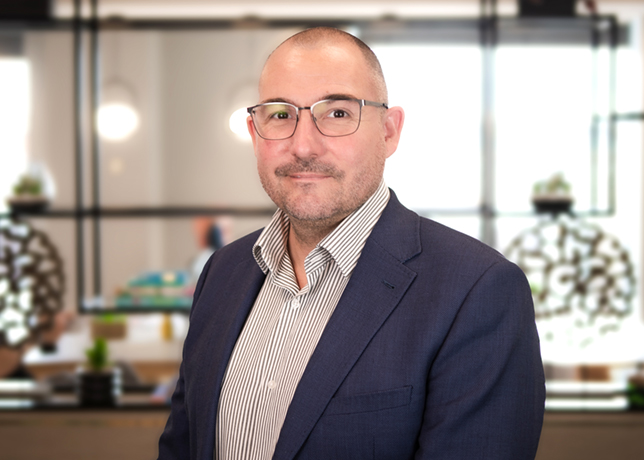
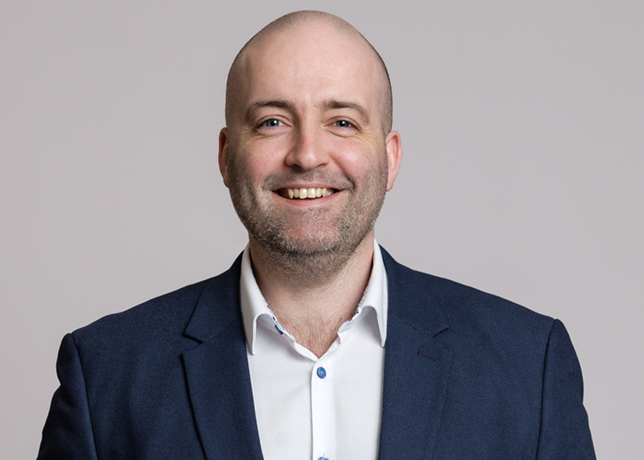
“In an exclusive interview with OGN energy magazine, Lee Vettese, Regional Manager - Middle East, ASCO Group says: “The approach has already delivered an 80 per cent reduction in processing time, 46 per cent faster kitting, and a 54 per cent cut in dispatch times.”
Beyond core materials handling, the company is deploying specialised digital waste tracking and Naturally Occurring Radioactive Material (NORM) decontamination capabilities proven in international markets.
These systems provide full end-to-end audit trails and closed-loop environmental controls to help operators manage aging infrastructure and meet stringent local regulatory standards during offshore campaigns.
By transferring specialised operational standards and establishing local supply chain coordination, ASCO aims to provide continuous operational support and mitigate macroeconomic disruptions for clients across Qatar, the UAE, Saudi Arabia, and Oman.
Below are excerpts from the interview:
With Qatar’s North Field Expansion demands placing unprecedented pressure on regional supply chains, how exactly will ASCO’s materials management model eliminate critical bottlenecks for EPC contractors on the ground?
On projects of this scale, the priority is identifying constraints early, before they affect construction, commissioning or production.
ASCO’s materials management model connects procurement, expediting, freight, customs, receipt, inspection, storage, preservation, inventory control, kitting and final delivery through one managed process.
This replaces fragmented contractor workflows with clear ownership and consistent data, prioritising materials by operational criticality so missing items and delayed shipments surface early enough to act on.
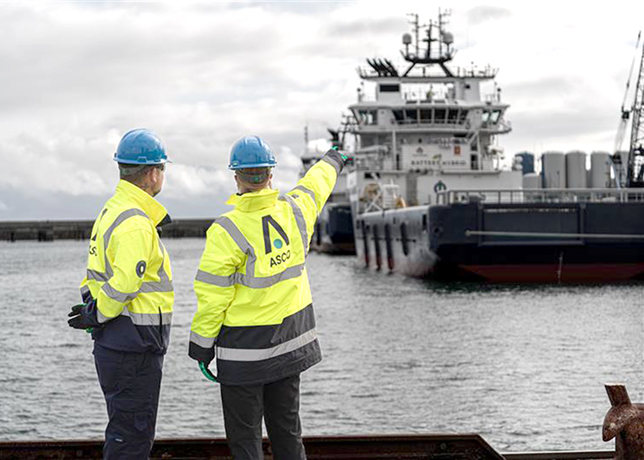
ASCO helps improve vessel and berth planning, cargo flow, materials readiness and coordination across the port and supply-base operation
This approach has already delivered measurable results, including an 80 per cent reduction in processing time, 46 per cent faster kitting and a 54 per cent cut in dispatch time.
For EPC contractors on the North Field Expansion, it means confidence that materials are visible and available at the point of need, freeing teams to focus on issues affecting delivery rather than locating materials or fixing avoidable supply-chain failures.
How will ASCO scale its marine logistics and port activity frameworks to match the rapid acceleration of LNG capital projects across the wider GCC region without compromising operational tempo?
Partnership will be central to scaling activity across the region. With many port access points and facilities owned by the NOCs, we will work closely with our local network to bring the operational experience, systems and specialist expertise needed to make better use of existing infrastructure.
For major LNG developments, that means improving vessel and berth planning, cargo flow, materials readiness and coordination across the port and supply-base operation.
We are focused on helping clients expand capacity by making better use of the facilities, infrastructure and resources already in place.
ASCO has a track record spanning three continents with more than 70 managed warehouses and supply bases globally so we have robust procedures enabling the business to scale up at pace.
Through our Doha office, we can adapt our established operating model to local ports, regulations and client requirements, while working in partnership with the organisations that control and operate the region’s critical infrastructure.
This gives GCC clients a practical way to support increased activity while maintaining safety, visibility and operational tempo.

ASCO’s Operational Control Centres serve as centralised hubs that integrate logistics, marine, aviation, transport, and materials management
As mature offshore assets across the Middle East approach their end-of-life phase, how does ASCO plan to transfer its extensive UK North Sea decommissioning readiness expertise into a regional market historically focused almost exclusively on production?
The objective is not to export UK regulation, it’s to transfer the planning discipline, operational controls and lessons learned from one of the world’s most developed decommissioning markets, and adapt them to local requirements.
This begins well before cessation of production. We can help operators establish materials baselines, identify potentially hazardous or NORM-contaminated equipment, map offshore-to-onshore logistics, assess port and facility readiness, define waste routes and determine where materials can be reused, recycled, treated or disposed of.
We’re eager to work with local partners and authorities to build the necessary infrastructure and competence and our Doha facility has a specific focus on regional decommissioning readiness.
Early planning is essential because the biggest decommissioning risks often arise when waste, port capacity, lifting requirements and onshore disposal options are addressed too late.
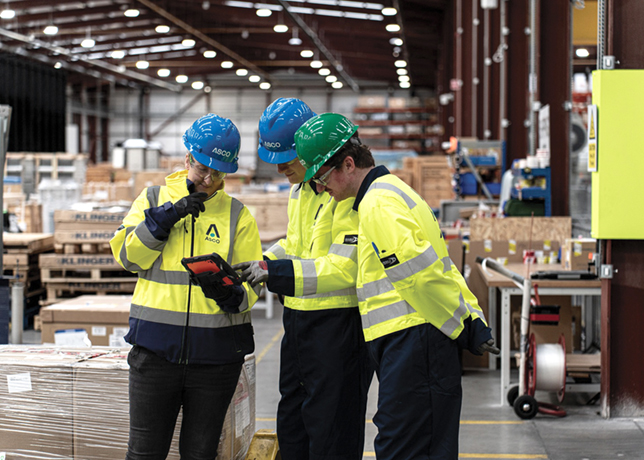
ASCO manages over 70 warehouses and supply bases globally enabling the business to scale up at pace
What specific logistical and operational frameworks is ASCO introducing to help GCC operators mitigate the unique integrity and safety risks associated with aging plugging and abandonment (P&A) infrastructure?
ASCO supports operators’ well engineering and integrity teams with the logistics, materials, lifting, environmental and marine controls needed for safe, efficient P&A campaigns.
This covers verified equipment inventories, certification and preservation checks, and full chain of custody from offshore removal through treatment, reuse or disposal.
This also includes NORM screening and waste routing built into the plan before equipment reaches the quayside.
Lifting assurance, cargo sequencing and marine coordination then align tools, tubulars, fluids and recovered infrastructure with the well programme.
One coordinated process gives operators visibility of material status, equipment readiness and emerging risks across the campaign, reducing delays and remobilisation.
Given the strict environmental mandates adopted by regional national oil companies, how will your specialised NORM (Naturally Occurring Radioactive Material) waste management services enable Qatari operators to meet stringent ESG targets?
Effective NORM management starts at the point of generation, covering radiation monitoring, classification, segregation, packaging, transport, controlled storage, decontamination and documented final routing.
Material that can be safely cleaned is returned to service or recycled, cutting the volume needing specialist disposal.
Where disposal is necessary, operators receive an auditable record of how it was handled.
Our model uses enclosed ultra-high-pressure decontamination, specialist ventilation and monitoring, and closed-loop water treatment with zero discharge, delivered under local regulation through permitted facilities.
Proven in the UK and Australia under stringent environmental legislation, this gives clients confidence in safe, compliant handling.
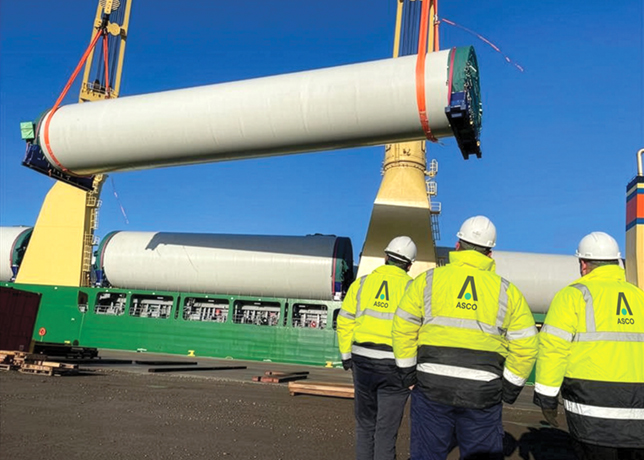
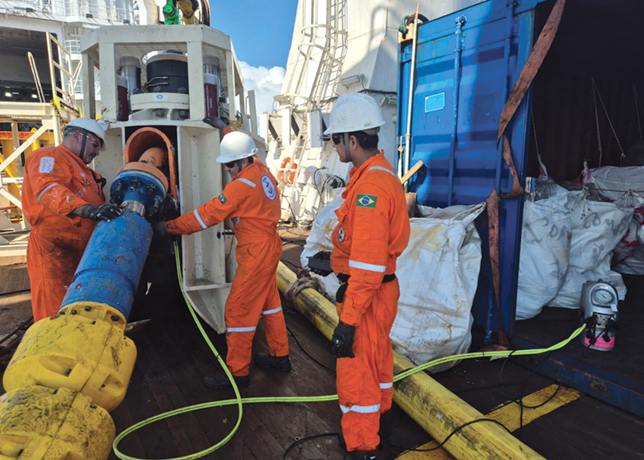
ASCO managing heavy-lift marshalling operations at Steel River Quay on Teesside
Beyond standard environmental compliance, what proprietary technologies or methodologies will ASCO deploy in the GCC to bring total traceability to complex, hazardous oilfield waste streams?
True traceability comes from combining digital records with clear physical checks at every handover.
ASCO’s approach combines our Integrated Management System, AIMS, with digital waste tracking, pre-acceptance checks, approved vendor and facility controls, and documented chain-of-custody procedures.
Where appropriate, our integrated logistics technology can connect waste records to the originating asset, container or work order.
This provides more than a waste-transfer note. It creates a searchable audit trail that gives clients visibility from the initial waste assessment through to final closure, while highlighting exceptions before they become compliance failures.
In light of ongoing maritime vulnerabilities and structural disruptions across regional corridors, how will establishing this permanent Doha hub actively insulate your clients’ operations from macroeconomic supply chain shocks?
A permanent regional presence gives clients greater resilience by bringing decision-making, local coordination and contingency planning closer to their operations.
The Doha office allows us to work more closely with projects, ports, authorities, suppliers and transport providers across the region and provides 24-hour operational support.
Linked to our international network, it connects regional coordination with our freight, marine, materials and operational systems, giving clients clearer visibility of developing issues and faster access to alternative routing and delivery options.
This helps teams respond earlier, coordinate decisions across the supply chain and keep critical materials and equipment moving wherever safe and practical.
How does ASCO intend to modernise traditional warehousing and inventory management models in the Gulf to support the regional shift toward highly automated, resilient supply bases?
For ASCO, warehouse modernisation starts by addressing the underlying materials challenges before using technology to improve visibility, control and flow.
We analyse how materials move through the operation, from inventory data and storage layouts to preservation, replenishment, and the links between procurement, maintenance and operations, identifying where stock is delayed, duplicated, misplaced or held unnecessarily.
Only once that foundation is solid do we introduce digital tools such as mobile scanning, track-and-trace, live dashboards and WMS or ERP integration, alongside redesigned layouts for safer movement, faster picking, kitting and cross-docking.
For Gulf operators, this delivers a robust supply base with accurate records and materials available when and where needed, driven by better processes and experienced teams as much as by systems.
How will ASCO align its regional expansion with Qatar’s ‘Tawteen’ programme to ensure tangible in-country value and the structured transfer of specialised technical knowledge to the local workforce?
Our approach aligns with Tawteen through local employment, supplier development, regional investment and the structured transfer of skills to the Qatari workforce.
Local capability development has seen us build national workforces in Trinidad, Suriname and Senegal and we’re bringing this approach to Qatar, aiming for a business unit ultimately run entirely by Qatari nationals.
Our Doha office is recruiting and developing local talent, and our appointment of TATI Oman as the first GCC provider approved to deliver training under our NSL Standard shows how specialist knowledge can be made available locally while quality and technical standards stay consistent.
This supports Tawteen’s goals of local value, workforce development and long-term leadership in Qatar’s energy sector.
Given the intense competition from established regional logistics providers, what is ASCO’s strategic timeline for converting its current pipeline of work into dominant market share across the UAE, KSA, and Oman?
ASCO’s regional growth will follow the same model that has built our strongest client relationships elsewhere: earning trust through consistent delivery.
Many of those partnerships have now spanned decades.
We specialise in the energy sector’s complex logistics, materials, marine, environmental and lifting requirements, giving us deeper understanding of the interfaces that affect safety, cost and continuity.
Our immediate focus is building our Doha presence and converting the current pipeline into delivery.
Growth across Oman, the UAE and Saudi Arabia will come from the same formula, which is understanding clients’ operations, delivering safely and reliably, and adding value beyond the immediate brief.
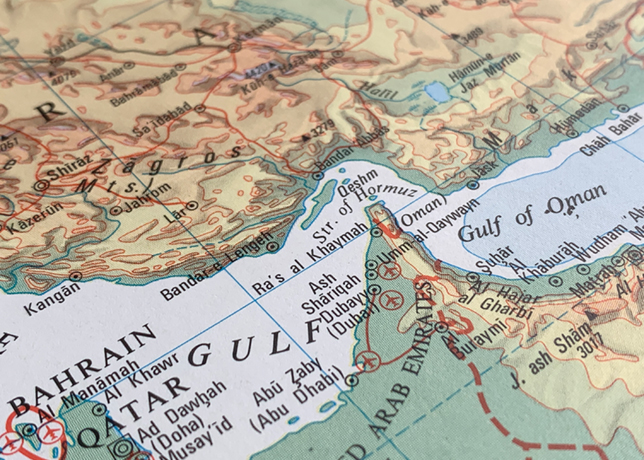
In light of the current US-Iran war and the near-standstill of commercial shipping through the Strait of Hormuz and the Red Sea, what immediate contingency frameworks is ASCO deploying to ensure operational continuity for its Qatari and regional clients?
ASCO is positioning its Doha hub to support the expected increase in regional activity as conditions stabilise.
The focus will be on maintaining visibility, identifying disruption early and coordinating practical alternatives as requirements change.
Supported by our wider international network, our local team will help clients adapt plans quickly, regain project momentum and support the longer-term redevelopment and rebuilding of energy and infrastructure across the region.
Throughout, safety, security and continuity will remain central to every decision.