










































As the international maritime sector seeks robust technical frameworks to evaluate evolving vessel configurations, major shipping stakeholders are advancing novel architectures to integrate renewable propulsion into liquefied natural gas carrier fleets.
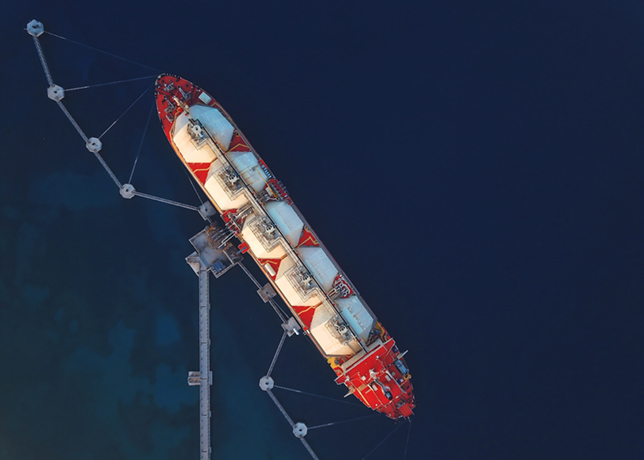
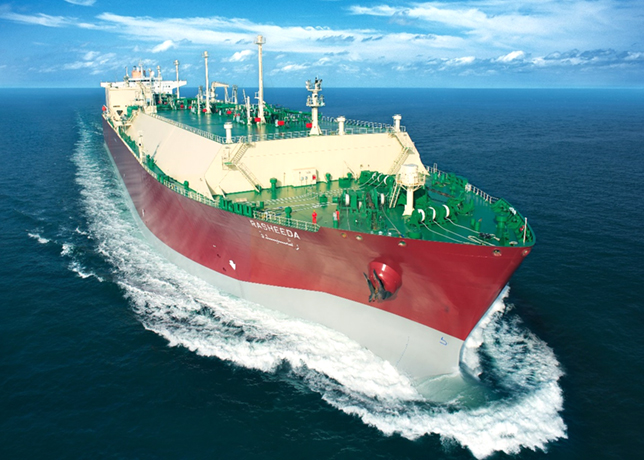
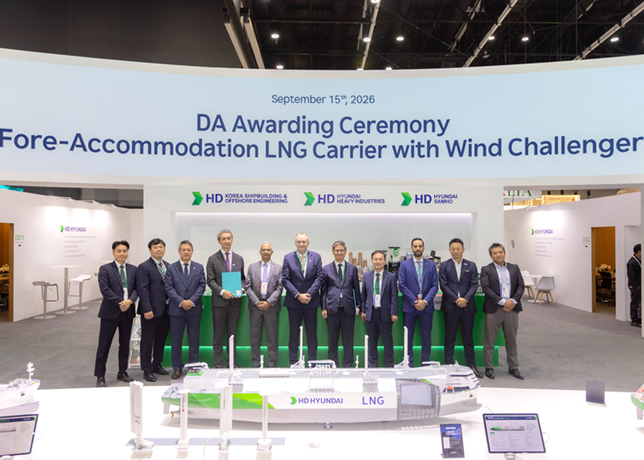
In this regard, Lloyd’s Register (LR) has granted design appraisal for HD Hyundai Heavy Industries’ (HHI) fore-accommodation LNG carrier design incorporating the Wind Challenger wind-assisted propulsion system developed by Mitsui OSK Lines (MOL).
According to Yoshihiko Sugimoto, Executive Officer & CTO, MOL: “This design appraisal represents an important milestone in advancing the practical application of wind-assisted propulsion for LNG carriers.”
The approval confirms full compliance with LR’s Wind-Assisted Propulsion Systems (WAPS) notation requirements for the safe and effective application of mechanical sails on gas carriers.
This technical achievement represents the latest milestone in an ongoing joint development project comprising LR, HHI, MOL, and the Republic of the Marshall Islands (RMI) Maritime Administrator.
The design appraisal builds directly upon the foundational Approval in Principle (AiP) previously awarded by LR at Gastech 2025.
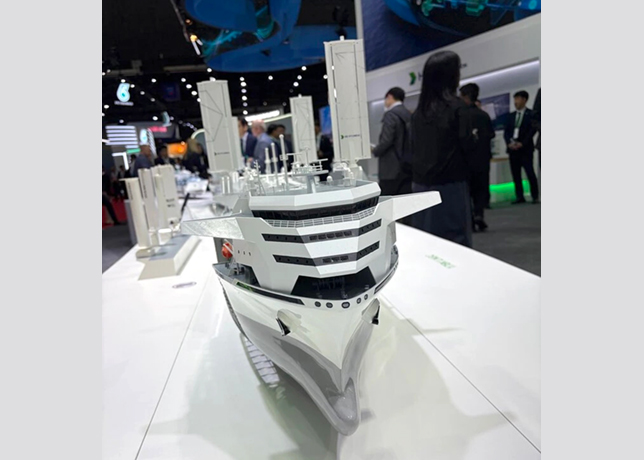
What project partners describe as the world’s first fore-accommodation LNG carrier equipped with a hard-sail system fundamentally alters conventional naval architecture by relocating the accommodation block and navigation bridge to the bow of the vessel.
This forward restructuring establishes an unobstructed mid-to-aft deck space capable of accommodating up to four MOL Wind Challenger hard sails while fully preserving mandatory operational and navigational parameters.
The integration of four hard sails onto a fore-accommodation LNG carrier offers a validated pathway to reduce greenhouse gas emissions during LNG transportation, serving as a model for next-generation, operationally efficient gas carrier designs.