





























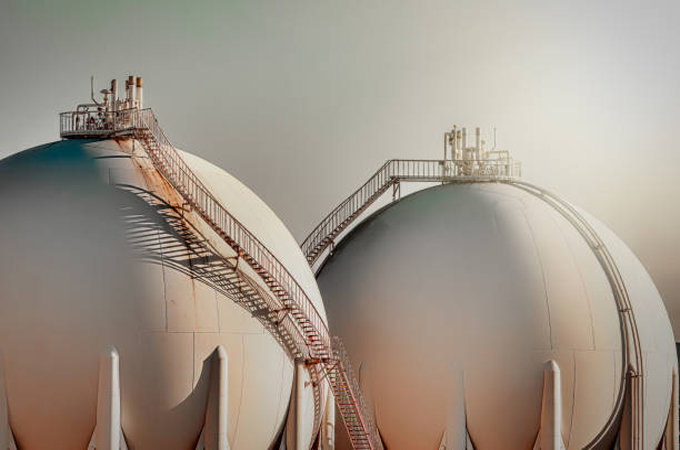
 Image by Haykirdi/ iStock
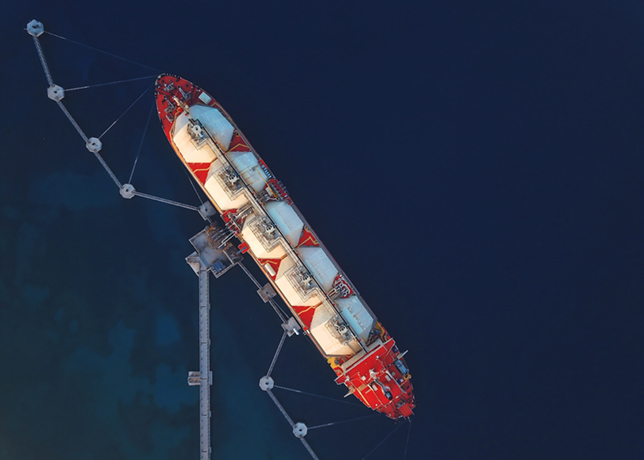
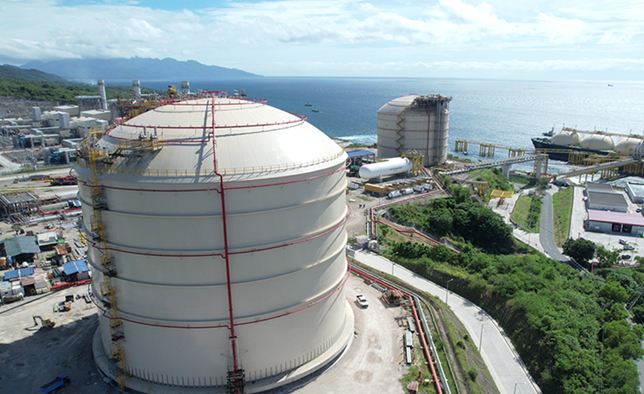
Africa’s LNG and gas sector is entering a dynamic growth phase, driven by expansions of major export projects, the scaling of floating liquefaction capacity by emerging producers, and the commercialisation of large undeveloped gas discoveries.
These developments are guiding the flow of
capital, partnerships, and infrastructure investment across the continent’s
next wave of LNG and gas opportunities.
Grand Tortue Ahmeyim Expansion – Mauritania
& Senegal
Following the achievement of first LNG, the
focus has shifted to Phase 2 of the Grand Tortue Ahmeyim development.
Partners are advancing a low-cost scale-up
that could roughly double liquefaction capacity before 2030 by leveraging
existing floating LNG infrastructure and proven offshore reserves.
With core infrastructure and export routes
already established, Phase 2 represents a near-term growth opportunity with
comparatively lower development risk and significant production upside,
positioning it as one of Africa’s clearest LNG expansion projects.
Yakaar-Teranga – Senegal’s Pre-FID Gas
Anchor
The Yakaar-Teranga discovery remains one of
the world’s largest undeveloped gas resources.
Its commercialisation structure and
domestic-versus-export allocation are still under negotiation, making it a key
pre-FID opportunity on the continent.
The project could support future LNG
trains, long-term gas-to-power supply, or industrial feedstock development.
Its scale and potential make it a major
focus for upstream financiers and infrastructure developers seeking long-life,
scalable gas reserves.
Nigeria’s Domestic LNG & Gas-to-Power
Build-Out
Nigeria is aggressively expanding gas
monetisation through supply growth, LNG projects, and downstream utilisation.
The 2026 gas master plan targets an
additional 1.8 bcf/d, aiming for 10 bcf/d by 2027 and 12 bcf/d by 2030,
supported by over $60 billion in sector investment.
Mini-LNG and small-scale liquefaction
projects are enhancing gas access for off-grid industry, transport, and
distributed power.
For investors, this strategy signals a
shift from export-only LNG toward an integrated domestic gas ecosystem,
creating multiple entry points across the value chain and diversified revenue
streams.
Libya’s Gas Redevelopment Potential
Libya aims to raise gas production to
nearly one bcf/d in the latter half of 2026 through offshore redevelopment and
legacy infrastructure rehabilitation.
The goals are to stabilise domestic
electricity supply and rebuild export capacity.
Improved financing and political conditions
could re-establish Libya as a major Mediterranean gas supplier, presenting one
of North Africa’s most significant, yet undercapitalised, gas investment
opportunities.
Congo LNG – Fast-Track Floating
Liquefaction Growth
The Congo LNG development has rapidly
established the Republic of Congo as a new LNG exporter. Phase 2, operational
since December 2025, added 2.4 million tonnes per year of capacity, lifting
total output to around 3 million tonnes.
Built with floating LNG units and modular
upstream tie-ins, it demonstrates a replicable, lower-cost commercialisation
model with faster timelines than traditional onshore terminals.
Its modular and expansion-ready design
offers investors opportunities across upstream supply, LNG shipping,
processing, and regional gas infrastructure partnerships, creating a clear
pathway into a fast-growing, relatively lower-risk African LNG market.
Collectively, these projects highlight Africa’s evolving LNG and gas landscape, offering diverse opportunities for investment, infrastructure development, and strategic partnerships in both export-oriented and domestic gas markets. -OGN/TradeArabia News Service