








































 Image by Shutterstock
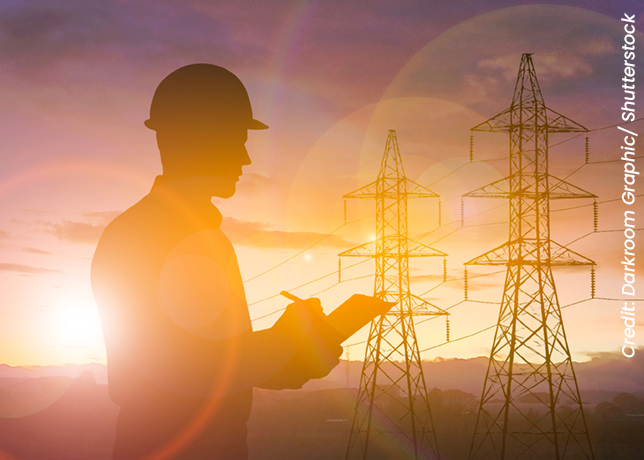
The rapid expansion of artificial intelligence is driving a structural surge in global electricity demand, with data centres emerging as one of the fastest-growing sources of power consumption. Facilities that previously required tens of megawatts are now scaling to 100–200 MW, while hyperscale campuses are increasingly consolidating demand at the gigawatt level, fundamentally reshaping global energy planning.
In Africa, this shift highlights a growing mismatch between
emerging demand and existing infrastructure strategies. While the continent
holds significant energy resources, its planning frameworks remain largely
based on incremental, megawatt-scale capacity additions. However, AI-driven
infrastructure requires far larger, more concentrated and reliable power
systems.
Africa’s current data centre capacity stands at an estimated
300–400 MW, with projections indicating growth to 1.5–2.2 GW by 2030.
Electricity demand from data centres is rising at 20–25% annually and is
expected to reach around 8,000 GWh in the near term, reflecting global trends
where data centre consumption could approach 945 TWh by 2030.
Unlike traditional industrial users, AI workloads require
continuous, high-quality power with redundancy, placing increased pressure on
grid stability and long-term scalability. This is accelerating interest in
coordinated, gigawatt-scale energy and digital infrastructure development,
integrating power generation and data centre investment strategies.
Global benchmarks underscore the pace of change, with
Northern Virginia—the world’s largest data centre hub—exceeding 4 GW of
capacity and adding over 1 GW in a single year amid near-zero vacancy rates.
The issue is expected to feature prominently at African
Energy Week 2026, where discussions will focus on aligning energy planning with
digital infrastructure needs, as reliable power becomes a critical enabler of
AI-driven growth.
“This is
ultimately about aligning Africa’s energy strategy with where global demand is
heading,” says NJ Ayuk, Executive Chairman of the African Energy Chamber. “If
we continue to plan in megawatts, we will struggle to compete in an economy
that is already moving at the gigawatt scale. Building larger, more resilient
power systems is not just about meeting demand – it is about creating the
conditions for investment, innovation and long-term growth.” -OGN/ TradeArabia News Service