



































Bahrain unveils gas project
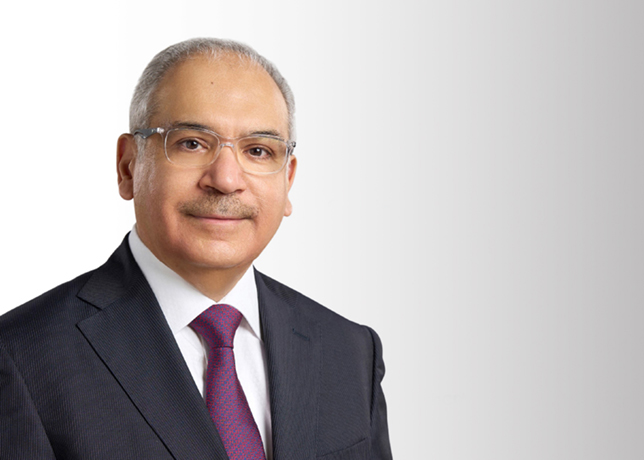
MANAMA: Bahraini oil firm Bapco is embarking on an ambitious project to expand the gas production and distribution system to meet the growing need for power generation at a cost of more than $150 million.
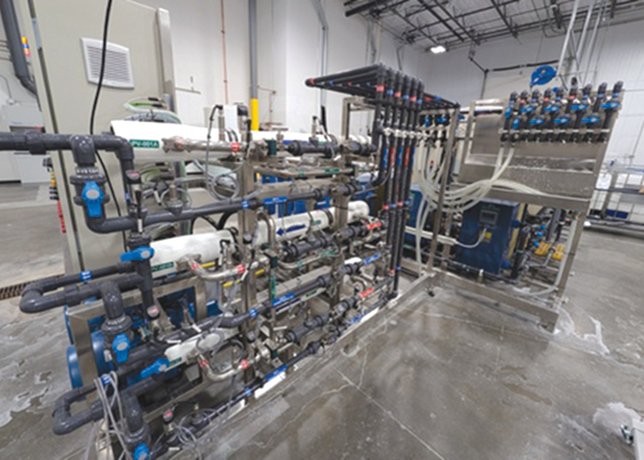
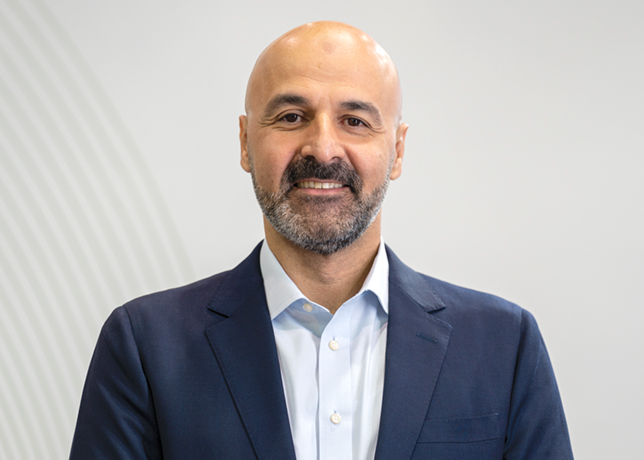
The project involves drilling of eight Khuff gaswells plus the installation of eight gas dehydration units, said company president Dr Mustafa Al Sayed. The company will undertake a major upgrade of the gas distribution network to cope with the increased demand for gas projected for 2010 and beyond.
Sabic awards contracts
RIYADH: Sabic affiliate National Industrial Gases Company (GAS) has awarded two turn-key contracts to the Linde AG of Germany and Linarco Saudi Arabia Ltd to carry out engineering and construction works of two new air-separation units at GAS complexes in Jubail and Yanbu industrial cities.
“I expect production to start at these two new plants by April 2008, each having a production capacity of 3,000 tonnes of oxygen per day,” GAS chairman Ibrahim Al Shuweir said.
Teikoku wins rights
TOKYO: Japan’s Teikoku Oil Co said it has won oil exploration rights in Venezuela.
Teikoku Oil won joint rights with Brazil’s Petroleo Brasileiro SA (Petrobras) to explore the Moruy II offshore block in the Gulf of Venezuela, located 450 kilometers west of Caracas.
Yemen oil income up
ADEN: Yemen earned $2.24 billion from its state’s crude oil exports in the first nine months of 2005, up from $1.64 billion in the same period last year.
Crude oil exports by the government fell to 44.33 million barrels in the nine months to September from 46.13 million barrels a year earlier, a central bank report said.
Inpex gets loan for Kashagan
Singapore: The Japan Bank for International Cooperation has signed an agreement to loan Inpex up to $649 million, which will go towards the Japanese upstream player’s equity financing of the multi-billion-dollar Kashagan offshore oil development in the Kazakhstan-controlled area of the North Caspian Sea.
JBIC said oil production would begin in 2008 and after phased development, gradually rise to a peak of 1.2 million bpd. Kashagan is said to be the largest oil field discovered in the world in the past 30 years, the bank noted.
Pearl profit soars
SINGAPORE: Singapore oil firm Pearl Energy Ltd posted an over 50-fold surge in quarterly profits, boosted by strong crude oil sales and higher prices.
The firm, majority owned by Indonesian-controlled ANJ Energy, said that its third-quarter net profit was US$7.47 million, up from $143,000 in the year-earlier quarter. Net revenues increased more than 400 per cent to $63.12 million.
New storage tank
SINGAPORE: China’s Guangdong LNG terminal currently under construction has obtained approval to add a third storage tank of 160,000 cubic metres, bringing the terminal’s total storage capacity to 480,000 cubic metres, project leader China National Offshore Oil Corp announced.
The Guangdong terminal is China’s first LNG import facility and is scheduled to start test operations in June 2006.
Bonds planned
JAKARTA: Indonesia’s state oil company PT Pertamina is planning to raise $500 million in bonds next year to finance medium and long-term projects.
“It is likely that we will issue $500 million in bonds in 2006. We have needs to finance our medium- and long-term projects which cover upstream and downstream operations,” Finance director Alfred Rohimone said.
Musi unit to shut
JAKARTA: Pertamina plans to shut a 30,000 bpd crude distillation unit (CDU) at the Musi refinery for maintenance in April. Pertamina has five CDUs at Musi with total combined capacity of about 126,000 bpd.
Shell share in consortium 3pc
Istanbul: Royal Dutch Shell holds only a three per cent stake in the consortium which acquired a 51 per cent controlling stake in state oil refiner Tupras for $4.14 billion, according to statement filed by the partners to Istanbul bourse.
Under bidding documents, Turkey’s Koc Group and its subsidiaries were to hold a 90 per cent shares of the Tupras stake with Shell holding the remaining 10 per cent.
Talks delayed
MUMBAI: Talks between oil major BP and India’s Hindustan Petroleum Corp Ltd (HPCL) to finalise a joint venture proposed last month have been prolonged as the two differ on its structure.
The two companies had signed a letter of intent on October 13 to form an equal joint venture covering refining and marketing, but they were to finalise a binding, detailed agreement within a month.
Petkim makes profit
ANKARA: Turkey’s largest petrochemicals producer Petkim swung to a profit in the third quarter as production resumed in July after a seven-month shutdown for expansion and maintenance work in some factories.
Partly state-owned Petkim made a net profit of 12.18 million new lira ($8.96 million) in the third quarter.
Maintenance due
LONDON: Libya’s 120,000 barrel per day (bpd) Zawia refinery will shut for maintenance in September next year, a European-based oil trader familiar with the country’s operations said.
The refinery’s two main units will go down one at a time in the turnaround work, which is conducted every three years.
Explosions kill 5
HONG KONG: PetroChina Co said a series of explosions at its No 101 Chemical Plant in Jilin city resulted in five people dying in the accident.
PetroChina said the explosions happened at an aniline facility of a dianil plant at Jilin Petrochemical Co.
Profit plunges
Seoul: South Korean refiner and petrochemical producer S-Oil reported a 46 per cent on the year plunge in its third quarter net profit to $104.7 million due to weak refining margins and maintenance shutdowns.
Cairn finds more oil in Rajasthan
London: British firm Cairn Energy said the latest exploration well on its prolific Rajasthan play in northwest India found a number of oil bearing zones.
Cairn said the N-R-4 discovery well, drilled 6.5 km west of the Vijaya and Vandana fields, encountered a 38 million oil bearing reservoir in similar units to those seen at Vijaya and Vandana. Based on initial estimates, the oil in place for the N-R-4 discovery is between 100 and 400 million barrels.
Lanka plans bids
Singapore: Sri Lanka aims to invite bids in early 2006 for exploration of oil and gas resources in the Gulf of Mannar off the country’s west coast.
Barring some haphazard exploration activities in shallow waters along the coast in the 1970s and 80s, which yielded nothing, the south Asian country has seen close to nil upstream activity.
Repsol to invest $6bn
Buenos Aires: Spanish firm Repsol YPF plans to invest $6.5 billion in Argentina between 2005 and 2009, with three-quarters of it on exploration and production to boost reserves, said Enrique Locutura, the company’s general director in Argentina, Bolivia and Brazil.
Early this year, the company said it was drilling 750-800 wells a year to avert a natural decline in maturing fields and exploring or planning to explore in producing basins and higher-risk areas, particularly offshore.
LUKoil output to rise
Moscow: Russian oil major Lukoil expects oil production to increase by five per cent next year and gas output will “double” as the company connects a gasfield to the national pipeline network.
Production growth is expected to be much higher in 2006 than in 2005, the company’s vice-president Leonid Fedun said.
Mauritania signs deal
Algiers: Mauritania and Germany’s Wintershall signed an oil production sharing-agreement for two blocks in the Taoudeni basin.
The blocks cover an area of 68,000 sq km in northeastern Mauritania, located in southwest region of the country. Mauritania is set to become an oil producer in the first quarter of next year.
Syria aims to find more crude
MANAMA: Syria’s energy priority now is to find new oil reserves as current crude oil production from existing oilfields continues to decline, Middle East Economic Survey reported.
Syrian Oil Minister Ibrahim Haddad said in an interview with the newsletter that the primary challenge facing Syria’s energy sector is to maintain and boost oil production.
“We hope that our production will increase as a result of the new contracts for development and exploitation that we expect to sign,” he said.
Exports set to rise
NEW YORK: Iraqi Deputy Prime Minister Ahmad Chalabi said the country could return its oil exports to pre-war levels by mid 2006.
“I expect we can do it by the middle of next year. We can increase by 500,000 barrels quickly if we de-cap the capped oil wells,” Chalabi, the head of the Iraq’s Energy Council, said in New York. He said in Basra alone 200,000 barrels per day (bpd) of production could be easily de-capped.
Soon after the US-led invasion of Iraq in March 2003, Kuwaiti and US firefighters capped some oil wells that had caught fire.
OMV makes oil find
LONDON: Austria’s OMV said it made a fourth oil discovery in its Block S2 (Al Uqlah) in the Shabwa province of central western Yemen.
The Al Nilam-ST1 well, drilled to 3,090 metres, encountered a 430m oil column which tested at a stable flow rate of 1,800 bpd. A secondary target tested at a flow rate of 200 bpd.
The find follows the August Habban-1 well which flowed at 500 bpd in tests.
Unit shut down
KUWAIT: Kuwait’s 460,000 bpd Mina Ahmadi refinery has shut down the first of two 36,000-bpd fuel oil units for planned maintenance works due to last 25 days each.
Assad Al Saad, the executive assistant to the managing director at Mina Ahmadi, said the second atmopheric residue desulphuriser (ARD) will undergo similar maintenance works after the first unit is back onstream.
Quick takes
Exxon expects pipeline progress
CALGARY: A C$7 billion ($5.9 billion) Canadian Arctic gas pipeline will likely go ahead, despite costly delays in finalising land access deals with native communities, ExxonMobil Corp’s president said.
The Mackenzie Valley pipeline, which would carry badly needed natural gas supplies to southern markets from the Beaufort Sea coast, has bogged down over access and benefits issues and the partners’ inability so far to get a royalty and tax deal.
“My expectation is the Mackenzie pipeline will go forward. I think there’s been good progress made in dealing with a number of long-standing issues ... regarding aboriginal claims and benefits – the compensation that they expect,” ExxonMobil president Rex Tillerson said. ExxonMobil is a partner in the pipeline proposal and majority owner of the project’s leader, Imperial Oil Ltd.
TNK-BP halts construction
MOSCOW: Russian oil company TNK-BP has halted construction on a $175 million export terminal in the Listino Bay near St Petersburg, the Vedomosti daily reported, citing a company official.
TNK-BP, which is 50 per cent owned by BP, believes high export duties on crude make exporting refined products more advantageous for the time being, Sofia Katkova, the company’s director of transport development and infrastructure, told the paper. The terminal was to handle mainly crude.
India sees $33bn crude imports
MUMBAI: India’s crude import bill in the fiscal year ending March is seen reaching 1.5 trillion rupees ($33 billion) compared with 1.2 trillion a year earlier, said Sushil Tripathi, the country’s oil secretary.
Asked if there were plans to raise retail petrol and diesel prices, he said: “I don’t think there is a need to increase prices.”
Pemex tax reforms approved
MEXICO CITY: Mexico’s Energy Department applauded a Senate decision to approve changes in tax rules for state oil monopoly Petroleos Mexicanos, or Pemex, that will leave the company with more money for exploration and production.
Pemex currently surrenders most of its income to the government in the form of taxes, leaving it little money for investment.
ENVIRONMENTAL EYE
UK to require 5pc biofuel levels by 2010
London: The UK government has announced plans to require biofuels to make up five per cent of all UK fuel sales by 2010, up from 0.25 per cent currently but still below the EU’s biofuel penetration targets.
The department for transport said it had now completed a feasibility study on introducing a “Renewable Transport Fuels Obligation” (RTFO) designed to promote the uptake of renewable fuels which are lagging the UK’s EU partners.
The RTFO will place a legal obligation on oil companies, importers and other fuel suppliers to source five per cent of their road fuel sales from renewable energy sources or buy RTFO credits to meet any shortfall.
Under the scheme, oil companies will receive tradeable certificates showing how much biofuel they have sold in a given period. Most biofuels come from crops like oilseed rape (biodiesel) and wheat and sugar cane (bioethanol) which are mixed with gasoline and diesel and run in ordinary cars.
“Taking action to tackle climate change is essential,” transport secretary Alistair Darling said in a statement.
“The Renewable Transport Fuels Obligation I am proposing is predicted to save around one million tonnes of carbon dioxide emissions in 2010 – the equivalent of taking one million cars off the road.”
The RTFO plans follow a public consultation last year which showed the majority of stakeholders favor the use of compulsory biofuel levels in addition to tax incentives to boost the use of biofuels.
The government’s feasibility study concludes that, assuming no major complications to the scheme, an RTFO could be introduced by 2008. The UK has been offering a 20 pence per liter duty incentive on biodiesel for some time and the duty break was extended to bioethanol from January 1, 2005.
But biofuels sales in the UK will be still be way below EU target levels by the end of 2005, despite expectations that biodiesel and bioethanol sales will jump 10-fold this year to about 136 million litres, or 0.3 per cent of total sales.
