


















THE South Rub al-Khali (Srak) joint venture remains committed to carrying out tricky sour gas exploration and shooting a new year-long seismic programme in Saudi Arabia’s vast Rub al-Khali desert, undeterred by three noncommercial wells and the announcement that French major Total has withdrawn from the consortium.
Srak – now made up solely of Royal Dutch Shell and Saudi Aramco – is due to spud its fourth well in Block 82, Kidan-6, around 50 miles from Saudi Arabia’s giant Shaybah oil field and 50 miles from the border with the United Arab Emirates, before the end of the month, sources familiar with the project said.
This will be the first exploration for Srak in Area 1, which also contains blocks 83, 84 and 85. All Srak drilling to date has been in Area 2, where it turned up three dry wells in a row.
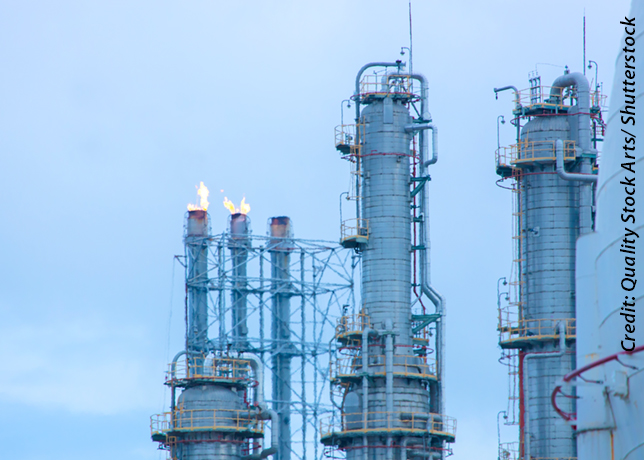
Block 82 is termed “extremely challenging,” with dangerous levels of potentially deadly hydrogen sulphide (H2S) gas, along with high temperature and pressure levels. That makes the gas reservoirs “very similar” to the Shah sour gas field across the border in the UAE, industry sources said.
Costs will likely be high. Estimated development costs in the discovered Shah field, for which US ConocoPhillips is considered the front-runner to win the development deal, are $4-$5 per million Btu. Moreover, Srak plans to drill deep – Kidan-6 is targeting 17,000 feet — increasing the chance that more complicated reservoirs will drive up costs.
If Srak makes a discovery, it would get just 75¢/MMBtu for the gas under the terms of the upstream agreement signed with the Saudi oil ministry in July 2003, and the consortium would need to find condensate in sufficient quantities to make the development commercial. But industry sources say the reserves around Shaybah are thought to be drier gas.
On the plus side, large gas deposits in Block 82 were revealed during Aramco’s drilling programme in the 1960s, 70s and 80s. Aramco drilled eight wells in the block, including Kidan 1-5, Kahla and Suhul, but moved on after finding gas with high levels of H2S but no oil.
Srak will likely spud a fifth well in Block 82, but could then turn its attention back to Area 2. By mid-2008, the venture should have gathered 1,864 miles of 2-D seismic data, which it began shooting in January in the northeast corner of Area 2. The seismic will take around a year to shoot.
That would push Srak up against the expiration of its concession agreement in January 2009. Srak applied for an extension in the summer, but has yet to hear back from the oil ministry. Srak is reportedly seeking an 18-month extension to allow it time to analyze the best places to drill its next three wells after Kidan-6.
Srak will have to relinquish 50 per cent of its 81,080 square mile concession by the end of the exploration period, and — provided it completes its work programme — will have the option of signing up for a second exploration programme.
Following Total’s exit, Shell has 40 per cent of the Srak consortium and Aramco 30 per cent. They have yet to decide how to split the French major’s stake.
The three other ventures exploring for gas in the Rub al-Khali are led by Russia’s Lukoil, China’s Sinopec and Italy’s Eni with Spain’s Repsol YPF.


