














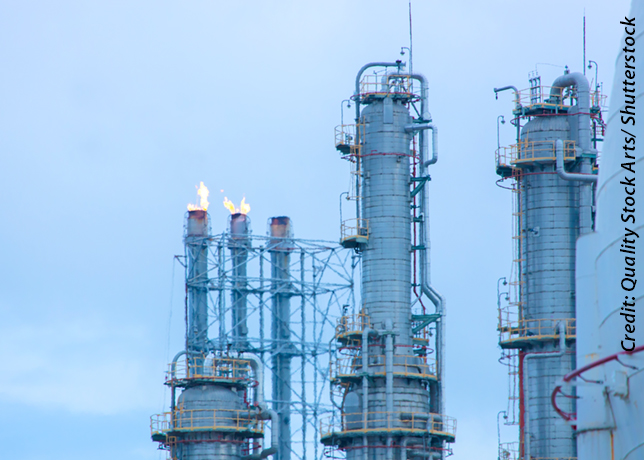








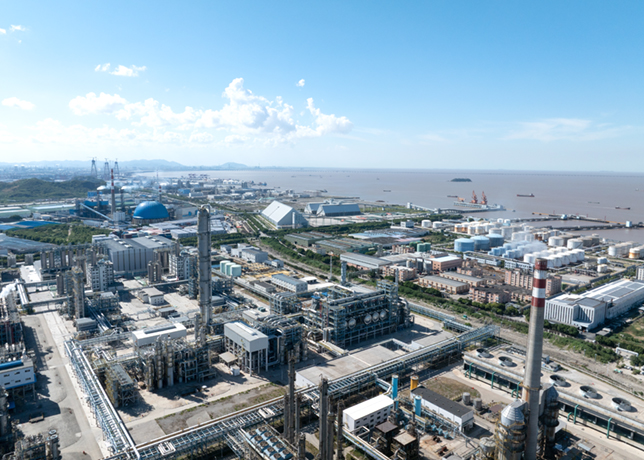



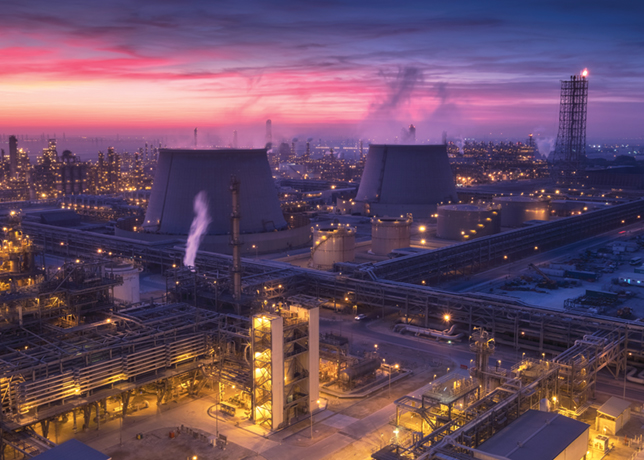

SAUDI Arabia’s external economic performance is highly dependent on oil exports, which account for around 85-90 per cent of total exports.
The strengthening oil price has helped to markedly improve the trading surplus.
Exports since 1998 has grown from $39 billion to $210 billion in 2006 and are further more anticipated to touch $240 billion by the end of 2007. On the other hand imports has also picked up during the period from $28 billion to $137 billion.
As a result of such an extraordinary performance, the country has remained in a surplus situation which increased to $143 billion in 2006. Increasing petrodollars has raised the liquidity levels, ignited inflationary pressure and has spurred a new wave of Saudi investment in foreign countries.
Total value of the kingdom’s merchandise exports stood at $211 billion in 2006 compared to $180 billion in 2005, denoting a rise of 17 per cent. Oil exports constituted 90.2 per cent of the total. The kingdom’s oil exports (including bunker oil) were estimated at $189 billion in 2006 as compared to $161 billion in the preceding year, registering a rise of 17 per cent. The rise was attributable to an increase in the average price of Arabian Light crude oil by 21.7 per cent from $50.15 a barrel in 2005 to $61.10 a barrel in 2006, but the kingdom’s production of crude oil declined by 1.6 per cent during the same period.
Preliminary data on oil exports by type indicate that crude oil exports increased by 17 per cent from $137 billion in 2005 to $160 billion in 2006.
After oil, chemical products remained the second largest contributor to the exports, however in dollar terms the amount was $11.01 billion. Exports of base metal and products increased by 23 per cent in 2006 to $1.64 billion as against $1.33 billion in the previous year.
Saudi Arabia launched the Saudi Export Programme of the Saudi Fund for Development in 1999 to provide finance and insurance necessary for the development of national non-oil exports to diversify the sources of national income.
In June 2003, the Saudi Exports Programme started to execute insurance of credit for non-oil exports. It aims at helping exporters to overcome difficulties of receiving export proceeds due to commercial reasons stemming from an importer’s failure to pay his due amounts or because of political reasons related to the importer’s country hindering him from payment.
Under the programme, a range of various export finance and credit insurance operations amounting to SR3.3 billion were executed during 2006, rising by 161.5 per cent over the preceding year.
The kingdom’s imports of goods (CIF) in 2006 increased by 11 per cent to $66 billion against $59.4 billion in the preceding year, recording the highest level ever in the kingdom’s imports which indicates the high economic activity in the country.
According to detailed data on the value of the kingdom’s imports in 2006, imports of machinery, electric appliances and equipment occupied the first position with a relative share of 26 per cent and a rise of 19 per cent over the preceding year.
Imports of transport equipment ranked second, constituting 19 per cent of total imports, rising by 2.4 per cent over the preceding year. The improvements in these two categories indicate increased investment activity as those imports include capital goods.
Imports of ordinary metals and their products occupied the third position with a relative share of 15 per cent and a rise of 58.3 per cent. Imports of chemical and metal products came in the fourth position, with a relative share of 13 per cent and a rise of 6.7 per cent.
The kingdom’s imports by origin show that imports from the largest sixteen exporting countries to the kingdom increased by 11.5 per cent to $48 billion during 2006. Moreover, their relative share in the kingdom’s total imports went up to 72 per cent from 71 per cent in the preceding year.
Imports from the US amounted to $9.76 billion came first with a relative share of 14.7 per cent of the kingdom’s total imports, increasing by 11.2 per cent over the preceding year. Imports from China came second ($5.8 billion) with a relative share of 8.7 per cent, increasing by 31.4 per cent. Imports from Germany ranked third at $5.4 billion.
Saudi Arabia, being one of the major oil exporters, continues to enjoy positive trade balance.
But being dependent on energy exports make it dependent on oil prices and production levels, which have been a boon for the economy, in recent past. Since 2003, the trade balance has recorded strong growth as the oil price went up and the country was operating at near-100 per cent capacity.
Oil exports as proportion of total export of the country has remained in the range of 89 per cent-90 per cent in the last five years. Although the country is looking to diversify its economy, it also has plans to increase the oil production capacity from its current 11mbpd to 12.5mbpd in 2009 to meet demand. The government projects that its trade balance for the year 2007 will remain at $104 billion – imports at $137 billion and exports at $240 billion.
Saudi Arabia’s economy is booming. The kingdom’s nominal gross domestic product rose 5.7 per cent in 2007. It’s not the rate of growth that’s the most impressive – it’s the sheer scale of Saudi Arabia’s income and its audacious spending plans.
In 2007, Saudi Arabia predicted its total revenue would rise to $106 billion (SR400 billion). That figure proved – as in previous years – to be wildly conservative.
In fact, the Kingdom was left with a surplus $47.6 billion (SR178.5 billion), and that’s even after spending more money than it had planned.
Forty-odd billion might sound like a staggering surplus, but it’s only the third highest in Saudi Arabia’s history and represents a drop of 62 per cent on the previous year.
There are no firm figures yet on how much money Saudi Arabia made from exporting oil in 2007. SABB estimates a figure in the region of $165 billion (SR618 billion), a “staggering” figure “more than 118 per cent of the UAE’s GDP in 2006 and four times bigger than the size of Qatar’s GDP during the same year.”
Some fear that Saudi Arabia’s reliance on the oil industry leaves it particularly vulnerable to a downturn in the market.
However, Saudi Arabia’s budget forecasts are based on an oil price of $45 per barrel – around half the current market price – so there’s widely thought to be plenty of slack in the system.
This is not the first oil boom to bring a flood of money to the desert kingdom.
The 1970s also saw a sharp rise in the price of crude, followed by heavy spending and substantial debt. This time Kingdom says it’s putting its money to good use, building economic cities and investing in education and healthcare to assure the future of its young population.
Despite its vast wealth, unemployment is still relatively high in Saudi Arabia, and is rising. Ratings agency Capital Intelligence recently noted that the Kingdom’s challenge to create jobs is exacerbated by demographics – its population is expected to grow by 40 per cent by 2020. “Saudi Arabia will need to generate faster, self-sustaining private sector growth to prevent potentially serious social and fiscal strains emerging in the long run,” it says.
Inflation is also a concern. The cost of living hit a 27-year high of seven per cent in January, and is unlikely to fall any time soon, according to the vice governor of Saudi’s central bank. Muhammed Al-Jasser says “present inflationary pressures will likely continue in 2008 until the supply response in the real estate market catches up with demand.”
Dropping the dollar peg has been suggested – by none less than former US Federal Reserve chairman Alan Greenspan – that dropping the dollar-peg would lead to a “significant” fall in inflation in Saudi Arabia, and other Gulf countries.
It’s an option that Saudi Arabia has refused to consider. Addressing the Shura Council – a body that advises King Abdullah – Central Bank governor Hamad al-Sayyari said this week that “easy solutions can be catastrophic in the long term.”
The Saudi central bank is confident that government measures to boost welfare payments and subsidies and to restrict lending will reap rewards in coming months.
Longer term, it’s planning to build a series of economic cities to provide jobs, homes and a future for its expanding population.
The largest of the Kingdom’s seven new economic cities is named after the man behind Saudi Arabia’s grand vision, King Abdullah.
King Abdullah Economic City (KAEC) is being built from scratch, a city in the desert north of Jeddah the size of Washington DC. The $100 billion plan includes a residential zone, an education zone, an industrial zone, central business district, sea port and resort. Two million residents are expected to live there, with one million of those employed in local jobs.
If all goes to plan, KAEC will be completed by 2016. It’s an ambitious task with a relatively short timetable, but in the end, the kingdom hopes it will stimulate regional growth and employment.


