


































IN 1938, after five years of frustrated searching, the American geologists of Standard Oil of California (Socal), decided that Dammam Well No 7 should be drilled “a little bit deeper”.
This decision taken in a mood of exasperation at the elusiveness of the treasure beneath the rock strata was to lead to the discovery of oil in vast quantities. Thus a new era in the Eastern Province and the kingdom as a whole began.
Dammam Well No 7 continued to produce in its modest way until 1982, and now stands as a monument, touchingly small in scale, to the opening up of the world’s largest known oil reserves.
Today the Eastern Province’s oilfields, together with the new fields around Riyadh, are thought to contain reserves of 260 billion barrels, or over a quarter of the total known reserves in the world. This figure is constantly being revised upwards as new fields are discovered and extraction techniques are improved. The kingdom’s economic prosperity, its leading role in Opec and its global economic influence, stem directly from the sheer volume of “black gold” lying beneath the desert and sea of the Eastern Province.
The discovery of the Eastern Province’s oil wealth came at an opportune moment, just as the newly formed Kingdom of Saudi Arabia was establishing the apparatus of statehood. The first government agencies were in the process of being formed, Riyadh’s early expansion as the capital was under way, and funds were urgently required for the development of the basic infrastructure which would enable the young country to be governed effectively. It was the oil wealth of the Eastern Province which was to provide the means for the kingdom to transform itself, in little more than forty years, from a traditional, materially backward region of the Middle East into the prosperous modern society of today.
With geological hindsight there seems an inevitability about the discovery and development of oil resources in Al-Hasa. Today it seems inconceivable that there should ever have been doubts about their existence there. Yet, ironically, exploration got off to a decidedly shaky start. As early as 1922 Ibn Saud had been alerted to the possibility of oil by the appearance at the Uqayr Conference of Major Frank Holmes, an ebullient New Zealand mining engineer who was to play a crucial role in the birth of the Gulf oil industry. This resulted in the granting of a concession to the Eastern and General Syndicate to explore for oil. However, Eastern and General failed to interest any prospectors, and their concession lapsed in 1927. This is one of the most famous lost opportunities of international commerce yet the decision was reasonable, enough given the state of geological knowledge at the time, and the commitments of oil companies in Iraq and Iran.
Holmes had better luck on Bahrain. Here he managed, in 1928, to interest an American company, Standard Oil of California, in taking over Eastern and General’s concession. This led, in 1930, to the formation of the Bahrain Petroleum Company, and the discovery of oil on Bahrain in 1932. Socal’s geologists were quick to notice that geological formations on the Arabian mainland bore a striking similarity to those on Bahrain. By 1933, Socal had entered into negotiations in Jeddah with King Abd Al-Aziz for preliminary investigations and a concession in the Eastern Province. The result was the historic Concession Agreement, drafted by Lloyd Hamilton of Socal, and signed by him and Shaykh Abdullah Sulayman, the Finance Minister in Jeddah, on May 29th 1933.
In November 1933 the concession was assigned to a specially created subsidiary of Socal, the California Arabian Standard Oil Company (Casoc). In 1936 The Texas the Eastern Province.
Company (later Texaco) took a half share of Casoc. This was the company whose name was to be changed, in 1944, to Aramco, the Arabian American Oil Company.
Casoc appointed the Gosaibi brothers as its agents in Al-Hasa, and set up rudimentary facilities at Hofuf and Jubail, then a small fishing village. The first geologists stepped ashore in September 1933, and at once began mapping and prospecting. They soon confirmed the Dammam Dome as a geologically promising feature, and in 1934 decided to test drill. A camp was established on the Dame, near Jabal Dhahran, its most prominent feature. Later the camp became known simply as Dhahran. Equipment was imported from the US into a tiny fishing settlement on the coast called Al-Khobar, just south of the small town of Dammam.
Such were the beginnings of the major demographic changes in the Eastern Province which mark the modern era: the shift. of population density away from the traditional oases of Al-Hasa and Qatif.
This was the heroic age of prospecting in Saudi Arabia. It has given the oil business some of its most renowned figures Miller, Henry, Hoover, Kerr, Mountain, Steineke and Ohliger among the Americans, and, among the locals, Khamis ibn Rimthan, the legendary Ujmani guide, Abd Al-Hadi ibn Jithina of the A1 Murrah, and Salim Aba Rus. Working together, these men fanned out through the Eastern Province, mapping and prospecting as they went. In 1934 they were joined by a reconnaissance aircraft, which revolutionised the rate of their investigations.
These pioneering American geologists and engineers were hardy, resourceful characters who were used to achieving their ends with the minimum of means, improvising as necessary. When they arrived they knew next to nothing of the alien culture in which they found themselves. But they were forthright, adaptable and tough qualities which they shared with their hosts, and which seem to have inspired a mutual respect. And there was another factor which the Saudis found refreshing: involvement with Casoc and its parent Socal did not, in those days, entail the political dimension which involvement with the British oil companies of the region would have carried.
Between 1935 and 1938 ten wells were drilled into the Dammam Dome. The results failed to confirm expectations. Thus the decision was taken, on Max Steineke’s advice, to take Well No 7 deeper still, into the strata known as the Arab Formation. In, early March 1938 oil began to flow in commercial quantities, at a depth of 1,440 metres. Saudi Arabia had entered the oil business.
This breakthrough was the signal for a major influx of Casoc personnel into the Eastern Province. More accommodation was built at Dhahran, construction began of an oil port next to deep water at Ras Tannurah, where the Ottoman government had once maintained a coating station, and smaller shipping facilities were developed at Al-Khobar. Local labour was recruited and Casoc initiated the process of training a Saudi workforce a commitment whose longterm results can be seen today in the largely Saudi-ised management and workforce of Saudi Aramco. More men meant more prospecting, and Casoc’s geologists, under Steineke’s direction, began probing the secrets of what were to become the Abqaiq and Abu Hadriya oilfields. By 1940 there were 435 Americans, including some wives and children, together with 3,300 non-Americans, chiefly Saudis.
In these pre-War years the Americans developed a flexible, helpful relationship with the Saudi government. The government in the 1930s lacked both management and technical skills, and regarded Casoc as a friend which could set up and run big projects for it. Casoc responded: hospitals, public health programmes, the drilling of water wells agricultural projects and transportation all received vital help from Casoc and after the War Aramco was to continue the tradition on a larger scale.
World War II and after
During 1940-41 Casoc operations were run down because of wartime difficulties. By 1944, however, the lull had been brought to an end by expanding demand for oil for the Allied war effort, and the increased safety of the sea lanes. Casoc was renamed Aramco, expansion was set in hand, and new personnel arrived.
By 1945 a new refinery had been built at Ras Tannurah, together with storage tanks, loading lines, a T-shaped pier with tanker berths, and a submarine pipeline to Bahrain. Oil production leapt yearly, from below 20,000 bpd before 1944, to 500,000 bpd in 1949. The first wells were sunk into the huge Ghawar oilfield, later found to be the world’s largest single onshore reservoir. Prospecting continued apace, into the Empty Quarter and the Gulf, where the first offshore field, Safaniyyah, was discovered in 1951.
From now until the 1970s, annual production steadily increased: in 1958 it reached 1m bpd; by 1967 it had passed the 2.5m bpd mark. In an age of small tankers, Aramco cast around for new ways to export such volumes. In the late 1940s, it was decided to proceed with the Trans-Arabian Pipeline. Completed in 1950, this “long steel shortcut” took oil from the Eastern Province to the Mediterranean port of Sidon; despite the political upheavals of the region, its operations continued until the early 1980s.
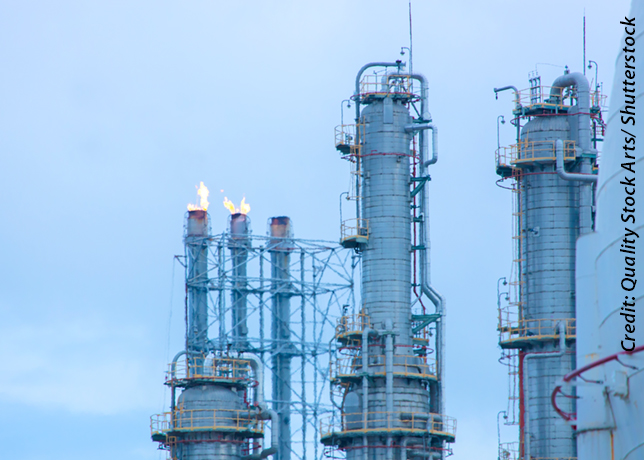
In the early days, the production of Saudi oil was a relatively simple business. Crude was produced from wells, taken via a network of pipelines to storage tanks on the cost, and exported. Little was refined at home, and associated gases were burnt off – which, in a less environmentally aware world than today, was normal practice, despite the waste of a potentially valuable resource. It was only as uses and markets for this gas emerged, that Aramco developed the idea of the Master Gas System to collect and process it a major undertaking which was launched in the 1970s.
The transformation of the company into the world’s largest oil producer involved, in 1948, a widening of its ownership: Exxon and Mobil took 30 per cent and 10 per cent respectively, 30 per cent each remaining with Socal and Texaco. So it remained until 1973, when the Saudi government acquired a 25 per cent interest, later increased to 60 per cent in 1974 and, in 1980, to 100 per cent.
Less than fifty years after Casoc’s formation, this company, now known as Saudi Aramco, was being run by the sons and grandsons of a traditional, largely trible people. The Saudi element was vital from the start, and was encouraged by Aramco’s vigorous training programmes. By the 1950s general schooling was also available for company employees who, as their education skills increased, rose steadily to more responsible positions. By 1957 Saudis already made up 70 per cent of Aramco’s 18,325 employees. By 1967 they held 57 per cent of the company’s 1373 managerial or supervisory posts. Employees were sent abroad on scholarships for further training. In 1963, the University of Petroleum and Minerals was established as a college at Dhahran, being given university status in 1975. Today, as the King Fahd University of Petroleum and Minerals, its student enrolment stands at some 14,000, and it is at the cutting edge of research into new technologies for the oil industry. As a source of professionals to man the nation’s industry its reputation is unrivalled.
In addition, Aramco ran a home ownership scheme to enable employees to build their own houses, and encouraged employees to set up in business on their own. In the 1950s and 1960s the local economy was much assisted by Aramco departments the Local Industrial Development Division, and the Agricultural Assistance Division specifically set up to foster its growth. Some of the bestknown names on the Saudi business scene, such as Bin Laden, originated in this way.
The development of oil as an export commodity had an inevitable effect on the economy and culture of the Eastern Province as a whole. In a generation its economic base was to be transformed. Its absorption into the global marketplace had an enormous and continuing impact on the horizons and expectations of its people.


