


























OVER the past decade, Saudi Aramco has grown from mainly an oil and gas producing company to an integrated company with substantial shipping and refining assets.
Saudi Aramco today is the world’s largest oil producer and sixth in refining capacity. It is committed to ensuring that Saudi Arabia will be self-sufficient in meeting domestic demand for refined products and natural gas well into the next century.
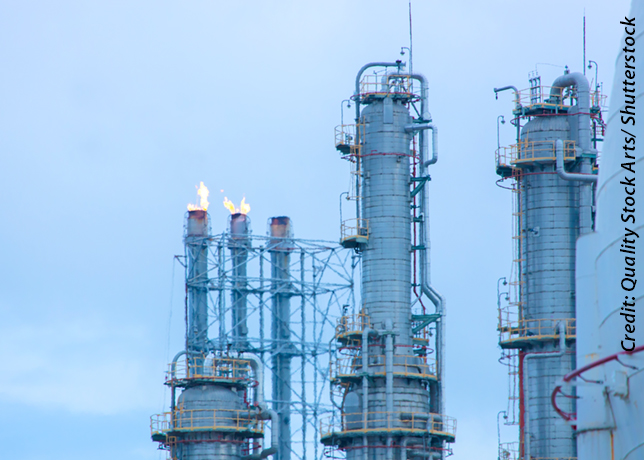
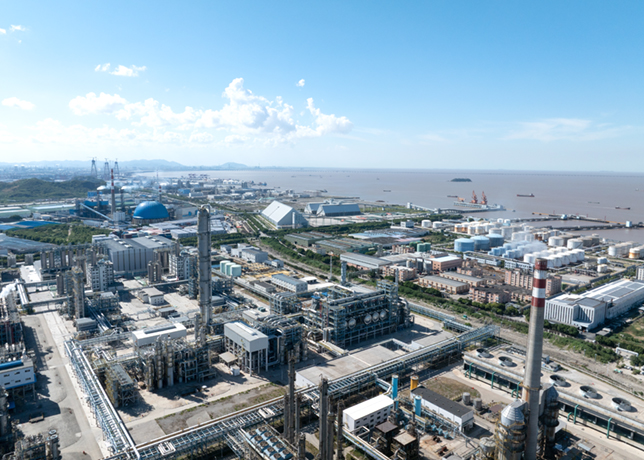
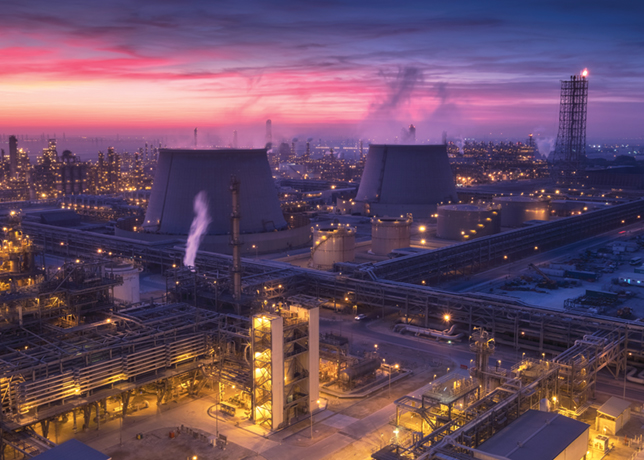
The main issues in refining are the need to meet increasingly stringent environmental requirements while operating efficiently and profitably. Refining upgrades have been undertaken with Saudi Aramco’s joint venture partners in the United States and Korea, and are planned in the Philippines and in the Kingdom of Saudi Arabia. A major upgrade is under way in the kingdom at Ras Tanura, the country oldest refinery located on the east coast.
Since 1989 Saudi Aramco has diversified and integrated its operations through strategic joint venture alliances with leading refining and marketing companies in the company’s principal crude oil markets. Through such alliances, Saudi Aramco benefits from the management expertise, market strength and experiences of its joint venture partners. To these alliances Saudi Aramco brings its strengths as the world’s largest crude oil producer and a major international refiner.
Saudi Aramco operates five wholly owned domestic refineries at Ras Tanura, Rabigh, Yanbu, Riyadh and Jeddah that supply refined products to meet the kingdom’s requirements. The company also holds a 50 per cent interest in each of two in-kingdom export joint venture refineries. One joint venture refinery is located in Yanbu on the Red Sea coast and is a partnership with Mobil. The second joint venture is located in the industrial city of Jubail on the East Coast and is a partnership with Shell.
The domestic joint venture export refineries were conceived to maximise the kingdom’s return on its oil assets by processing crude oil within the kingdom and exporting the finished products to international markets. At the present time, the majority of Saudi Aramco’s 50 per cent share of the production from the two domestic joint venture refineries is distributed within the kingdom. The majority of the products from the foreign partners’ 50 per cent share is exported to world markets.
Saudi Aramco is a major participant in four refining and marketing joint ventures located outside of Saudi Arabia: Star Enterprise in the United Sates, SsangYong Oil Refining company in the Republic of Korea, Petron Corporation in the Philippines, and Motor Oil (Hellas) in Greece. Saudi Aramco is committed to the long-term success of its international joint ventures as evidenced by its support for economically justified major improvement projects in each joint venture.
Operating plans, capital expenditure plans and project activities are closely monitored to minimise costs and optimise profits. The local business environment and trends are analysed to assess future profitability and the need for new capital expenditures.
The company currently has equity participation in thirteen refineries world-wide, with total crude oil distillation capacity of 150 million tonnes per year (mmtpy), or 3 million barrels per day (mbpd).
The purpose of the wholly owned refineries is to meet the kingdom’s domestic product demands, which are estimated to be 38.3 mmtpy or 850 mbpd. Of this total demand, 22 per cent is fuel oil, 39 per cent is diesel oil, 26 per cent is gasoline, 7 per cent is Jet-A1 and the remaining 6 per cent is distributed between asphalt and LPG. If refining margins are sufficiently high to warrant running the wholly owned refineries at maximum capacity, then the finished products available for export sales can be an additional 20.3 mmtpy or 450 mbpd.
Prior to the recent Ras Tanura refinery upgrade project, fuel oil production amounted to 30.4 per cent of the 15 mmtpy or 300 mbpd total charge. The post-upgrade yield amounts to 20.6 per cent for a net reduction in fuel oil of 9.8 per cent, which equates to 1.6 mmtpy or 29.4 mbpd. This reduction in fuel oil yield is distributed to an equivalent increase in gasoline yield.
The Ras Tanura refinery upgrade project changes the configuration of the hydroskimming refinery to a full conversion refinery. Implementing this upgrade at a cost of over $1.3 billion is part of the kingdom’s long-term strategy for making all five wholly-owned refineries “pacesetter” refineries. Phase one of this strategy stipulates that each refinery must make a positive profit contribution and that poorly performing assets will be retired. Included in this Phase is a future upgrade project at Rabigh refinery slated for completion in the year 2002. This upgrade will convert the topping refinery to a complex refinery with a similar configuration to the recently completed upgrade project at Ras Tanura refinery.
The kingdom will start producing unleaded gasoline in the year 2001 in limited quantities. To do so will require a 1.33 mmtpy or 31 mbpd C5/C6 Isomerisation Unit at Ras Tanura followed by a new 1.29 mmtpy or 30 mbpd CCR Unit at Riyadh refinery.
Saudi Aramco entered the field of refining in 1941 with a 150 mtpy or 3 mbpd refinery at Ras Tanura. The plant was expanded in 1945 with the construction of a 2.5 mmtpy or 50 mbpd refinery. Since then, Ras Tanura refinery has undergone numerous expansions and upgrades.
In 1998 Ras Tanura Refinery completed a major upgrade project which changed its configuration from a hydroskimming refinery to a full conversion refinery. The newly commissioned facilities consist of the following units: a 2.2 mmtpy or 44 mbpd hydrocracker; 3.0 mmtpy or 60 mbpd soaker visbreaker, 2.0 mmtpy or 40 mbpd CCR/Platformer with associated 2.8 mmtpy or 55 mbpd naphtha hydrotreater; 1.88 mm Standard Cubic Meters per Day (scmd) or 65 MM Standard Cubic Feet per Day (scfd) hydrogen plant with associated 6.36 mmscmd or 220 mmscfd PSA purification; 300 Long Tonnes per Day (LTD) Claus sulphur plant, and various support and infrastructure facilities.
The upgrade project will improve refinery margins and assure that the refinery can efficiently and economically supply its portion of the kingdom fuel demand well into the next century. Economics are further enhanced by addition of new distributed control systems with associated advanced and multivariable control strategies. Control strategies for in-line product blending are also included to limit product give-away by allowing blending closer to quality specifications.
The new units compliment the capacities of existing facilities which consists of a 15 mmtpy or 300 mbd two stage crude unit, two 1.35 mmtpy or 25 mbd fixed bed reformer plants, merox treatment, and a 300 LTD sulphur plant. Flexibility, changing products specifications and future expansions were prime consideration in new process selection. Flexibility designed into the new facilities allows the refinery to easily swing between maximum middle distillate and maximum gasoline operating modes. Additionally, the plants are consistent with future plants for unleaded gasoline and lower sulphur diesel production. Finally, the new units comprise the first phase of a planned multiphase expansion programme at Ras Tanura in which all future plants have been checked for compatibility with available feed and expected product requirements.
Ras Tanura Refinery expects that current and planned upgrades will make it a world class complex with the capacity to survive in an increasingly competitive marketplace. In this respect Saudi Aramco management recognises that business prospects are closely linked to technology improvement and are proceeding with major upgrades at other refineries in Saudi Arabia.
Over the past decade Saudi Aramco has changed significantly from an upstream company to a fully integrated company which develops both crude oil resources as well as having to meet the kingdom’s domestic hydrocarbon product demands. The company has set an overall refining strategy to make each of the wholly owned refineries “pacesetter refineries”. To implement this strategy the company has developed action plans to move the downstream refining business towards a cleaner and more profitable operation.
One of these action plans includes the Ras Tanura refinery upgrade project which was commissioned in 1998. This project upgraded the refinery from a simple hydroskimming refinery to a profitable, more complex full conversion refinery capable of meeting the kingdom’s product demands well into the next century.
The 400,000 barrels per day (bpd) expansion of Ras Tanura will add 100,000 bpd to world gasoline flows in the fourth quarter of 2012, a refinery official says.
Ahmed al Raigi, superintendent of the refinery engineering division at Ras Tanura, says that Aramco’s refinery expansion plans were designed to meet booming domestic demand for products in Saudi Arabia.
The world’s biggest crude oil producer and holder of the world’s biggest reserves, Saudi Arabia is planning four new plants as it looks to boost domestic refining capacity by as much as 1.6 million barrels per day from 2.098 million bpd.
The Middle East kingdom is spending $90 billion over the next five years to boost crude, refining and petrochemical capacity.
More immediately, Raigi says the refinery will launch a 100,000 bpd diesel hydrotreater in the final quarter of 2010, raising the refinery’s output of high quality diesel by increasing its capacity to remove sulphur.
“Consumption of middle distillates and diesel has risen in the past couple of years (in Saudi), and I assume that is true across the board in the Gulf,” Raigi says.
Aramco is not the only supplier to the region with an ambitious expansion schedule. Refiners and traders, facing weak profits on gasoline, are watching with trepidation as India’s Reliance Petroleum Ltd prepares to open a giant new plant in October.
Raigi says, however, that the new 580,000 bpd Reliance plant would Petroleum Ltd refinery in India later this year would not affect the operations of Aramco refineries like Ras Tanura, insulated by domestic demand.


