



























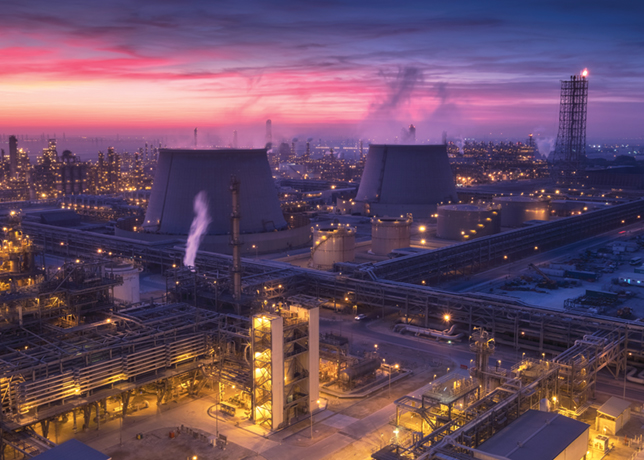


NEXT year Saudi Arabia plans to turn open the largest oil field to come online anywhere in the world since the late 1970s.
The Khurais complex, sprawling across a swath of red dunes and rocky plains, is expected to add 1.2 million barrels a day to an oil market caught between growing demand and a paucity of significant new discoveries – a squeeze that has helped drive prices to record levels.
But the project also illustrates a darker point: Even in Saudi Arabia, home to more than a quarter of the world’s known recoverable reserves, the age of cheap and easily pumped oil is over.
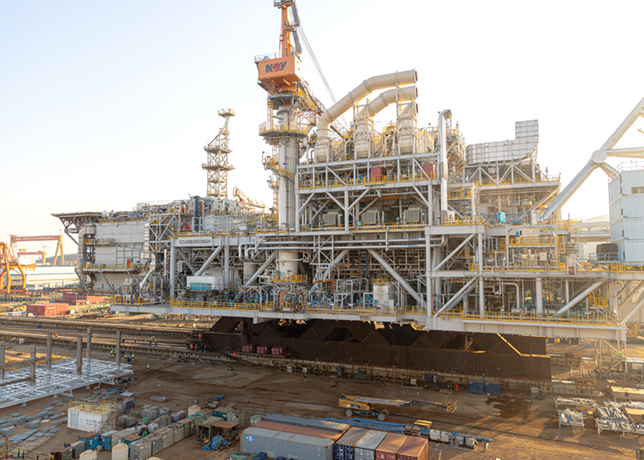
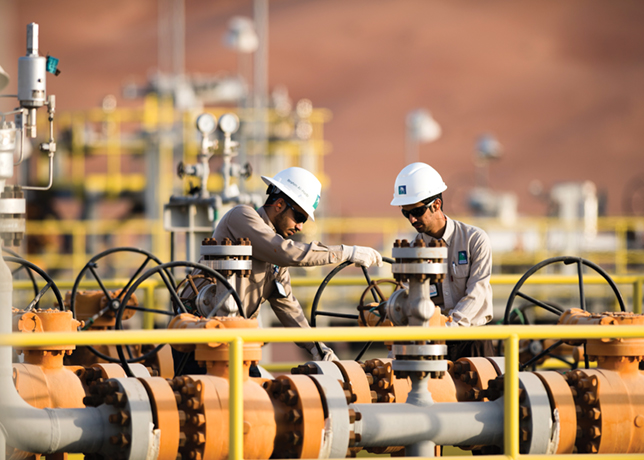
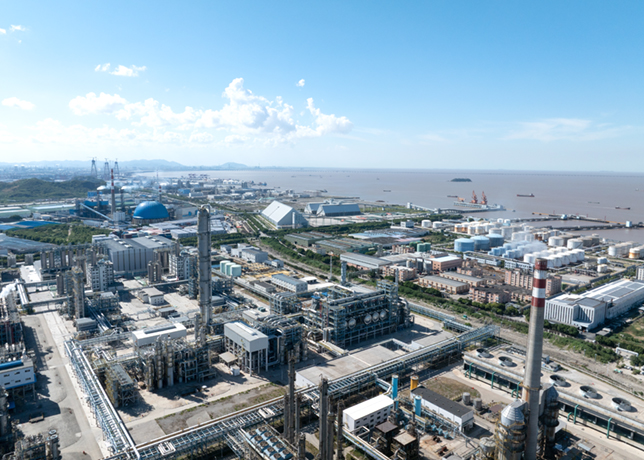
To tap Khurais, Saudi Aramco, has embarked on the most complex earth- and water-moving project in its history. It is spending as much as $15 billion on a vast network of pipes, oil-treatment facilities, deep horizontal wells and water-injection systems that it calls “one of the largest industrial projects being executed in the world today.”
Moreover, with the project, Aramco is pulling from its cupboard one of its last big basins of oil. After Khurais, Saudi Arabia will have only one known megafield left to develop, the even more challenging Manifa field, offshore in the Arabian Gulf. After these, much of the kingdom’s reserves lie in either aging fields or smaller pockets.
“Khurais and Manifa are the last two giants in Saudi Arabia,” says Sadad al-Husseini, a former Aramco vice president for oil exploration. “Sure, we will discover dozens of other smaller fields, but after these, we are chasing after smaller and smaller fish.”
The Khurais project is at the heart of an all-out effort by Saudi Arabia to keep abreast of natural declines in older fields while trying to preserve its status as the oil world’s lone safety valve. To do that, Aramco is scrambling to boost its overall production capacity, currently just over 11 million barrels a day, to 12.5 million.
While Saudi officials said a few years ago that they could push production to 15 million barrels a day if necessary, and sustain that for decades, for some time they have been indicating they would level out at about 12.5 million barrels. Demand projections through 2020 don’t require anything greater, Oil Minister Ali Naimi told a London trade publication called Petroleum Argus.
Saudi Arabia is under pressure to ramp up its production as the world scrambles to keep pace with soaring oil demand, which the International Energy Agency predicts could hit 99 million barrels a day by 2015, up from 87 million barrels a day this year. With output declining or flat in Mexico, Venezuela, the North Sea and Russia, all eyes are on the Saudis to fill much of the gap, even as demand soars within Saudi Arabia itself.
Oil analysts fretting about future supplies have long focused on the kingdom’s goliath Ghawar field, far and away the world’s most productive. Since its discovery in 1948, Ghawar has provided the bulk of Saudi oil. Thanks to massive drilling and extensive water injection to increase underground pressure, Ghawar continues to pour out more than five million barrels a day, or just over half of Saudi production – and nearly 6 per cent of total world output.
But for a contingent of sceptics, the Khurais field has become the ultimate test of the health, or sickness, of the world’s oil patch. Scepticism runs deep in oil quarters over whether Saudi Arabia can overcome a slew of challenges, both geological and economic, to turn the Khurais field into what Saudi officials hope will become the fourth-most-productive oil field in the world.
“This is the big one,” says Matthew Simmons, a Houston energy investment banker, whose 2005 book “Twilight in the Desert” challenged Aramco’s petroleum prowess. “If Khurais falls short of its advance billing, then Saudi Arabia is going to struggle to fulfill its promises.”
Aramco geologists discovered the field, about 100 kilometres west of Ghawar, in 1957. Aramco put the field into limited production for a short while in 1959 and then mothballed it. Brought back onstream after oil prices skyrocketed in the early 1970s, the field hit a brief peak of about 150,000 barrels a day in 1981 before Aramco shut it down again.
“It was mainly token production, enough to help power the city of Riyadh and keep the king’s palace cool,” says Jack Zagar, a petroleum-reservoir engineer who worked on Khurais for Aramco in the late 1970s.
Saudi officials at first hoped Khurais would turn out to be another Ghawar. Years of assessment proved otherwise. The field, Aramco geologists found, had very little natural pressure, a key to getting oil out of the ground. Its oil-bearing rock is deep underground and much tougher to tap than Ghawar’s.
“It turned out,” Aramco says in a recent statement, “that the reservoir at Khurais was much smaller and not as high-quality as Ghawar.” Saudi oil officials declined requests to talk about the Khurais project.
Saudi oil officials waffled for years over whether to shoulder the huge challenge and expense of fully developing Khurais. Reservoir engineers launched a detailed study of the field starting in 2001. Their conclusion: The only way to revitalise Khurais, and get the oil flowing at sufficient volumes, was to force the oil out by injecting massive amounts of seawater. Injecting natural gas was ruled out because the kingdom’s own needs for gas for electricity generation are skyrocketing.
The need for water injection raised a slew of complications. The Khurais complex, which includes the smaller satellite fields of Abu Jifan and Mazalij to the south, lies far from most of the kingdom’s oil infrastructure. So hundreds of kilometres of pipes would have to be laid to distribute highly filtered seawater from the Arabian Gulf, some 190 kilometres to the east.
A massive water-injection programme would require Aramco to ring the complex with more than 100 injection wells. And Aramco would have to master the field’s complex geology – all 7,000 square kilometres of it – not only to know where to drill but also to make sure the water injection didn’t flood the oil wells.
“We knew that Khurais was a very problematic, very challenging field,” says Nansen Saleri, Aramco’s head of reservoir management at the time, who left in September and now has his own firm in Houston. “The trick was to understand Khurais down to its smallest detail.”
To do that, Aramco seismologists spent 20 months shooting 2.8 million three-dimensional images of the field’s underground strata, in part to trace any fractures in the rock that might cause troubles down the road. It was Aramco’s most ambitious underground mapping program ever. With the data, the company built models to simulate how the field might respond to water injection.
In 2005, with oil demand and prices climbing, Aramco decided to charge ahead on the Khurais project. It hired Halliburton Co to drill the wells. Canada’s SNC-Lavalin Group Inc. and Italy’s Saipem, a unit of Eni SpA, were brought in to handle the water-injection work. New Jersey-based Foster Wheeler Ltd. took over as project manager. Dozens of other companies were hired to lay the pipe and build what amounted to a small oil city in the middle of the desert. The total estimated cost at the time was $6 billion.
For Saleri, the Khurais project has become a symbol of all the technological leaps Aramco has made over the past decade or so. “This will be the biggest smart field the world has ever seen,” he says.
Halliburton is drilling more than 300 wells that snake down more than a kilometre and a half and then branch horizontally into the rock. Each can be guided electronically to within a metre of where the oil lies, using a technology known as geosteering. To flush the oil out, Halliburton is drilling 125 water-injection wells and installing dozens of electric submersible pumps.
Saleri says he also insisted that dozens of observation wells be drilled, so that sophisticated sensors could monitor what was happening below ground. Once the field is operational, reservoir engineers will be able to track it second by second from Aramco’s huge command center in Dhahran, about 240 kilometres to the northeast.
But all this wizardry also underscores Khurais’ many quirks and foibles. To counter the field’s lack of internal pressure, Aramco plans to inject 2.4 million barrels of seawater a day into its underground structures, around two barrels of water for every barrel of oil it hopes to extract. By comparison, Aramco first put the mighty Ghawar under limited water injection in the 1960s before turning to large-scale seawater injection in the late 1970s.
It is tricky to get such a huge water-injection system just right, says Bruno Stegner, a former Aramco senior reservoir engineer. The water has to be filtered down to extremely tiny particles to avoid plugging the pores of the rock it is supposed to flow through. The main challenge, Stegner says, will be sustaining sufficient water pressure to push oil to the producing wells through three kilometres or more of Khurais’s tough rock layers, far less porous than Ghawar’s.


