





























The world’s largest state oil company, Saudi Aramco’s oil operations encompass the Kingdom of Saudi Arabia, including territorial waters in the Arabian Gulf and the Red Sea.
Totalling more than 1.5 million square kilometres, this area is larger than the combined areas of Texas, California, Oklahoma and Utah, or of France, Spain and Germany. Most production comes from fields in the coastal plains of the Eastern Province in an area extending 300 kilometres north and south of Dhahran.
The Kingdom of Saudi Arabia is endowed with two major fossil fuel sources, crude oil and natural gas. Worldwide, gas is the fastest growing energy source. Over the last decade, world gas consumption has grown 1.7 per cent per year and is expected to accelerate at a rate of 2.4 per cent per year over the next 20 years. The worldwide demand for gas is driven by the power and industrial sectors due to its smaller environmental footprint as an energy source.
Saudi Aramco’s responsibilities expanded greatly on July 1, 1993, when a Royal Decree merged into the company all of Saudi Arabia’s state-owned oil refineries and distribution and marketing operations that were operated by the Petromin marketing and refining project known as Samarec. Under the same decree, Saudi Aramco assumed Petromin’s 50-per cent interests in three domestic joint-venture refineries. Saudi Aramco’s new refining interests, combined with its Ras Tanura Refinery and its joint-venture and shareholder interests in five other refineries in the US and the Far East, place the company in the top rank of world refiners, Aramco’s website says.
Meeting demand requires extensive, integrated manufacturing and transportation systems. A kingdom-wide network of refining, supply, and distribution facilities, staffed by highly trained personnel, maintains this continual supply of refined products.
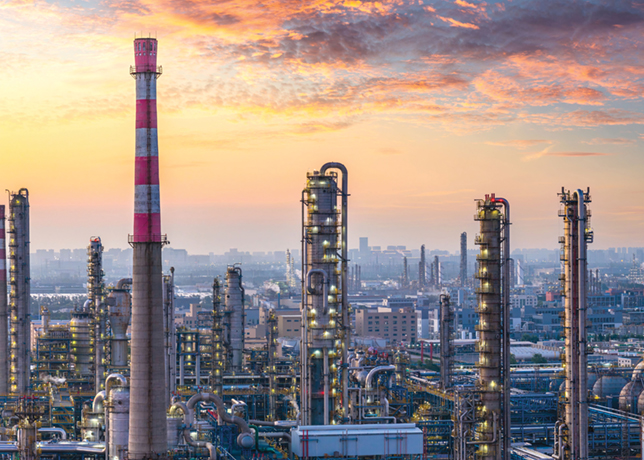
Saudi Aramco’s five domestic refineries, at Riyadh, Ras Tanura, Rabigh, Yanbu’ and Jiddah, have a combined capacity of approx. 1.4 million barrels per day. Adding the company’s two domestic joint-venture refineries, with ExxonMobil in Yanbu’ and Shell in Jubail, brings in-kingdom refining capacity to more than 1.9 million barrels daily, making Saudi Aramco one of the largest refiners in the world, Aramco says.
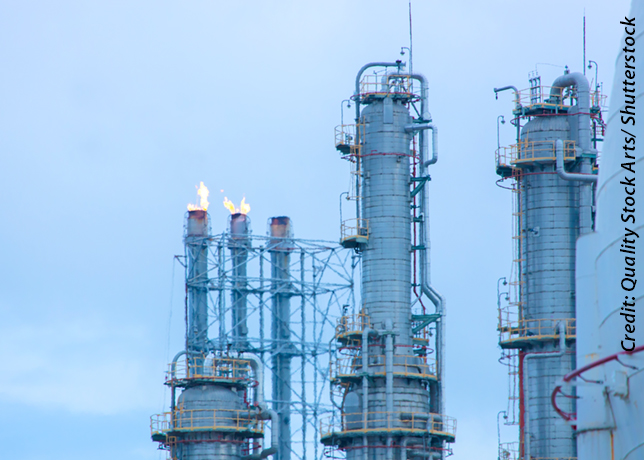
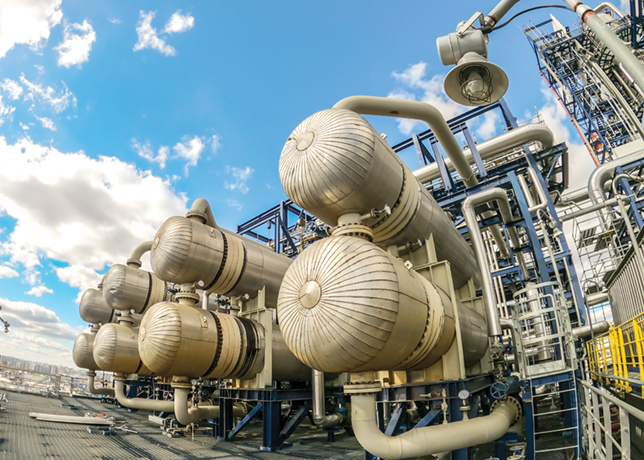
The most complex Saudi Aramco refinery is on the Arabian Gulf at Ras Tanura with a crude distillation capacity of 550,000 barrels per day (bpd). Ras Tanura Refinery also has a 305,000 bpd NGL processing facility, a 960,000 bpd crude stabilisation facility, 145/158 MW (summer/winter) of combined steam and gas turbine electrical power generation plants, a combined 150 lb and 600 lb steam capacity of 6,217 Mlb/hr, and 75 crude oil and products storage tanks with a combined capacity of 5.8 million barrels, Aramco says.
Ras Tanura Refinery’s major refining facilities include a 325,000 bpd Crude Distillation Unit, a 225,000 bpd Gas Condensate Distillation Unit, 50,000 bpd hydrocracker and a total of 107,000 bpd capacity of catalytic reforming. Ras Tanura Refinery is the only Saudi Aramco refinery that contains a Visbreaker (60,000 bpd). This refinery also produces 17,000 bpd of asphalt, more than any other refinery in the kingdom. Crude is normally transferred to Ras Tanura through a pipeline and can also be supplied by ship. Most of Ras Tanura’s production is for domestic use and transferred to the Dhahran bulk plant, while some products are exported, says Aramco.
The Rabigh Refinery is a 400,000 bpd crude topping facility located 160 km north of Jiddah. Crude is delivered by tanker through the Saudi Aramco Rabigh port which has two berths. The main products are fuel oil with a 38.1 per cent yield, naphtha at a 19.4 per cent yield and jet fuel/kerosene at a 9.3 per cent yield. LPG and oil are used as fuel for the refinery recovered sulphur is bagged and shipped, says Aramco.
A terminal and its associated facilities are located outside the refinery’s security fence, 1.5 km from the process units. The entrance to the terminal has been dredged to a depth of 28 metres, and two berths to a depth of 27 metres, to handle vessels up to 325,000 dwt.
Other facilities include a 42,000 gallon-per-minute (MGPM) waste water treatment plant, a 90-Megawatt power plant, a 1725 gallon per minute (GPM) desalination plant and a 560,000 lbs/hr steam plant. On-site tankage for crude, naphtha, jet fuel, gas oil and fuel oil totals 3.47 million barrels. Housing for the workforce is provided by a Saudi Aramco facility located some 20 km north of the main refinery, Aramco says.
“The Yanbu’ Refinery (YR) on the Red Sea was established in 1979 as part of the Petromin projects (ex-Samarec). The plant became operational in 1983. It produces LPG, gasoline, jet fuel, diesel oil, and fuel oil. The refinery was built on 165 hectares in the industrial park, and is a hydro skimming facility with a design capacity of 170,000 bpd, mainly serving the domestic market,” Aramco says.
In June 1993, by Royal Decree, Samarec operations were integrated into Saudi Aramco. YR currently operates at a crude processing rate of 225 mbd and is manned by approximately 700 employees; Saudi employees constitute approximately 85 per cent of the total work force, says Aramco.
According to Aramco, Arabian crude oil is received from the Yanbu’ Crude Oil Terminal and stored in YR crude tanks. From the tanks, the crude is heated through exchangers and sent to the distillation column. There are 74 tanks in the tank farm with a capacity of 12 million barrels. The refinery products are distributed through truck loading, interconnecting pipelines and four marine terminal facilities.
Jiddah Refinery (JR), which started operations in 1967, (60 thousand bpd) nominal capacity, 100 mbd utilisation capacity) has a 22 mbd vacuum column and a 20 mbd cat cracker, and a 3.0 mbd catalytic reformer. Jiddah Refinery exchanges streams with adjacent Lube Oil Plant – Luberef (sends imported Reduce Crude and receives VGO, FO, and asphalt). It also provides services (Power, Fresh Water and Fire Water) to neighboring facilities (Luberef, Petrolube and SWCC pump station), Aramco says.
Jiddah Refinery handles 350 mbd of hydrocarbon products through its Marine Terminal (8 inner berths 40,000 DWT and 2 outer berths up to 100,000 DWT) and Product Handling Facilities (84 tanks with a total capacity of 8 million barrels). This can reach up to 450 mbd during the high seasons, Ramadan and Hajj periods. This capability highlights the importance of the refinery function in safeguarding and providing critical supplies of fuel to the Makkah Area as well as to local consumers, such as the King Abdulaziz Airport, the Jiddah Islamic Seaport and Power Plants, Aramco says.
Through the Jiddah Refinery Terminal, crude and final products are imported, and petroleum products are exported. The majority of products are transferred to two local bulk plants, SWCC, SEC and the King Faisal Naval Base via pipelines. Refinery sales are LPG, unleaded gasoline, diesel, and asphalt. In addition, the refinery exports naphtha.
Riyadh Refinery (120,000 bpd capacity) in the Central Region of Saudi Arabia is supplied with crude oil from the East-West pipeline. Riyadh Refinery, unlike Rabigh or Yanbu Refineries, contains a vacuum column, which permits processing of the heavier crude fractions. Consequently the refinery contains a 30,000 bpd hydrocracker, for upgrading of heavy fraction. Riyadh Refinery also has a 30,000 bpd catalytic reformer for upgrading naphtha to gasoline blending products.
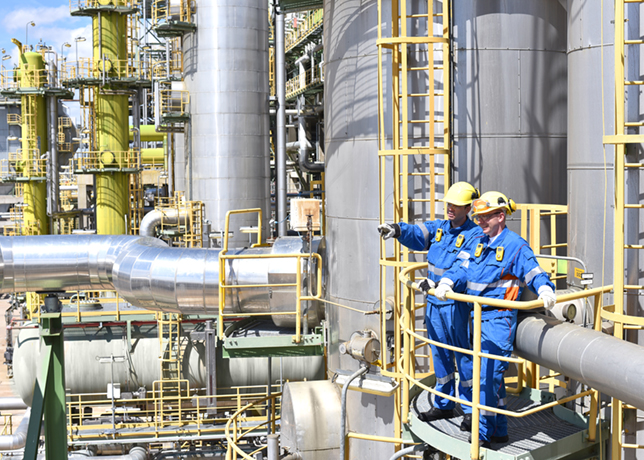
A broad network of bulk plants and air-fuelling units strategically located throughout the kingdom supplies thousands of bulk customers with products ranging from gasoline and jet fuel to fuel oil and liquefied petroleum gas. Added to this are gigantic tank farms that enable terminal exports of crude, natural gas liquids and refined products through the Arabian Gulf and the Red Sea. Interconnected with these storage facilities are extensive delivery systems that enable timely and reliable delivery of product. In a continually evolving world, the Saudi Aramco supply and distribution operations strive to surpass customer expectations by providing state-of-the-art facilities run by a world-class workforce, Aramco says.
Making petroleum and its products available to the world begins with exploration and development. Exploration focuses on finding oil and gas fields hidden deep underground. Oil is formed in sedimentary rocks and migrates through a sedimentary basin’s fluid system. Some is eventually trapped in a variety of geologic environments. It is up to oil exploration teams to locate these traps. These teams are primarily comprised of geologists and geophysicists, Aramco says.
Geologists study rocks, minerals and fossils to determine where oil and gas accumulations are likely to be found. They also understand global plate tectonics and how the basins of the world have evolved over time. Geophysicists study the physics of the earth. They often use seismology, the study of sound within the earth, and seismic surveying, the study of manmade sounds within the earth. Saudi Aramco explorationists primarily look for traps found by geophysicists in areas where geologists have determined that oil is likely to be found.
Once a field is located, development begins. Development entails studying a hydrocarbon reservoir to determine exactly how much oil or gas is present and how it may be safely and effectively extracted or produced. The techniques used in development are similar to those of exploration but are usually done in much more detail and can extend over the life of the field, Aramco says.
Saudi Aramco succeeds by taking a systematic approach to exploration. All exploration studies done by its scientists are kept in libraries, even studies that had negative results. Exploratory wells that were unsuccessful in finding oil or gas, called dry holes, provide valuable information about conditions in the sedimentary rocks thousands of feet down. Oil is generally found in a new basin after a long search, which may take many years, so a systematic approach to exploration and good record keeping are extremely important. The science of oil exploration matured over the last century and is now very sophisticated. Exploration and development require computer specialists to operate the powerful computers necessary for processing, analysing and mapping the vast stores of data collected, Aramco says.
Two other important groups of specialists are the drillers and the petroleum engineers. The drillers are the ones responsible for the actual drilling of all exploration or development wells. The petroleum engineers become involved during the early development of a field after its initial discovery. They are largely responsible for managing a reservoir. In cooperation with, and using the data supplied to them by the geoscientists and those who directly produce the hydrocarbons, the engineers build highly detailed, 3-D reservoir models and input these models into sophisticated reservoir simulation computer programs that predict the current and future production of a reservoir.
Saudi Aramco is recognised for its experience in transporting of hydrocarbons, while simultaneously being an environmentally conscious neighbor and a safety and loss prevention practitioner. Punctual product movements between supply and distribution facilities are executed through an elaborate delivery system which encompasses an area of around 2 million square kilometres – constituting the area of Saudi Arabia. Pipelines, marine crude oil tankers, product carriers and hauling trucks, the main components of this delivery system, are operated and maintained by a highly qualified workforce and adhere to the highest industry standards to ensure optimised operational levels.
The pipeline network totals some 20,000 kilometres in length, including links with new oil fields in central and southeast Saudi Arabia. Major pipelines are the Trans-Arabian Pipe Line (Tapline), the Saudi Arabian-Bahrain Pipeline and the East-West Crude Oil and Natural Gas Liquids (NGL) pipelines to Yanbu’ on the West Coast. The NGL pipeline linking Yanbu’ and Shedgum is the longest and most advanced gas line ever built – 1,170 kilometres long. The line is telescoped, starting at 66 centimetres (26 inches) in the east and arriving in Yanbu’ with a 76-centimetre (30-inch) diameter. This pipeline was completed in 1982. From a central control station in Dhahran, an operator can monitor 38 locations along the line. Saudi Aramco has extensive experience in product batching operations that are carried throughout the pipeline network. The complex nature of the pipeline network, combined with the wide extension of its geographical area, dictate being abreast of the latest dispatch technologies, most notably in the areas of monitoring and control, to prepare for future expansion, Aramco says.
Shipping accounts for almost all of Saudi Aramco exports of crude oil, NGL and refined products. Shipping vessels are also used to transport hydrocarbons to satisfy some of the domestic demand of supply and distribution facilities on the Red Sea. The company’s shipping subsidiary, Vela International Marine Limited, was established in 1984, when rights to Vela’s name and four existing tankers were acquired. The company operates a large fleet of ultra large crude carriers (ULCCs), and technologically advanced very large crude carriers (VLCCs). Each of these ships was built to the highest safety standards and is can carry at least two million barrels of crude, says Aramco.
Approximately 2,000 trucks are also used to transport refined products over the kingdom’s 150,000 km of highways. These trucks are subject to strict safety and quality standards commensurate with policies and procedures enforced throughout supply and distribution operations. However, given the impact that this delivery method has on safety and the environment, Saudi Aramco is minimising use of trucks in hydrocarbon transportation. Numerous new pipeline projects are replacing hauling operations.
Saudi Aramco owns and operates kingdom-wide storage facilities for crude oil, refined products, Refrigerated Liquefied Petroleum Gas (RLPG) and Natural Gas Condensate, which amount to an overall capacity of 200 million barrels. These facilities include terminal tank farms, refinery crude charge and finished product storage facilities, product storage bulk plants and loading and unloading facilities, says Aramco.
Through its 19 bulk plant operations, Saudi Aramco annually supplies around 375 million barrels of refined products to about 5,000 domestic bulk customers, at the highest quality and quantity assurance. A Product Integrity Program supports the company’s “zero tolerance” policy and prevents off-specification and contaminated products from reaching customers. Operations Compliance Reviews (OCRs) and periodic spot-checks are conducted to assist in maintaining product quality, and to assure operations compliance with established policies and procedures, including the Distribution Operations Manuals (DOMS) which address product storage, management, quality, sales and transportation between various Saudi Aramco’s storage facilities and air fueling operations, says Aramco.
Saudi Aramco continues modernisation by introducing state-of-the-art technologies to better manage the business of bulk product sales. Salient in this modernisation effort is the automation of storage facilities operations, thus enhancing performance productivity and plant operations control. Also, conversion from truck top-loading to bottom-loading, a new Terminal Management System (TMS) and subsystems such as Radar Tank Gauging (RTG) and metering control have enhanced safety, efficiency and working environments, Aramco says.
The plant-level automation systems are linked to the corporate SAP R/3 enterprise resource planning (ERP) system for tight control on product movement and accountability.
To keep pace with today’s global business developments and to provide Saudi Aramco local customers with outstanding services, Saudi Aramco developed an easy and secure Electronic Sales and Payment system. The system enables Saudi Aramco local customers to initiate and process sales orders and payments electronically from any place at any time through internet or by telephone. Additionally, the Electronic Sales and Payment system enables Saudi Aramco customers to view online their invoices and monitor their balances and orders with Saudi Aramco online, Aramco says.
Furthermore, a Customer Service Centre handles inquiries and complaints. The centre is also in charge of increasing customer awareness on issues such as safety and the environment.
Saudi Aramco’s storage facilities undergo cyclical upgrades to ensure a high standard of service and to meet the ever-increasing local demand for refined products. The company has approved three capital projects in preparation to introduce a second grade of gasoline (91 RON) into the domestic market including the modifications of existing storage facilities by year end 2006.
Saudi Aramco supplies aviation fuel to domestic as well as international customers through outlets, that include the international airports at Riyadh (KKIA), Jiddah (KAIA), and Dammam (KFIA).
Customers range from passenger and freight airlines to government and military aircraft. Saudi Aramco’s air fueling network has 19 outlets distributed over the Eastern (10), Central (3), and Western (6) regions of Saudi Arabia. The company is a major jet fuel supplier in the region, selling annually around 16.8 million barrels of jet fuel to more than 93 national and international airlines.
Saudi Aramco customer service strives to exceed customer expectations. Flexible, competitive formulas and efficient invoicing procedures allow the company to efficiently supply aviation fuels throughout the kingdom.
The Operations Coordination Centre is the control centre for the management of oil, gas, electric and refined products. The OCC optimises hydrocarbon system capacities and inventories to deliver quality products to the customer at the right time and place. Various Saudi Aramco organisations are represented in the OCC. The planning and scheduling group monitors the movement of tankers, refined products, crude oil, NGL and the electric power network. The OCC also functions as a disaster control centre, responsible for coordination of emergency responses to abnormal interruptions in supply and distribution operations.
The Saudi Aramco Operations Coordination Centre (OCC) is the focal point for all supply and distribution operations in the company. This includes the planning and scheduling of refined product movement, terminal mooring/loading and unloading operations, oil and gas system functions and company electrical system operations, including its interface with the Saudi Electric Company (SEC) network, Aramco says.
Twenty-four hour coverage of these operations takes place every day of the year through thousands of state-of-the-art data gathering points fused into supply and distribution facilities, providing real-time monitoring and control capabilities. OCC personnel monitor Saudi Aramco scheduled operations using real-time computer systems, which are connected through an extensive communications network to all of the company’s plants, terminals and pipelines. Important operational information and data are scanned every 15 seconds to update OCC databases and provide dispatchers and engineers with real-time “snapshots” of activities in the field. Several real-time modelling systems help dispatchers monitor and plan the operation of the electrical system, as well as the gas and oil pipelines network, Aramco says.
OCC operations rely on sophisticated electronic networks that target 99.99 per cent of the availability of complex, kingdom-wide supply and distribution functions. This is further enhanced by highly trained manpower, including engineers, planners, and dispatchers/shift coordinators. Information is displayed on massive 4-by-80 metre (12-by-240 foot) mapboards reflecting schematics of all supply and distribution systems. Several wide-screen and x-wall projection subsystems are incorporated into these mapboards that can display teleconferencing and data images. Dispatcher consoles are organised to accommodate multiple workstations and computer terminals to serve each of the operation divisions using the OCC.
The OCC is equipped with advanced Supervisory Control and Data Acquisition (Scada) systems for the coordination of hydrocarbon and electric power operations with features such as real-time data gathering, interactive device control, alarm annunciation and response and automated reporting, Aramco says.
A Production and Offtake Planning (PROP) system is used to plan and control production, inventory and liftings of Saudi Aramco crude, NGL and refined products. It is also used to provide accurate reporting to management and operations. More than 2,000 daily reports are generated by PROP.
The ATPB (Automated Terminal Planning Board) is used as a visual tool for terminal operations planners to monitor ships scheduled to berth within a four-day window. All necessary details such as cargo, loading rate, ship deadweight and loading sequence are displayed on the system, says Aramco.
To facilitate the planning of refined product slates, a tracking system, RPMS (Refined Products Management System), supporting client server architecture is used by the OCC to forecast demand, prepare long-term and short-term operating and supply plans, monitor bulk plant inventory and track refined product transfers.
A PI (Plant Information) System provides a fully automated program to collect, store, present and distribute plant data, giving the OCC convenient and fast data access. This system can significantly reduce the time required to make critical quality, cost, safety and environmental decisions while improving decision-making and performance. Currently, the PI is processing 10,000 points, of which 7,000 are analog; the rest are status points and controls.
The planning and efficient operation of the Saudi Aramco pipelines network is assisted by the OCC suite of simulation programs known as the PAS (Pipelines Application System). The real-time PAS software collects updated process information through the SCADA-PAS interface at a fixed frequency of 15 seconds. The PAS database contains all necessary pipeline configuration needed to provide the PAS with functionality, such as: leak detection, batch tracking, scraper tracking, survival time warning, look-ahead analysis, etc. The modeling results of the PAS can be displayed graphically via a MMI, while leak alarms are sent to planners through the Scada Central Dispatch System.
A similar system to PAS is the Saga (Stand Alone Gas Application) System, which is an integrated hardware and software system that provides OCC planners and other users with information about leak detection, inventory control, line balance and scraper tracking.
The OCC also contains an advanced communications system that serves as an Emergency Monitoring Room (EMR), which is a disaster control headquarters to direct response and containment operations.
In 1996 the OCC underwent its first major renovation since commissioning in 1979. This renovation prepared the OCC for the 21st century, making it more efficient and able to accommodate new user organisations. The OCC’S appearance and ergonomics were substantially enhanced, creating a world-class facility that is visited annually by many high-level delegates, including government officials, company presidents and heads of state.
The future of the OCC relies on a vision of transporting the OCC into a fully integrated, fully automated facility that can monitor virtually all Saudi Aramco’s supply and distribution field operations. The OCC will be equipped with the latest technology to enhance its monitoring and control capabilities. In the near future, x-wall projection will be provided for all existing mapboards. The OCC is also ready for expansion envisioned in the growth of Saudi Aramco operations, including the accommodation of new organisations in the OCC field.
Saudi Aramco is engaged in the business of power generation, transmission and distribution. The company’s facilities, including communities and hydrocarbon production, processing, refining and delivery systems, are powered through various levels of voltages. The company’s power systems are interconnected with other utilities systems in the Kingdom of Saudi Arabia such as Saudi Electricity Company (SEC) and Marafiq.
On average more than 10 ships are serviced every day at Saudi Aramco terminals.
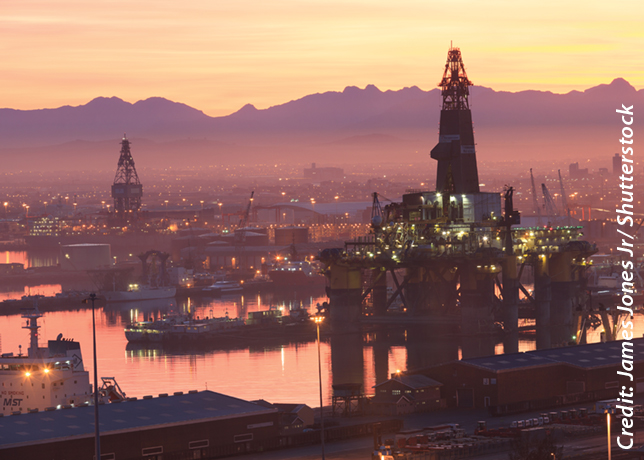
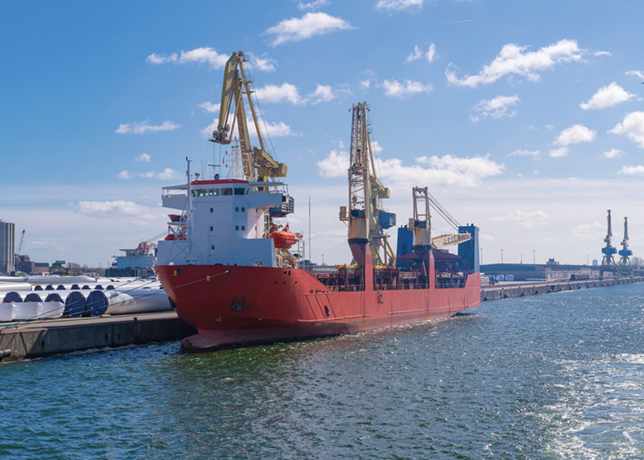
Mammoth tank farms and shipping terminals supply crude oil, natural gas liquids and refined products to customers around the globe. Every year, more than 9,000 tankers call at Ras Tanura and Ju’aymah on the Arabian Gulf, and at Yanbu’, Jiddah and Rabigh on the Red Sea. Since beginning its first terminal operations at Ras Tanura in 1939, Saudi Aramco has been on an ambitious expansion track that now enables its terminals to service the largest crude and LPG tankers afloat.
Saudi Aramco is committed to the prevention of harmful hydrocarbon release due to normal operations in the air, land or waters of Saudi Arabia. After the primary concern of protecting human life, public health and safety – in the event of an oil spill – comes protecting facilities, minimising the disruption of safe operations at export terminals and critical production facilities and preserving marine environment. Saudi Aramco takes extensive preventive measures to minimise the risk of oil spills from the marine terminals and the tankers calling at them. It also augments these measures by maintaining a high level of preparedness to combat and contain these oil spills wherever they might occur.


