











































EMERSON Process Management and BP continue to collaborate on the application of wireless technology to speed use of this innovative technology for business improvement.
BP has expanded its Cherry Point refinery applications in Washington, US, installed Smart Wireless throughout its tank farm in its R&D facility in Naperville, Illinois, and is making installations at its other refineries around the world.
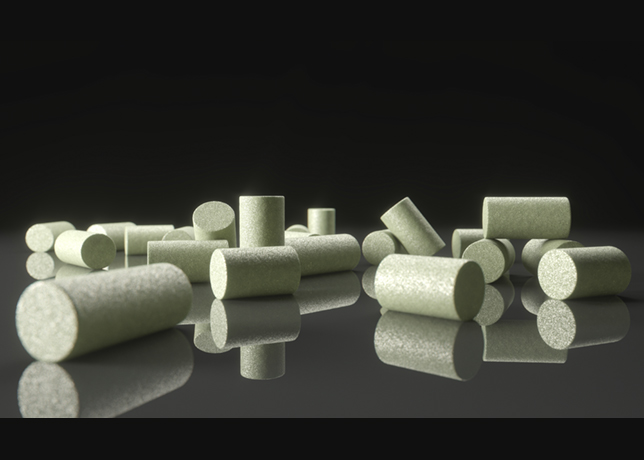
BP Cherry Point is a 225,000 barrels per day (bpd) refinery, and is the largest supplier of calcined coke to the aluminium industry. One out of every six aluminium cans is made using BP Cherry Point’s calcined coke. Emerson’s Smart Wireless installation on the refinery’s calciner unit monitors bearing and calciner coke temperatures to help prevent fan and conveyor failure.
Fans can cost up to $100,000 to repair but, more importantly, can be down for up to 10 days with associated production losses. The 15-transmitter wireless installation in 2006 is believed to be the world’s first industrial wireless mesh network installation, and continues to operate reliably while eliminating operator rounds in the field.
Cherry Point has expanded wireless use to 35 transmitters including tank farm and utility applications, and the installation of a Smart Wireless gateway in the diesel unit to make it ready for wireless motes.
“The principal advantage we see around wireless is the ability to accumulate and analyse a much greater array of data than would otherwise be economically possible,” says Michael Ingraham, technical manager for Cherry Point refinery.
“Wireless enables us to get more data more efficiently, more economically than we ever have been able to in the past. We really hope our wireless technology will be a principal tool in maintaining plant availability while expanding our flexibility to meet fuel specs and ever changing array of feedstock.”
A second facility, BP Naperville R&D, is a world-class technology centre including a modernised tank farm feeding an expanding number of pilot plants that develop processing technology options for BP refining worldwide. Following the first application of Smart Wireless at BP’s Cherry Point refinery, which BP saw as a success, BP installed a 45-transmitter wireless network at the Naperville tank farm. Operational for about one year, this has provided strong operational experience and a platform for testing the technology, leading to significant take-up of wireless at other BP refineries throughout the world.
“The wireless devices allow our operators to be more efficient, collecting data from one central point as opposed to walking around the tank farm and recording all the values,” comments a BP representative. “The other advantage of the wireless devices is that they supply data continuously for recording in our historian, allowing us to see what is happening in the tank farm at any time of the day.”
The Naperville wireless network uses Rosemount wireless transmitters to monitor suction, and discharge pressures, levels, flow, and temperatures. New wireless functions are installed as they become available, and emphasis is on collaboration with Emerson to expand the capabilities as rapidly as possible to cover refinery-wide applications. The real-world environment, in a pilot-scale operation, provides feedback to Emerson and hands-on experience for refinery management. Options for refinery process optimisation and sharing of wireless automation technology are thereby shared globally by the Refining Technology team.
“Wireless is an important enabler for ‘refinery of the future’ technologies,” comments Mark Howard, commercial technology manager for BP.
“It helps us deploy the sort of instrumentation, sensors, and analytical devices that we need for condition monitoring to support predictive maintenance, tracking feedstocks through the value chain, and a host of other applications. Wireless is a very important vehicle for getting instrumentation into places where wired devices would be too expensive or frankly not very practical.”