
































Building on its tradition of leadership in safety and quality compliance within the global pipeline industry, GE Oil and Gas, PII Pipeline Solutions has announced that it has successfully attained third-party certification to the latest internationally recognised quality management system standard, ISO 9001: 2008.
Lloyds Register Quality Assurance (LRQA), a leading third-party certification body, recently completed a series of assessments at PII Pipeline Solutions’ main facilities in the US, UK and Germany against ISO 9001: 2008, which effectively replaced ISO 9001: 2000 in November 2008. All existing certificates issued against ISO 9001: 2000 will become obsolete at the end of 2010. GE has, therefore, proactively secured certification well in advance of the expiry deadline.
In 1991, PII Pipeline Solutions’ became the first pipeline inspection company globally to attain quality management system certification, and ISO 9001 is now the preferred standard used by over 500,000 companies around the world.
“Achieving ISO 9001: 2008 certification reflects our ongoing commitment to quality, safety and operational excellence at both our own and customer facilities globally,” says John Bucci, general manager, GE Oil and Gas, PII Pipeline
 |
|
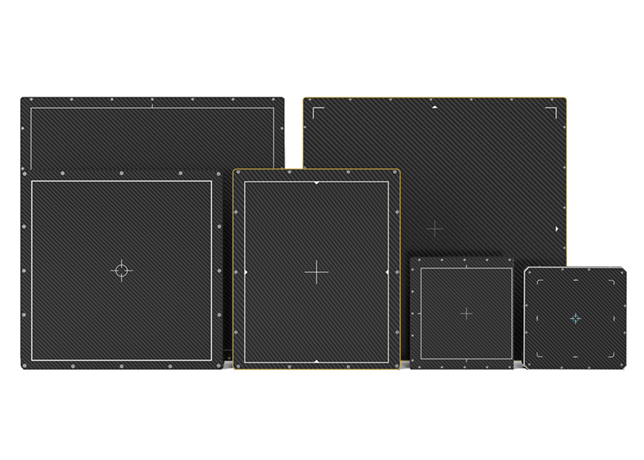
Miropak electronics enables enormous |
olutions. Furthermore, many international pipeline operators now expect In-Line Inspection vendors to have ISO 9001 certification as an absolute minimum, Bucci notes.
To this end, and for the first time, GE Oil and Gas – PII Pipeline Solutions’ Houston facility was also successfully assessed against two additional certification standards, in parallel to ISO 9001 certification, namely: ISO/TS 29001: Petroleum, petrochemical and natural gas industries – sector-specific quality management systems – requirements for product and service supply organisations; and EN 13980: 2002: potentially explosive atmospheres – application of quality systems.
Being the first in-line inspection business to attain ISO/TS 29001: 2007 certification, will further underpin GE’s commitment to be a world-leading pipeline integrity business. Based on ISO 9001, the ISO/TS 29001: 2007 standard sets out additional oil and gas industry specific requirements and is the international identical equivalent of API standard API Spec Q1. Both standards are complementary to API standard 1163, which defines requirements for the qualification of in-line inspection systems and personnel to ensure the safety and integrity of pipelines that transport gas and hazardous liquids.
Similarly, EN 13980 is also based on ISO 9001, and is linked to European legislation – directive 94/9/EC for the design and operation of equipment for use in potentially explosive atmospheres (Atex directive). This important legislation created a framework for ensuring that products (pipeline inspection tools), are designed, manufactured and operated in accordance with specific essential health and safety requirements with the overall aim of explosion prevention.
The Atex directive has since rapidly become an internationally recognised requirement of many pipeline operators worldwide.
GE Oil and Gas was the first pipeline integrity services provider to deploy Atex compliant inspection tools – EC-type examination certification through an independent notified body. The company was also the first to earn Atex quality management system certification against EN 13980 in 2006.
The recent addition of EN 13980 certification for the Houston facility emphases the commitment to deliver a service worldwide based on the highest level of safety to prevent harmful incidents during a pipeline inspection – the design, manufacture and operation of inspection tools are Atex compliant.
GE Oil and Gas is a world leader in advanced technology equipment and services for all segments of the oil and gas industry, from drilling and production, LNG, pipelines and storage to industrial power generation, refining and petrochemicals. The company also provides pipeline integrity solutions, including inspection and data management.
Meanwhile, GE Oil and Gas’ PII Pipeline Solutions business has presented recognition awards to two of its valued customers following their pioneering use of MagneScan, the next generation of MFL (magnetic flux leakage) pipeline inspection technology, now proven on both sides of the Atlantic.
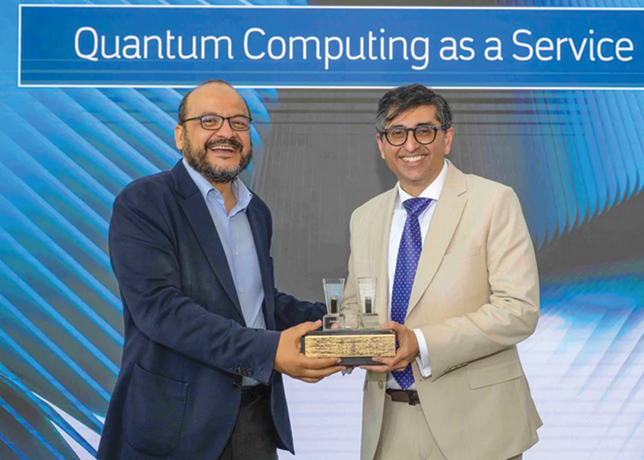
Sarpom, ExxonMobil’s affiliate refinery and pipelines company in Italy, and Jayhawk Pipeline, the US pipeline operator, were recognised for projects successfully completed in the first quarter of 2009. Representatives of Sarpom received the GE award in Cramlington, UK, GE’s Centre of Excellence for Magnetics, while Jayhawk was presented with the award at GE’s Biannual North American Pipeline Conference in Austin, Texas.
The Sarpom inspection in Italy was from Trecate to Malpensa Intercontinental Airport (Northwest region) on a 6-inch diameter jet-fuel pipeline, spanning almost 33 kms. The line was last inspected in 2003. The scope of work implemented by GE was to detect corrosion, dents and bends, as well as mapping coordinates acquisition.
he inspection was successfully completed in just four hours and 45 minutes, with the expert field support of Tecma Pipeline Services, GE’s partner in Italy. Sarpom operates a network of 1,158 kms of liquid pipelines in Italy.
Giorgio Tencaioli, Pipeline Integrity Supervisor for Sarpom Italia, says: “To inspect this seamless steel pipeline, partially built in the early 1960s, we had three priorities: we needed the combination of three tools in one, to reduce disruption to our operation; we also needed a very short arrangement of the system due to space restriction at the airport, and we wanted better corrosion assessment than was offered by previously available technology. We also had been waiting for a credible 6-inch mapping capability.’’
The first new MagneScan inspection project in North America was performed for the National Cooperative Refinery Association (NCRA) in the state of Kansas and consisted of four sections of 6-inch products pipeline, spanning a total length of 366 kms. A US company formed in 1943, NCRA operates an 85,000-barrel-per-day (bpd) refinery, located in McPherson, Kansas, as well the 366 kms, refined-products pipeline that runs from the refinery to Council Bluffs, Iowa.
Jayhawk Pipeline, which is 100 per cent owned by NCRA, transports approximately 125,000 bpd of crude oil through 1,287 kms of pipeline. KAW Pipeline Company, 67 per cent owned by NCRA, transports approximately 30,000 bpd of crude oil through 402 kms of pipeline.
 |
|
GE's new MagneScan takes |
Mark Graves, pipeline engineer at Jayhawk Pipeline says: “The four, 6-inch pipeline segments were 79, 96, 93, and 97 kms respectively, and each run was completed in less than 24 hours in standard configuration. One of our requirements was related to the product speed inside the line, making the run time at the upper specification of the battery life of the tool. This was, therefore, an excellent testing ground for this new technology.”
“We are very proud to have such strong partnerships with pipeline operators worldwide who trust GE to deliver leading-edge technology to secure the safe and productive future of their asset. Combined inspection runs mean less digs, less operational disruption and reduced impact on the environment for cost-efficient compliance,” says Bucci.
The new MagneScan inspection tool simultaneously maps the pipeline and checks it for corrosion, using high resolution MFL sensors that deliver high-quality data to identify and locate metal loss and is suitable for GIS (geographic information systems) analysis. Mapping data is integrated with inspection information during the run, reducing the amount of post-processing required.
TransCanada’s Pipeline
GE Oil and Gas’ PII Pipeline Solutions group is completing its largest pipeline inspection project by helping TransCanada evaluate the condition of an 864-km portion of a natural gas pipeline in Canada. This part of the pipeline, which covers a span equivalent to the distance between Paris and Berlin, needed to be inspected prior to being converted to carry crude oil as part of the Keystone Oil Pipeline.
TransCanada is converting its 34-inch, mainline gas pipeline between Burstall, Saskatchewan and Carman, Manitoba as part of TransCanada and ConocoPhillips’ joint Keystone Oil Pipeline project. The initiative will allow crude oil to be transported to US Midwest markets at Wood River and Patoka, Illinois and to Cushing, Oklahoma.
The converted pipeline will transport liquids at its approved operating pressure of 880 pound per square inch gauge (psig) (6,067kPa). To ensure optimal availability of the converted pipeline, TransCanada first had to make sure it was free of stress corrosion cracking (SCC) that could potentially lead to leaks.
TransCanada turned to GE Oil and Gas’ PII Pipeline Solutions division, which operates the industry’s most advanced ultrasonic pipeline inspection tools used for crack detection. Headquartered in Houston, GE’s PII Pipeline Solutions operates an integrated engineering services center in Calgary to support TransCanada and other Canadian pipeline operators.
Between October 2008 and March 2009, GE’s field team performed crack-detection inspection runs in three segments of the natural gas pipeline of 294, 315 and 255 kms in length, respectively. “GE was selected by TransCanada because we were the only company with both the experience in using ultrasonic tools for crack detection and the resources to manage this critical project’s scope and technical requirements, particularly the need to deploy multiple tools over such a vast distance,” says Bucci.
The project’s scope and schedule requirements meant that GE needed to simultaneously deploy several types of in-line inspection (ILI) tools, also known as “pigs”. Prior to deployment, TransCanada had to develop a special pipeline manifold to accommodate all the tools and ensure that no air bubbles were left in the line. A total of eight tools were dispatched in section 1, and seven tools in section 2. Six of those were batching tools.


