

















THE cornerstone of Saudi Arabia’s economy, Saudi Aramco and its joint venture partners expect to give their final verdict on nearly $50 billion worth of petrochemical projects by September as the kingdom pushes downstream development in an effort to squeeze more value from its crude.
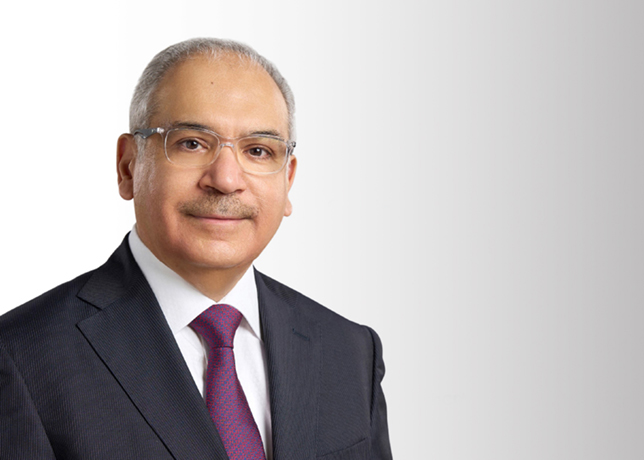
“In the third quarter we should be making an investment decision,” Aramco president and chief executive Khalid Al Falih says.
“We are moving incrementally with those projects. We are committing money as we speak to early finance, to early EPC (engineering, procurement and construction) activities,” he adds.
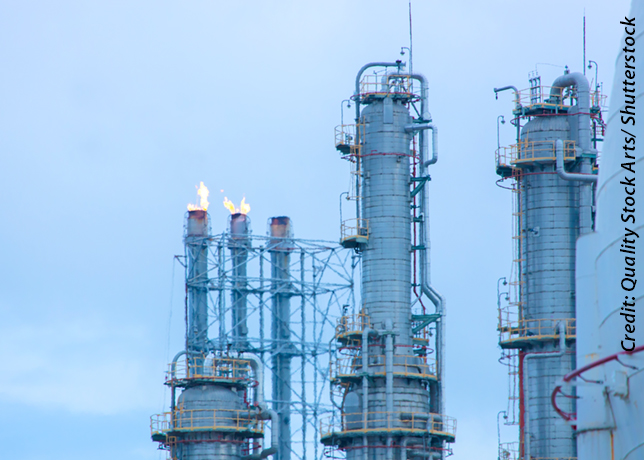
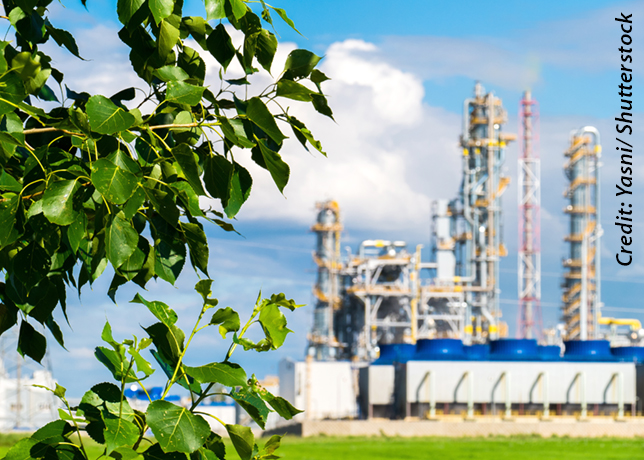
Aramco and Dow Chemical are finalising studies on their Jubail integrated petrochemical project, for which they will be wrapping up front-end engineering and design (Feed) work by mid-2011. Originally planned to produce 7 million tonnes per year (mtpy) of petrochemicals when conceived in 2007, the project’s scope has been narrowed.
“The Jubail project will be in excess of 4 mtpy,” Al Falih says.
Dow was understood to be nervous about the huge capital outlay for the project, so earlier last year Aramco and Dow found cost savings by reducing the number of speciality plants and shifting the facility from the oil export terminal at Ras Tanura to the Jubail industrial complex.
Still, the project will not come cheap, with a price tag “approaching $20 billion,” Al Falih says.
The giant project has moved slowly over the years, but Aramco is now eager to push it along as rapidly as possible. Aramco has already committed money to buy long-lead items and is in the process of tendering Jubail’s giant ethane cracker EPC package ahead of the final green light, Al Falih says.
On the kingdom’s western coast, Aramco and Sumitomo Chemical will also make a decision in the third quarter of 2011 on a second-phase expansion of the $10 billion PetroRabigh integrated petrochemical complex, which would increase output from 2.4 mtpy to almost 5 mtpy.
 |
|
Al Falih ... seeing a golden age |
“That will bring many derivatives that have never been produced in the Middle East,” Al Falih says.
He says the cost of the second expansion of PetroRabigh has been estimated at $6 billion-$8 billion.
The integrated petrochemical ventures at Jubail and Rabigh are the cornerstones of Aramco’s strategic objective to produce a range of chemicals to drive industrial development in the kingdom – and most importantly, create jobs for Saudis.
Al Falih is confident about the economic strength of both projects and played down risks that the foreign partners may pull out – as ConocoPhillips did from the 400,000 barrel per day (bpd) Yanbu refinery in April last. Aramco maintains that Conoco’s exit had less to do with Yanbu’s profitability – and more to do with the US major’s decision to stop investing in any more downstream assets.
“We want commercially successful ventures that will create profits for all investors, including us,” Al Falih explains.
He was “confident” that both ventures would achieve favourable project financing when they come to the market, in line with the “very good” financial terms won by the 400,000 bpd Aramco-Total Jubail refinery.
Aramco says it is not equipped to tackle these types of projects alone. “Our strategy in petrochemicals is to partner with leading international companies. We do not have the marketing or the technology to do it on our own,” Al Falih says.
The Aramco chief predicts a bright future for the Gulf. “The next 10 years will be a golden age for our region in terms of economic conditions and commercial opportunities,” he predicts. He advocates a concerted industrialisation push and challenges the Gulf to boost annual sales of petrochemicals and chemicals from $40 billion to $150 billion-$200 billion by 2020. Otherwise, the business-as-usual scenario projects sales doubling to reach $80 billion in the same time frame, he added.
Saudi Aramco is planning one of its most ambitious spending efforts in the petroleum industry to meet rising energy demands, Al Falih says.
Al Falih says a pragmatic approach to energy was needed to address the expected increase in global energy demands. He says global progress and development meant that more people would need more energy. “Consequently, we will have to meet the world’s increased energy needs and do so in the most responsible manner,” he says.
Despite the move toward renewable resources like wind energy, Al Falih says the world would continue to rely on fossil fuels to power economic development.
With this in mind, the chief executive said his company was planning to spend lavishly to develop the energy that the world needs for sustainable development. “Over the next five years, we are undertaking perhaps the most ambitious capital programme in the petroleum industry, with an increasing proportion of those funds directed to the gas and downstream oil sectors,” he says.
 |
|
Khursaniyah ... gas processing |
Having built up a spare crude production capacity of over 4 mbpd, Saudi Aramco’s priorities will now be gas development – where an increasing focus on unconventional gas is needed – to meet spiralling domestic demand, while its oil position will be sustained through, over the long term, raising recovery levels to 70 per cent at its main onshore oil field.
Al Falih says the oil and gas giant would concentrate on technical development to replace and grow its oil reserves and that its gas shortage would be met by an increased focus on developing the kingdom’s vast unconventional gas potential.
Saudi Aramco expects to continue growing its oil reserves mainly through improvements to its recovery levels, hoping to raise those to 70 per cent and add 40 per cent to crude reserves “over time”, while its domestic gas shortage is to be met over the long term by the company moving into the exploitation of unconventional gas reserves in the kingdom.
Saudi Aramco is also hoping to escape its gas shortage dilemma by targeting unconventional gas reserves, which it believes could more than double its current gas reserves of “about 280 trillion cubic feet (tcf)”.
Moving the company into an unconventional-focused gas exploration and production sphere will, however, require not only large investments, but also the attainment of a new technological skillset. The focus on unconventional gas will be aided by a $130-billion investment programme.
Al Falih says Aramco’s exploration efforts have indicated that the kingdom could hold “hundreds of trillions of cubic feet of unconventional resources such as shale gas, more than doubling its proved reserves of 280 tcf.”
As Saudi Aramco is making steady progress in its effort to address a structural shortage of natural gas supply, which has obliged the Saudi Electricity Company and operators of independent water and power plants to run many of their utility plants on heavy fuel oil. Saudi Aramco strategy has therefore focused on developing additional gas production to feed power plants and free up more oil for export.
There is some evidence that this strategy has been successful. In July last, Aramco agreed to allocate 300 million cubic feet per day (mmcfd) of gas for the proposed Qurayyah power station. The plant will have a capacity of 1,800 MW and was originally planned to run on heavy oil. It was originally expected to be brought on stream in two phases, in 2014 and 2015, although, now that it is going to run on natural gas instead, the whole plant is scheduled to start up in 2014.
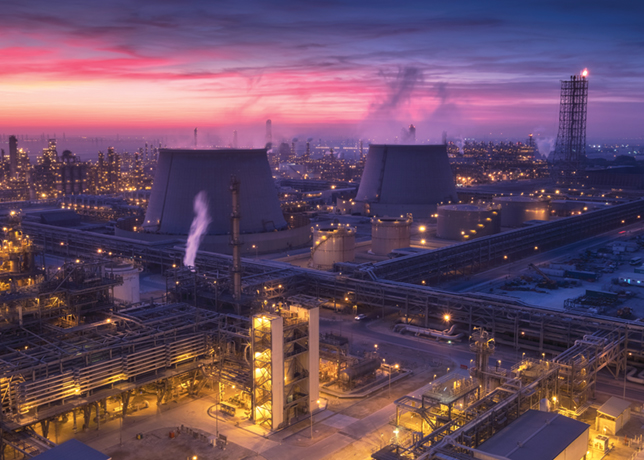
The 1 billion cubic feet per day (bcfd) Khursaniyah associated gas processing plant is expected to be commissioned imminently. The EPC contract for the $6 billion Wasit gas mega complex was awarded in February. With a nameplate capacity of 2.5 bcfd, the Wasit project is the largest gas development in the kingdom since the master gas system (MGS), which was constructed in the 1970s-1980s and was originally designed to handle 3.5 bcfd of natural gas.
Wasit has been rolled out to support Aramco’s corporate strategy to use gas as much as possible to meet rising domestic energy demand over the short term. It is estimated that without the Wasit development, the MGS will have a shortfall of sales gas for end users amounting to 740 mmcfd from 2014, according to Aramco. The development will entail the construction of a processing complex about 10 km southeast of Khursaniyah. This will process non-associated sour gas from the offshore Arabiyah and the Hisbah fields to produce 1.75 bcfd of sales gas and 4,200 tonnes per day of sulphur.
EPC bids were also submitted by an array of US, European and Asian contractors for the 1.5 bcfd Shaybah natural gas liquids (NGL) extraction and processing project in Rub Al Khali (the Empty Quarter). The $4.5 billion programme involves the fabrication and installation of facilities to recover NGL and relieving bottlenecks at the existing gas-oil separation plant. Aramco is aiming to award the contract by mid-2011, with commissioning targeted in autumn 2014.
Onsite construction work has also advanced for the offshore Karan gas development, with plant commissioning due to start in 2012.
The 1.8 bcfd project is Aramco’s first venture to commercially develop non-associated gas. The new natural gas capacity will primarily be used by Aramco to provide ethane feedstock for the petrochemical industry in the Eastern province, with the propane and methane being used for power generation and re-injection into oil fields.
However, when oil major ConocoPhilips exited the development of the $10 billion Yanbu oil refinery last year, it was easy to see the events as a sign of the US’ dwindling importance as a trade partner to Saudi Arabia.
But that would be too simplistic a reading of events. At the same time as losing out on the Yanbu deal, US firms notched up deals to partner on a $10.8 billion aluminium project, signed about $800 million of contracts in the power sector and the government agreed a $60 billion arms deal.
The ties between the two nations go beyond the purely economic and stretch deep into the kingdom’s history. Oil was first discovered in Saudi Arabia in the 1930s by US geologists, and the industry remains populated with US expatriates.
Saudi Aramco, the cornerstone of the country’s economy, was initially a joint venture with the US. And despite every US administration since president Richard Nixon saying it wanted to reduce dependence on foreign oil, particularly from the Middle East, that dependence is actually increasing.


