



























IN THE next few months, Saudi Arabia will make important progress in addressing its chronic gas shortage, with construction set to start on the $5 billion Wasit gas development and the $3 billion Shaybah natural gas liquids (NGL) project. This year will also see the Karan gas field come onstream.
Gas consumption has been rising rapidly over the past decade, on the back of huge investment in power and water schemes, petrochemicals plants and other sectors, such as metals and mining. National oil company Saudi Aramco has been unable to keep up with the growing demand and is struggling to provide new allocations to industrial schemes. As a result, many projects have been delayed. Currently, about $28 billion of industrial and petrochemical projects are on hold in Saudi Arabia. Of this total, $20.5 billion-worth of projects cite issues with gas feedstock as the reason for the delay.
Aramco has been charged with increasing domestic gas reserves by about 50 trillion cubic feet (tcf) by 2016, with an emphasis on finding new non-associated fields. The state-owned oil giant is also developing several multibillion-dollar megaprojects.
The Karan gas field was discovered in 2006 off the coast of the Eastern Province and is the first non-associated gas field to be developed in Saudi Arabia. The $10 billion scheme was fast-tracked from the outset and started its construction phase in 2009. Completion is due in mid-2011 and the field is expected to produce 1.8 billion cubic feet a day (bcfd) of gas, from reserves of more than 9 tcf of gas.
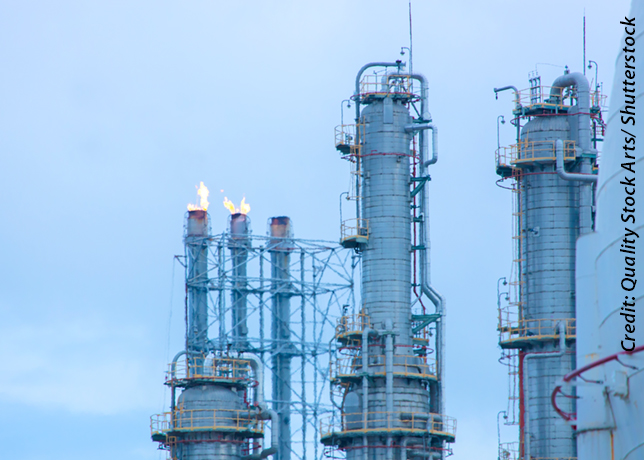
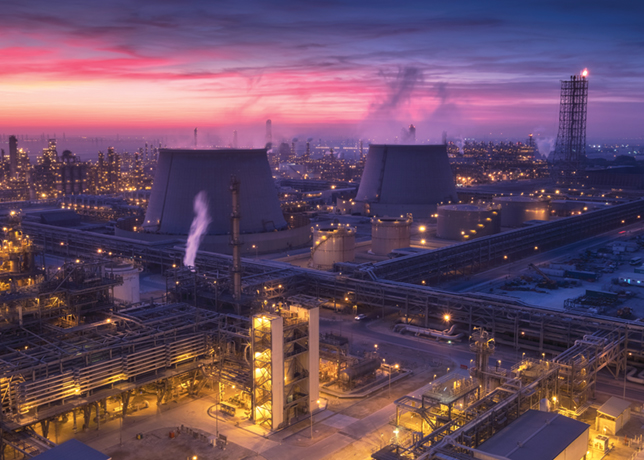
The gas will be processed at the Khursaniyah gas plant, which has undergone a major refurbishment. It now has two NGL trains that will process the first phase of Karan, as well as 1 bcfd of associated gas from nearby oil fields Abu Hadriya, Fadhili and Khursaniyah.
Most of the contracts have now been signed for the Wasit gas scheme and awards are expected soon on the Shaybah NGL project.
Under the Wasit scheme, Aramco aims to produce 2.5 bcfd of sulphur-rich non-associated gas from the Arabiyah and Hasbah fields, located off the coast of the Eastern Province, before transporting it to central processing facilities at Wasit.
In late January, four onshore packages for Wasit were awarded by Aramco and all were won by South Korean companies. SK Engineering & Construction (SK E&C) was awarded three of the four engineering, procurement and construction (EPC) packages.
The company will be responsible for the main inlet and gas processing facilities, the NGL fractionating column, the sulphur recovery facilities and the main supporting utilities. The sulphur recovery facilities comprise four 1,200 tonne-a-day units. The deal was worth a total of $1.9 billion.
SK E&C’s win took the contracting sector by surprise, as it was not thought Aramco would not award three packages to one contractor.
“SK has held in-kingdom contractor status [which allows companies to bid for Aramco contracts] for some time now, but hasn’t really won anything of note,” says a Saudi contracting source. “Aramco had a good look at them to see if they were capable of executing all three of the packages for the prices they submitted and obviously decided they were.”
But the project is of such importance to tackling the kingdom’s gas deficit and SK E&C has a track record of finishing gas projects ahead of time.


