


















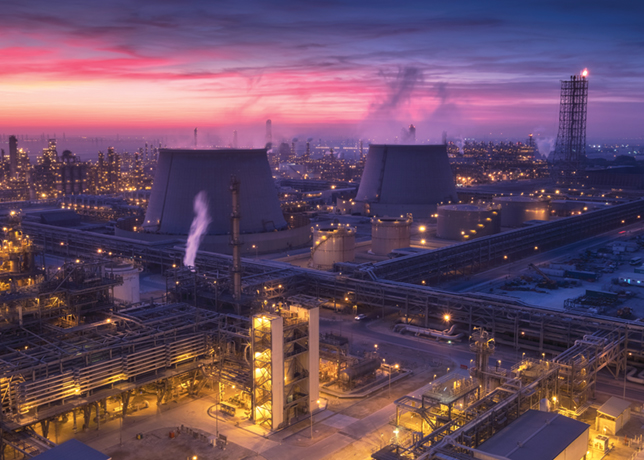

A SHARP decline in Saudi Basic Industries Corp (Sabic) second-quarter profits (it reported a 35-per cent drop due to lower prices and production) may have been a dampener for the global petrochemicals market, but the leading Middle East conglomerate, which supplies chemicals, industrial polymers, fertilisers and metals globally still holds a dominant market position in the global petrochemicals market. It is the largest and the most profitable non-oil company in the Middle East and one of the world’s largest petrochemicals companies.
Sabic’s dominant position in petrochemicals market provides it with a competitive edge. Sabic enjoys a comparative advantage over some other chemical producers because much of its feedstock comes from subsidised natural gas supplied by the government. The conglomerate’s products are used in a wide variety of industries, from car manufacture to house construction and cheap retail goods making it highly sensitive to movements in the global economy.
However, stricter environmental liabilities could result in substantial costs and increased potential liabilities for the company, says Datamonitor in its latest SWOT analysis of the petrochem giant. Sabic, which is 70-per cent state-owned, missed analysts estimates and posted net profit SR5.3 billion ($1.41 billion) for the quarter ended June 30, down from SR8.1 billion in the prior-year period. Analysts had forecast, on average, profit of SR6.58 billion, in a Reuters poll.
The bellwether Middle East conglomerate blames the lower profits on a combination of weaker product pricing, the impact of plant maintenance on production and sales volumes as well as higher raw materials costs.
Sabic’s profits had fallen in the two previous quarters amid slipping demand in China. But record earnings in the second and third quarter of 2011 helped it achieve a bumper year.
Basil Al Ghalayini CEO of BMG Financial Group says: “Although Sabic enjoys a competitive edge since much of its feedstock comes from subsidised natural gas supplied by the government, Sabic got hit with profits fallen in the first half of the year due to global economic slowdown, especially in China.”
STRENGTHS
• Comprehensive portfolio: Sabic has a strong chemical products portfolio addressing a global customer base that helps it in its revenue sustenance and enables it to establish its brand image. The company’s chemicals segment, which generates about 84 per cent of its total revenues, produces value-added chemical products.
For instance, Sabic manufactures hydrocarbon feedstocks (ethane, methane, and light naphtha, among others) which are the basic building blocks for manufacturing a range of other chemicals, plastics and advanced materials. It manufactures olefins and aromatics that are used to produce polyolefins and other polymers employed to make plastics, fabrics, and packaging materials.
Further, Sabic’s chemicals segment manufactures polyethylene, polypropylene, PVC, PET, thermoplastic resins, specialty compounds, film and sheet products, additives and intermediates and coatings. These products are further used by several industries including automotive, electronics, lighting and building, construction, healthcare, and transportation among others.
Also, the company’s chemicals business segment manufactures performance chemicals (such as bisphenol A, acetone, and ethanolamines) that find their applications in electronics, automotive, personal care, transportation/aviation industries.
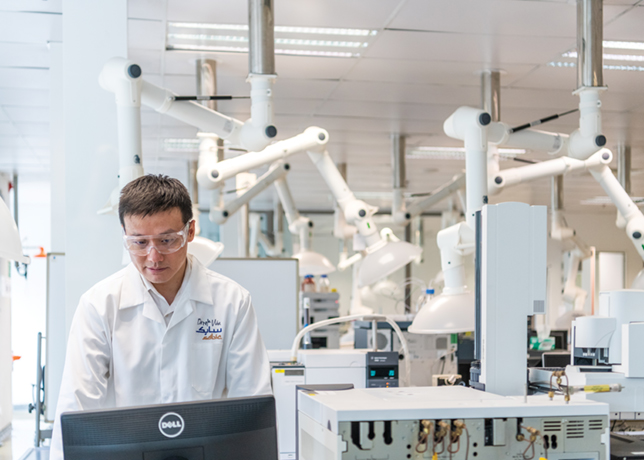
• Strong technology: Sabic has strong technology and innovation capabilities, which enable it to strengthen its product portfolio. In the financial year (FY) 2011, Sabic spent SR819.7 million (approximately $219 million) on its technology and innovation, an increase of 25.7 per cent over FY2010.
The company has six technology centres, of which two are in Saudi Arabia (Riyadh and Jubail), one in the US (Houston, Texas), one in the Netherlands (Geleen), and two in India (Bengaluru and Baroda).
Based on its strong research and technology operations, in FY2011, for instance, Sabic’s polymers business unit launched Sabic Vestolen A Rely, a new family of bimodal high density polyethylene (HDPE) materials for pressure pipe applications.
Further in FY2011, Sabic’s innovative plastics business unit introduced custom-colourable thermoplastic compound (sold under the brand name of LNP Thermocomp) for laser direct structuring to cater to the needs of mobile product designers.
• Dominant position: The company is the world’s third largest producer of polyethylene and the fourth largest producer of polypropylene. Sabic is also the world’s fourth largest polyolefins producer. It is a market leader in key products such as ethylene, ethylene glycol, methanol, MTBE, and polyethylene.
The company is also the world’s largest producer of mono-ethylene glycol, MTBE, granular urea, polyphenylene, and polyether imide. Furthermore, Sabic’s subsidiary, Saudi Iron and Steel Company (Hadeed), is also one of the largest steel manufacturers in the Middle East and is one of the world’s biggest fully-integrated steel producers.
WEAKNESSES
• Anti-dumping cases: Sabic can have potential legal consequences on it besides denting its brand image as it faces several anti-dumping cases against it in various countries. For instance, the Government of Turkey alleges that Sabic had been dumping monoethylene glycol in the Turkish market. Similar anti-dumping claims against Sabic had been made by the Government of India (GoI), although the case has been resolved.
In this case, in 2010, the GoI imposed a 6.5 per cent duty on polypropylene imports from Sabic saying that the company sold its product below cost. In China too, Sabic faced a similar anti-dumping case that got resolved in 2010.
OPPORTUNITIES
• JVs drive topline growth: Sabic has formed several joint ventures (JVs) with other major companies across the globe. For instance, in April 2012, Sinopec Sabic Tianjin Petrochemical Company (SSTPC), a 50:50 JV company between Sabic and China Petroleum & Chemical Corporation (Sinopec), laid the foundation for a polycarbonate complex with 260,000 metric tonnes per annum (mtpa) capacity, at a ground-breaking ceremony in the Tianjin Binhai New Area.
This new polycarbonate production plant is expected to be operational by 2015. Upon operation, this plant would produce four major classes of polycarbonate, including the mixed grade, extrusion grade, optical grade, and molding grade polycarbonate.
Earlier in May 2011, Sabic and Mitsubishi Rayon formed a 50:50 JV company, to build and operate two plants, one for methyl methacrylate (MMA), and the other for polymethylmethacrylate (PMMA), at one of Sabic’s manufacturing affiliates in Jubail, Saudi Arabia. The company’s MMA plant would have a 250,000 mtpa capacity, while its PMMA plant would have a capacity of 40,000 mtpa.
In April 2011, Sabic, Asahi Kasei Chemicals and Mitsubishi formed a strategic partnership for first acrylonitrile and sodium cyanide projects in the Middle East. The companies would form a limited liability company, Saudi Japanese Acrylonitrile Company (Shrouq), in Saudi Arabia, which would build a plant for the manufacturing of acrylonitrile (AN) and sodium cyanide (NaCN), with subsequent sales and distribution to be carried out by the partners. The agreed plan is to establish world-scale plants with annual capacities of 200,000 mt and 40,000 mt of AN and NaCN, respectively.
• Strategic initiatives: Sabic has taken strategic initiatives to boost its performance chemicals business. For instance, according to an agreement which Sabic entered into with Celanese Corporation in 2010, construction of a 50,000 tonne polyacetal (POM) production facility at the Sabic affiliate National Methanol (IBN SINA) complex in Jubail Industrial City, Saudi Arabia is under way.
This facility would become operational by 2013, using methanol being produced by IBN SINA. This represents a key feedstock for the production of POM, an engineered performance chemical product specifically used in automotive industries as well as in mechanical and construction fields. It also has many other industrial applications. This new facility can boost Sabic’s position in the performance chemicals industry.
Further, in 2010, Sabic signed an agreement with Lurgi, a Germany-based firm, for the technology licensing and engineering that would allow Sabic to produce oleo-chemicals at its affiliate, Saudi Kayan Petrochemical Company.
The new production line is expected to start up by the end of 2013. Sabic’s diversification into oleo-chemical products would increase its performance chemicals portfolio.
• New urea plant: Safco (an affiliate of Sabic), in December 2011, awarded a turnkey contract for the engineering design, supply and construction of the Safco-5 fertiliser plant (which would have an annual capacity of 1.1 million tonnes of urea) to Saipem (a turnkey contractor in the oil and gas industry).
The new plant is expected to start commercial production in 2014. Under this project, Sabic intends to convert 850,000 mt of carbon dioxide (green house gas), which is currently vented to atmosphere, into urea (a fertiliser). Construction of this new urea plant would strengthen Safco’s operations, which would in turn help Sabic in enhancing its fertilisers business.
THREATS
• Environmental liabilities: Sabic uses hazardous materials, chemicals and toxic compounds in its product development programmes and manufacturing processes. This exposes Sabic to risks of accidental contamination and events of non-compliance with environmental laws and regulatory enforcement. If an accident occurred or if contamination caused by the company’s prior operations was discovered, it would be liable for cleanup obligations, damages or fines, which could have an adverse effect on its business and results of operations.
Moreover, the environmental laws of many jurisdictions impose actual and potential obligations to remediate contaminated sites. These environmental remediation obligations could adversely affect the company’s operating results. Moreover, stricter environmental, safety and health laws and enforcement policies could result in substantial costs and increased potential liabilities.


