














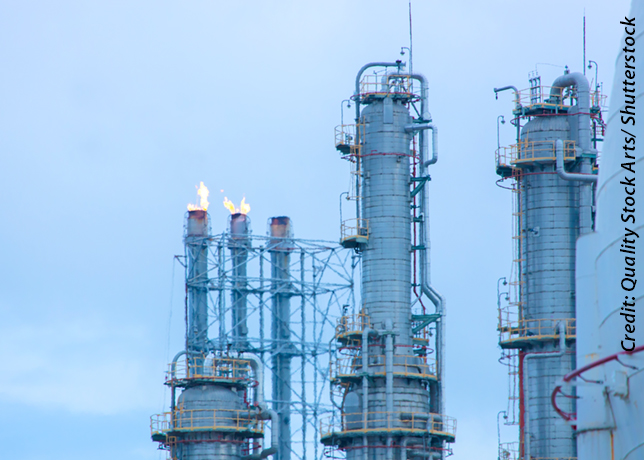












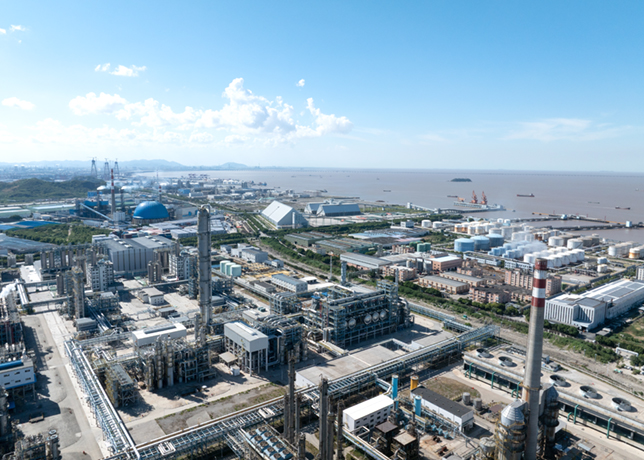



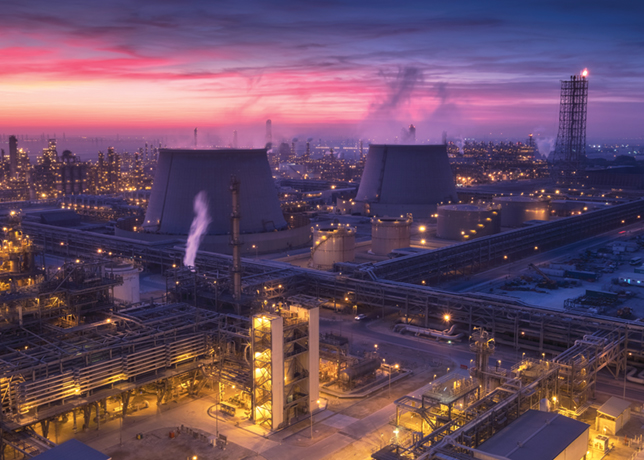

THE Middle East petrochemical market is expected to remain unaffected by the European financial downturn in the long term and is well poised to reach a total sales of $280 billion by the year 2015.
While there’s no denying the fact that the petrochemical sector clearly faces potentially growing challenges as the global demand outlook darkens, the impact will be only short term, experts affirm.
“The effect of the European financial crisis might be more short/medium term as opposed to long term,” says Vishnu Sankaran, industry manager, Chemicals and Materials Practice, Middle East & North Africa, Frost & Sullivan.
According to Sankaran, the primary reason being that Middle East petrochemical companies have increasingly started focusing on developing specialty petrochemical products (that never existed in the region before) and are developing more robust diversification plans.
“Given the industrial sector and population growth expected in the GCC in the next decade, we find a large number of companies trying to cash in on this opportunity within their own borders, and other opportunities in emerging markets as opposed to developed markets like Europe or the US,” says Sankaran.
This was corroborated by Abdulmohsen Al Majnouni, chairman, the Saudi Arabian Section of American Institute of Chemical Engineers (SAS-AIChE) Group, who recently spoke about the subject to The World Refining Association on how to capitalise on these opportunities whilst highlighting the vulnerabilities of this sector.
According to him, the petrochemical industry in the GCC has been vulnerable to financial crisis as it has consistently seen up and down cycles in recent years. It has been revealed that these cycles follow the refining industry cycles with a six to 12 month lag, however with recent advances in the petrochemical industry; the cyclic effect may not be the case anymore.
 |
Saudi Arabia contributes more than |
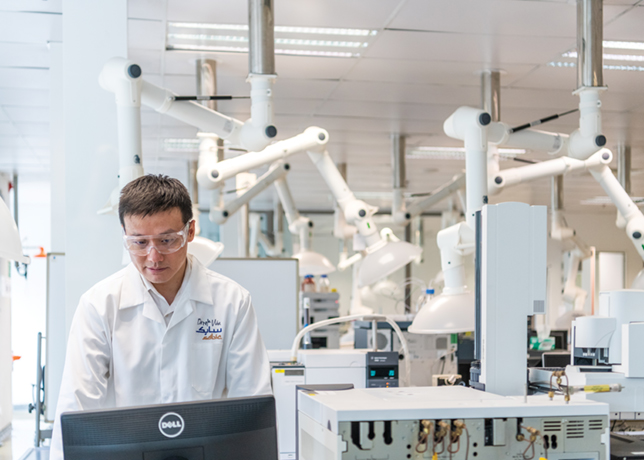
“The introduction of specialty or performance chemicals has differentiated the refining from petrochemical industries,” says Al Majnouni. “The more creative manufacturers are in developing new enhanced products, the more sustainable they become. The more efficient the petrochemicals industry becomes the less susceptible and less prone to financial crisis they are,” he adds.
A $280 BILLION MARKET BY 2015
According to the Gulf Petrochemical & Chemicals Association (GPCA), the GCC petrochemical capacity is estimated to increase from 77.3 million tonnes per annum (mtpa) to 113 mtpa at the end of 2015, marking a 46 per cent rise.
However, Frost & Sullivan estimates that the overall Middle East chemical sector which includes both the GCC and non-GCC countries, as well as other chemical segments in addition to petrochemicals to reach total sales of $280 billion by 2015. This will approximately constitute about 10 per cent of global petrochemical sales that year.
The GPCA reports that the GCC petrochemicals production capacity grew 13.5 per cent last year to nearly 116 billion tonnes, where Saudi Arabia alone was responsible for more than half of the $100 billion in sales generated by the GCC petrochemical sector.
Furthermore, petrochemical projects worth $19 billion are under execution in the GCC providing opportunities in both the long and short terms. According to the Kuwait Financial Centre (Markaz), Saudi Arabia tops the list with $12 billion of projects under execution and another $41 billion in future projects.
FEEDSTOCK RESTRICTIONS
While the opportunities will certainly help the Middle East to emerge as the global centre of petrochemicals production by 2020 as per industry projections, the region may, however, not continue to have the low cost advantage.
According to Frost & Sullivan’s Sankaran, the Middle East will indeed become a major global centre for petrochemicals, given the new petrochemical products (including specialised ones) that are coming up for the first time in this region over the next few years. However, it is unlikely that the region will have the feedstock advantage that it has enjoyed so long.
“While there certainly will be a marginal cost advantage, shortage of gas is expected to become a constraint in the future, in addition to the kind of new capacity additions that are coming up in China and shale gas discovery in North America,” Sankaran says.
A latest Citi Research report on Saudi Arabia’s petrochemicals market could not agree more. “For the petrochemicals market overall, the restriction in feedstock for Saudi Arabian companies would most likely translate to a potentially tighter supply-demand balance,” it says.
“Supply increases in recent years have been driven by the Middle East. This is particularly the case for the region’s largest producer of petrochemicals, Saudi Arabia. The country accounts for 10 per cent of global ethylene capacity and over 50 per cent of regional (Middle East and Africa) capacity,” it adds.
The research firm in its analysis of the sector calculates a five-year historical ethylene supply CAGR of 11 per cent for Saudi Arabia. This has far exceeded global demand growth of 4.0 per cent over the period. Saudi Arabian and other Middle East capacity growth has been driven by low-cost production. However, Middle East capacity growth is now slowing.
“We calculate a 2011-16e capacity growth CAGR of 5.3 per cent for Saudi Arabia. Growth is now being driven by NE Asia and specifically China,” it says.
“We believe further announcements of shale gas capacity additions could create imbalance in the market. That said, new petrochemical plants take at least five years to come on stream and so any over-supply concerns in this regard would be more long-term,” it adds.
Agrees Al Majnouni: “The major short term opportunities are in more integrated specialty and performance chemicals. These are basically secondary and tertiary industries. This is especially true for the Middle East countries as the supply of cheap feedstock is questionable.”
He further continues to state that in the long term, the opportunities will be found in the compounding industries, detergent basics, pharmaceuticals, rubbers and tires. Previously, companies operating in the GCC have enjoyed subsidised feedstock and less competition in the petrochemical area, however, now, competition and the availability of feedstock are two factors that demonstrate promise and excitement to the SAS-AIChE chairman.
“Now, not only has the feedstock become scarce and limited, but the entrance of many international companies in the business has made it very competitive. Companies have become smarter, energy efficient, cost effective and more sustainable,” says Al Majnouni.
RISKS AND CHALLENGES
Talking about the rationale behind the wide scale petrochemicals capacity expansion in the region, Sankaran says that the most important rationale for companies today is to go beyond an oil and gas based economy, and also beyond just commodity plastic manufacturing in the region. This will not only substitute imports of various specialty products and therefore create new jobs, but will also give rise to further downstream conversion within the region. In addition, construction and packaging sectors which consume large quantities of petrochemicals and plastics are expected to show good growth in GCC region over the next decade, states Frank & Sullivan’s Sankaran.
According to him, the key prospect for GCC petrochemicals companies is to cater to increasing in-house demand for petchems and plastics. That being said, some risks include accessibility to specific technology to make these products, as well as absence of proximity to some key end consuming sectors such as the automotive industry which is a large user of plastics.
The other major risk is the speed at which some of the end sectors might develop within the GCC region like automotive or electrical/electronics sectors. Basing petrochemical capacity addition on the sole criteria of developments of these end sectors within GCC might not be a smart move in the short to medium future. These are currently being serviced by well established players as well as other competitors from Asia.
Also while certainly Asia is a key target market for GCC-based producers currently, developing their business strategies purely based on Asian demand is also a risky affair. Both Africa and Latin America could also be potential target markets which have a good growth potential over the next five to 10 years.


