









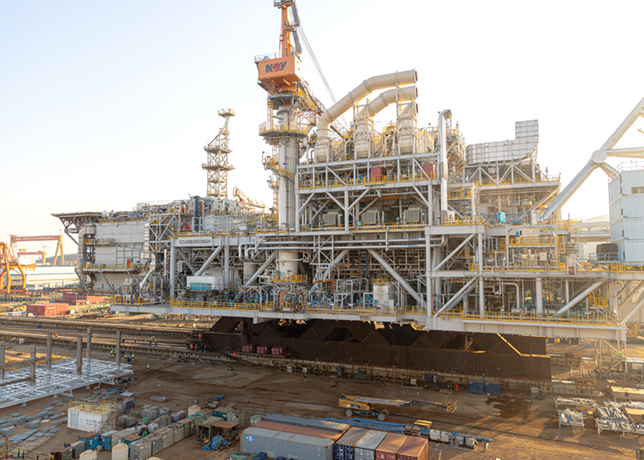
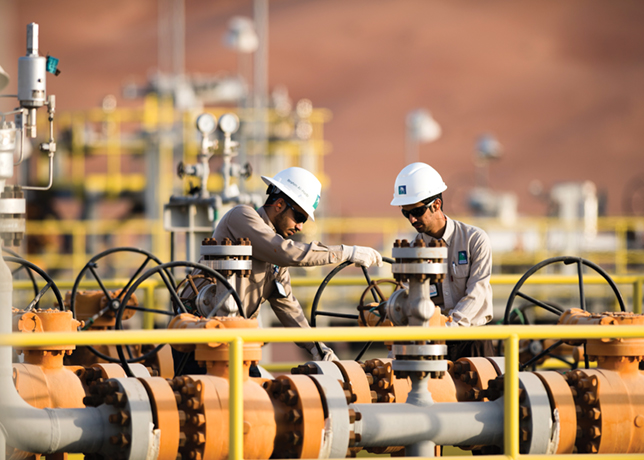
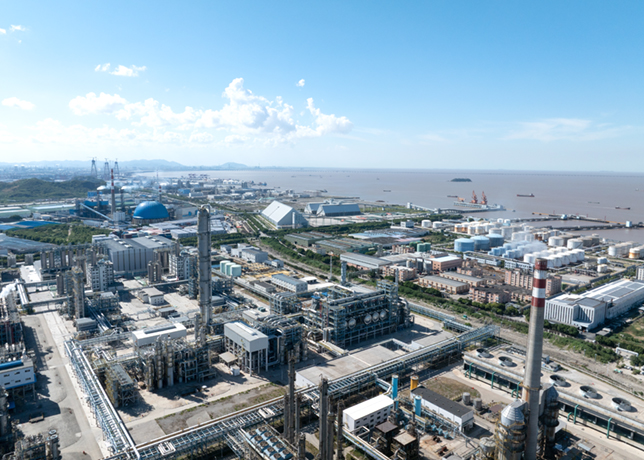

THE Middle East is witnessing a flurry of construction activity with petrochemical and polymer project constituting a significant share of it.
An additional 21.175 million tonnes per year (mtpy) of announced ethylene capacity is projected to come on line in the Middle East by 2018, including in Algeria, Egypt and Iran, based on analysis by ICIS.
Ethylene capacity in the region is estimated at around 27.25 mtpy. Planned expansions amount to 67 per cent of existing regional capacity. But certain projects – such as those in Iran – are likely to be delayed or cancelled on account of international sanctions.
The annual production of plastic resins in the GCC region is projected to increase by 39 per cent to 25 million tonnes (mt) in 2016 from the current 18 mt. The GCC includes Bahrain, Kuwait, Oman, Qatar, Saudi Arabia and the UAE.
About 3 mtpy is converted in the region. This is expected to grow by more than 50 per cent to 5 mtpy in 2016, Abdul Aziz Al Hajri, CEO of Abu Dhabi-based producer Borouge, said in Dubai during the opening of the third Gulf Petrochemicals and Chemicals Association Plastics Summit in April.
The small conversion capacity in the Gulf as compared with the vast amount of available feedstock, as well as converters’ proximity to the feedstock, are factors allowing for growth of the conversion sector here, the CEO says.
According to Saudi Arabia-based Samba Financial Group, about $50 billion worth of petrochemical projects are planned or under way in Saudi Arabia, with a chemical mix that is aimed at nurturing domestic industries rather than simply serving export markets with base chemicals.
SAUDI ARABIA LEADS
The Saudi government’s National Industrial Strategy aims to greatly develop and diversify the economy by 2020 with objectives to expand manufacturing from 11 per cent to 20 per cent of the gross domestic product (GDP); double Saudi industrial employment from 15 per cent to 30 per cent; increase industrial exports from 18 per cent to 35 per cent; and double the proportion of technology-based manufactured products from 30 to 60 per cent.
The Saudi Arabia economy was worth roughly $580 billion in 2011, notes Samba.
The latest project in the Middle East was announced at the end of May, with Japan-based Sumitomo Chemical and Saudi Aramco proceeding with the phase II expansion of Saudi Arabia joint venture Petro Rabigh.
Total investment in the Rabigh II project is estimated at $7 billion, and includes expanding the capacity of the existing 1.3 mtpy ethane cracker, as well as building a new aromatics complex using additional 30 million standard cubic feet per day (mcfd) of ethane and around 3 mtpy of naphtha as feedstock.
The facility is scheduled to start in 2016, and its main products will include ethylene propylene rubber, thermoplastic polyolefin, methyl methacrylate monomer, polymethyl methacrylate, low density polyethylene/ethylene vinyl acetate (LDPE/EVA), paraxylene/benzene, cumene and phenol/acetone.
Sumitomo and Saudi Aramco have a 37.5 per cent stake each in Petro Rabigh.
SADARA GETS STARTED
But the largest project under way in the region is the $20 billion Sadara Chemical venture. In 2011, US-based Dow Chemical and Saudi Aramco formed the Sadara joint venture, to be built in Jubail Industrial City. Sadara’s cracker will be the first Saudi plant designed to run on a mixed feedstock of ethane and naphtha.
“A mixed-feed cracker will enable Sadara the flexibility to crack the most advantaged feedstocks... capturing growth across large and attractive market sectors such as electronics, coatings, adhesives, and food packaging,” says Jim McIlvenny, senior vice president at Dow Chemical and chairman of the Dow Sadara Project Office.
Both Sadara and Petro Rabigh are encouraging downstream investment by building industrial parks next to their facilities, says Keith Savard, Samba’s director of economic research, in a report: “For investors, the close proximity to raw materials producers negates the need for large inventories; for the authorities, fostering these domestic industries opens up the possibility of significant job creation.”
According to McIlvenny, the location of the joint venture “also creates a unique opportunity to target high margin end-markets in Asia Pacific, the Middle East, Africa and Eastern Europe, enabling customer growth in these key emerging regions.”
Sadara is expected to deliver annual revenues of roughly $10 billion within just a few years of operation.
What makes Sadara different from the petchem projects of 10 or 15 years ago is “the complexity and magnitude,” says Dow’s McIlvenny. “Comprising 26 manufacturing units, Sadara will be one of the world’s largest integrated chemical facilities and the largest ever built in a single phase with more than 3 mt of capacity. Ultimately, Sadara will be instrumental in Saudi Arabia’s strategy to become not only a strategic chemicals and plastics producer, but also a hub for future downstream manufacturing,” he adds.
There is a considerable difference in the projects in Saudi Arabia compared with most others, notes Robert Bauman, director of US-based Polymer Consulting International:
“The strategy in the kingdom has been to move up the value chain to specialty chemicals and polymers, to consume more commodity polymers in the country to convert them to higher value-added fabricated products that can be exported – and create more jobs. Thus Saudi Arabia will still be a step ahead of the competition.”
FROM ARABIA TO ASIA
Other projects in the region include Saudi Kayan Petrochemical starting up its Al Jubail-based 300,000 tonnes year LDPE plant this year. Saudi Arabia chemical major Sabic owns 35 per cent of Saudi Kayan, with 20 per cent owned by Al-Kayan Petrochemical and 45 per cent by public shareholders.
Output from the new LDPE unit will be marketed globally, says Khaled Al Mana, the company’s executive vice president for polymers, on the sidelines of Chinaplas, in Shanghai, China, in April.
“Part of the LDPE exports from the plant will be targeted at China,” he adds.
Demand growth for polymers, including polyethylene (PE), will average about 6 per cent in 2012 – above the projected growth of global GDP – with growth in China forecast to be in the double-digits, Al Mana adds.
Borouge expects demand for polypropylene (PP) and PE to grow in the next five years by 7 per cent per year, mainly due to the higher GDP growth rates in the Gulf region.
“A major contributor will be the continued trend towards urbanisation and growth of cities in our target markets,” says a representative from the company.
“We are confident in the long-term growth of the high value markets we serve... The specific high-end infrastructure, automotive and advanced packaging markets of the Middle East and Asia have not experienced the decline in demand seen in many other petrochemical market sectors,” says the Borouge representative. “We expect this trend to continue,” he adds.
Although Europe is in recession, “on the positive side, (the continent’s) ethylene and derivatives capacity is being, and will be, rationalised,” points out consultant Fred Peterson of US-based Probe Economics.
“When Europe’s economy recovers, there will be more room than before for Middle East imports,” Peterson adds.
ADDITIONAL CAPACITIES
With its rich natural gas resources, Qatar is keeping busy as well. State-owned Qatar Petroleum and Qatar Petrochemical Co (Qapco) are jointly developing a new petrochemical complex in Ras Laffan Industrial City.
The new complex will include a 1.4 mtpy steam cracker that will obtain feedstock from natural gas plants at the site.
Output from the new complex will be sold primarily in high-growth markets in Asia, Africa and Latin America, and it is expected to produce 850,000 tpy of high-density polyethylene (HDPE); 430,000 tpy of linear low density polyethylene (LLDPE); 760,000 tpy of PP; and 83,000 tpy of butadiene.
The complex is estimated to cost $5.5 billion and is scheduled for completion in 2018. Qatar Petroleum will have an 80 per cent equity interest in the project, with Qapco taking up the remaining 20 per cent stake.
Qapco has also started up its new 300,000 tpy LDPE facility at Mesaieed in Qatar. Qapco’s two existing 200,000 tpy LDPE plants, which are located at the same site, are running at full capacity.
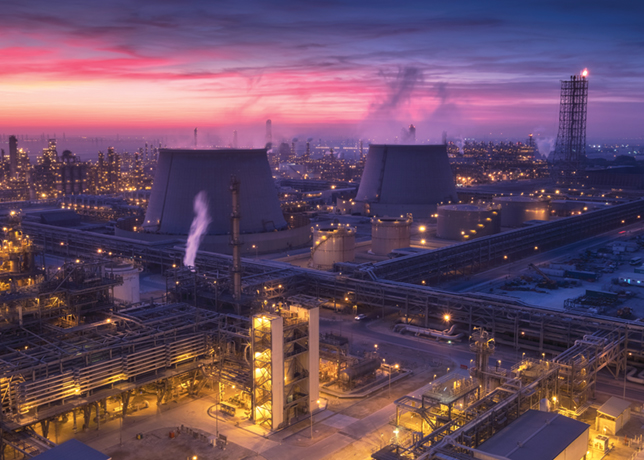
About 250 km west of Abu Dhabi City is the Ruwais petrochemical complex, where Borouge has been since 2001, starting with 450,000 tpy PE capacity. The company was founded in 1998, as a joint venture between Abu Dhabi National Oil and Germany-based Borealis.
The current $4.5 billion Borouge 3 expansion project at Ruwais in Abu Dhabi will increase capacity of the plant to a total of 4.5 mtpy by the end of 2013. It will be fully operational by mid-2014. As of March 2012, the company had completed 60 per cent of its construction.
This project includes the construction of an ethane cracker producing 1.5 mtpy of ethylene, at the cost of $1.01 billion; two additional Borstar PE units producing 1.08 mtpy as well as two additional Borstar PP units producing 960,000 tpy; and a 350,000 tpy LDPE unit.
The contract for the PE and PP units is valued at $1.26 billion, while the contract for the LDPE unit is valued at $400 million.


