









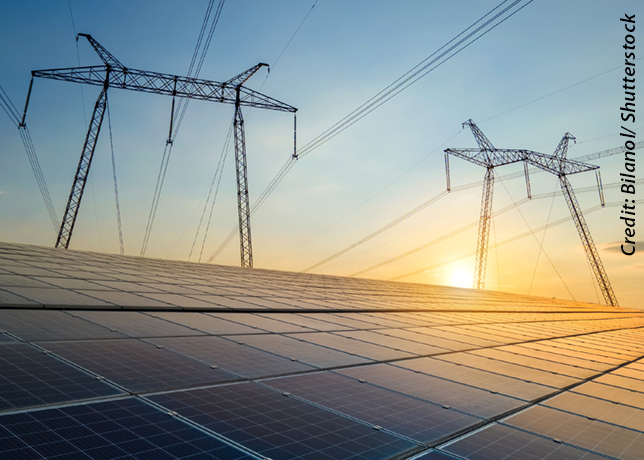








ELECTRICITY demand in the Middle East and North African (Mena) countries is set to grow at an average annual rate of 7 per cent per year, while it is estimated that as much as $283 billion (Dh1.039 trillion) will be invested within the region’s power sector between 2014 and 2018.
The proposed regional investment in electricity generation is as per the finding of Kuwait Financial Centre. Also, the Gulf Cooperation Council (GCC) states are projected to invest more than $300 billion in some 20 energy projects by 2020, which will generate eight gigawatts (GW) of additional power, according to Doha-based Gulf Organisation for Industrial Consulting (GOIC).
So far, 75 GW of renewable energy projects worth $200 billion are already in the pipeline, making the region a global power player in the sector.
The surge in investment is attributed is growing energy consumption in the Middle East, the highest in the world next to Asian countries. In the GCC, power generating capacity will need to rise by an estimated 64,000 megawatts (MW) to 176,500 MW by 2020, which at 2012 unit costs will require investment of $40-45 billion.
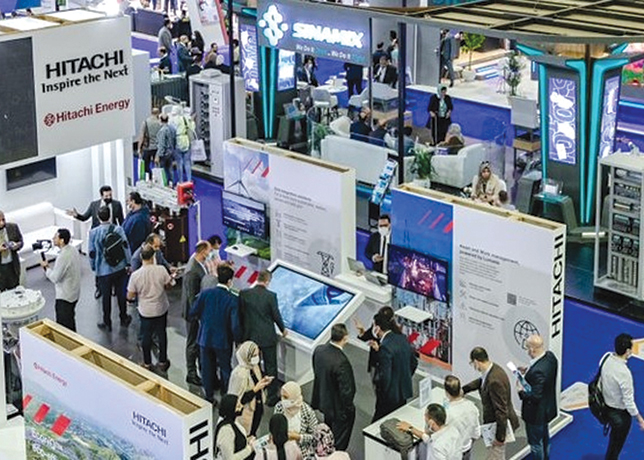
“Adwea has been producing clean and efficient water for Abu Dhabi for 15 years. In the last five years, the demand growth has increased on average by 9.4 per cent per annum in Abu Dhabi,” said Abdulla Saif Al Nuaimi, director general of Abu Dhabi Water and Electricity Authority (Adwea) in his speech which was read out by Saeed Nasouri, technical advisor at ADWEA, after inaugurating the sixth edition of Power & Water Middle East exhibition.
“As a result of new development and increase in population, an increase of 11.9 per cent per annum is forecasted for electricity and 7.2 per annum per annum for water, through 2015.”
Highlighting the need for efficiently building long-term plan capacity of future projects Saeed Nassouri, technical Advisor, Adwea says: “In the last five years demand growth has increased on average by 9.4 per cent per annum in Abu Dhabi, as a result of new development and increase in population and 11.9 per cent growth per annum until 2015 is forecasted by Adwea.”
To ensure availability of power Adwea has attracted $18 billion worth of investment to its independent power and water projects and extended its network length to over 5,800 km of transmission lines across the Emirate of Abu Dhabi.
“Adwea ensures sustainability of its business in the long run by ensuring supply meets demand, delivering on customer’s expectations, while maintaining the highest standard in health, safety and environmental practices,” he adds.
“More gas production (including unconventionals) is a necessity for regional and global markets. Mena gas export growth is virtually all driven by Qatar and Algeria. Neither will grow much after 2015 – Algerian exports are already declining, Oman, Egypt exports are also declining. (However), new importers are appearing such as Kuwait, Dubai, Bahrain and Fujairah,” says Robin Mills, head of Consulting at Dubai-based Manaar Energy Consulting.
Of the UAE’s current installed electricity generation capacity, almost 85 per cent of the power that’s generated is gas-based, while the other plants are oil-fired. Nearly all of Abu Dhabi and Dubai’s electricity comes from gas-based stations. The UAE’s $20 billion (Dh73.5 billion) civil nuclear programme is on schedule with the country’s first nuclear reactor slated to start operations in 2017.
The UAE is currently working on plans to have four nuclear power reactors operational in Barakah by 2020, to generate 5.6 GW of electricity. The first plant has been under construction since July 2012.
POWER DEMAND SEEN RISING 7PC
Meanwhile, power demand in the Mena countries is forecast to grow at around seven per cent over the next 10 years, says another report.
Power demand in the Middle East and North African (Mena) countries is forecast to grow at around seven per cent over the next 10 years and an estimated 283 billion will be invested in the region’s power sector between 2014 and 2018.
A report by Kuwait Financial Centre, or Markaz, notes that Mena countries, with the exception of GCC states, though rich in natural resources that aid in power generation, are bereft of the necessary technology, infrastructure and in some cases, political and economic stability, to fully utilise and benefit from them.
“In addition, power sector in those countries is plagued with problems of transmission and distribution losses. These countries, therefore, intend to increase investments in the sector and to look at other alternative sources of power,” the report says. The International Renewable Energy Agency, or Irena, and Renewable Energy Policy Network for the 21st Century (Ren21) says in their joint report that strong economic and demographic growth associated with rapid urbanisation has led to an increase in energy demand to meet rising electricity and desalinated water needs in the Mena region.
The report estimates that investments worth $145.7 billion will be needed for power generation from 2013. Of this, investments worth $63.1 billion will be in the GCC, $21.4 billion in Iran and approximately $53 billion in the combined other countries of the region.
According to the Irena report, global demand for renewable energy continued to rise during 2011 and 2012, supplying an estimated 19 per cent of global final energy consumption, with a little less than half from traditional biomass.
“Useful heat energy from modern renewable sources accounted for an estimated 4.1 per cent of total final energy use; hydropower made up about 3.7 per cent; and an estimated 1.9 per cent was provided by power from wind, solar, geothermal, and biomass, and by biofuels.
Total renewable power capacity worldwide exceeded 1,470 GW in 2012, up about 8.5 per cent from 2011. Hydropower rose three per cent to an estimated 990 GW, while other renewables grew 21.5 per cent to exceed 480 GW. Globally, wind power accounted for about 39 per cent of renewable power capacity added in 2012, followed by hydropower and solar PV, each accounting for approximately 26 per cent,” the Irena report says.
Markaz points out that in Egypt, domestic oil consumption has grown by over 30 per cent over the last decade and the government planned to invest more than $100 billion over the next decade. The economy has, however, been reeling under the negative consequences of political instability and security concerns since 2011.
The Markaz report says that surging power demand and shortage of domestic energy resources has compelled the Moroccan government to reduce dependency on non-renewable sources of power generation and strengthen efforts to tap the hydro and solar resources for power generation. Consumption has grown at an average rate of seven per cent per year over the past ten years, while the production has increased at the rate of four per cent for the same period.
The report says in 2011, the daily supply rate of natural gas to Jordan was approximately 95 million cubic feet as compared to the demand which was estimated at 255 million cubic feet. Jordan imports more than 96 per cent of its oil needs and is dependent on Egypt for its gas supplies. The country has not yet explored its energy reserves and there is a huge potential for investment opportunities.
“Oil and gas production remains the key source of foreign exchange income and fiscal revenues for Iran. Iran is estimated to have the second largest reserves of the natural gas and the fourth largest reserves of oil in the world. Iran also has abundant sunlight that is underutilised and can be developed as a major source of power. Over the past decade, the Iranian power sector has come under increased pressure to meet the growing consumption needs of the population,” says Markaz.
Power consumption in Iraq grew at an average rate of 3.6 per cent over the last decade. But the power distribution networks of Iraq suffer from poor design, lack of maintenance and theft. Iraqi government has announced 28 billion of investments in power sector.
Markaz report points out that depleting natural resources and global environmental awareness have prompted many Mena governments to increase the share of renewable resources in power generation. Mena region possess 57 per cent of the world’s proven oil reserves and 41 per cent of proven natural gas reserves, but population and economic growth are putting greater pressure on the power sector in the Mena region.
“Many countries in the Mena region have planned for the systematic reduction in subsidies, which should help in attracting investments. There is a long way to go for the Mena countries in terms of developing the power sector,” says the report.
INVESTMENT SURGE IN WATER TOO
Meanwhile, the water sector could witness a similar surge in investments. Data gathered by Meed shows $683 million more will be invested to water projects in the UAE and Lebanon this year. In 2014, more than $12.5 billion will be ploughed into water projects across Mena.
“The power and water sectors are two of the most active segments of the projects market in the Middle East and North Africa, with the GCC region leading the way in terms of power and water projects. Stakeholders attending these conferences will have a clearer idea of the opportunities at stake, and how they can align their businesses to take advantage of increasing investments in power and water projects,” says Edmund O’ Sullivan, chairman, Meed events.
But beyond projects opportunities, O’ Sullivan says equally critical issues such as waste water reuse, energy efficiency, and effective use of technology, among others, will be comprehensively discussed by international and regional experts in the hope of contributing to the growing body of knowledge of these important matters.
“Meeting the demand is only half the battle, ensuring that we have sustainable water and energy programmes is just as critical if are to handover the planet to future generations still capable of sustaining human progress,” continued O’ Sullivan.

