



















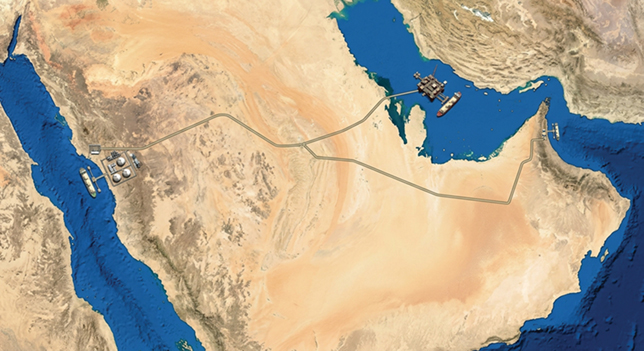

Saudi Aramco’s production portfolio includes the world’s largest onshore and offshore oil fields, these, along with all other company reservoirs, are conservatively managed to ensure long-term maximum sustainable production.
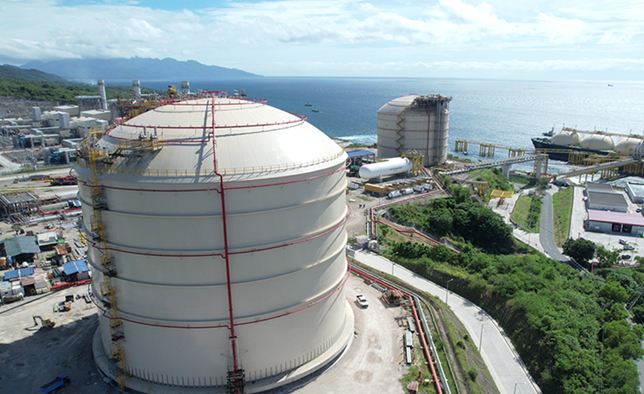
In the Haradh portion of the world’s largest oil field, Ghawar, a new increment of 330,000 bpd of Arabian Light crude oil was brought on-stream during 2003 with new GOSP facilities and the first-ever use of mixed seawater and disposable water in water-injection facilities.
Advanced power technology, or the cogeneration of heat and power to be commissioned for use as part of the Qatif increment infrastructure in 2004 (see page 26), actually saw its first company use in the triple-unit installation of combined-cycle, combustion gas turbine generators in Abqaiq Plants in 2003.
Each of these 9 three units produces electric power along with superheated steam. This facility provides Abqaiq Plants with reliable power for high-efficiency operations and also allows the export of electric power to the national grid.
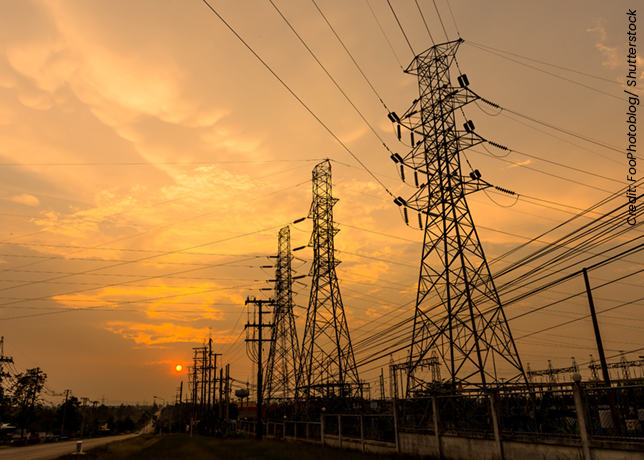
Power generation increasingly engages the time and attention of company engineers and planners, and during 2003, company-provided power distribution has been extended to the Central Region of Saudi Arabia, as well as to Rabigh on the West Coast.
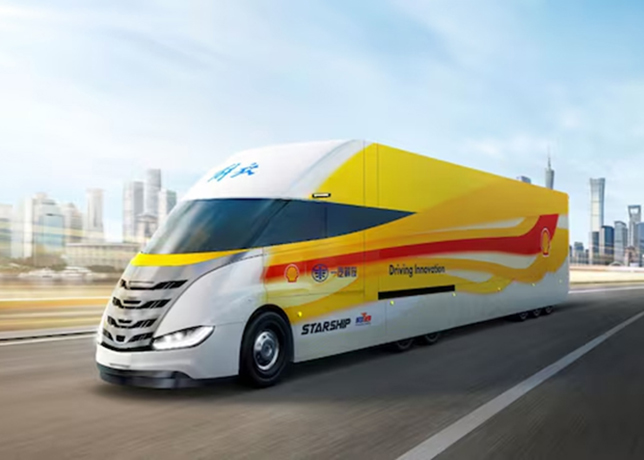
In keeping with the company's strategic emphasis and leveraging oil and gas resources to diversify and expand the kingdom's economy, Saudi Aramco signed agreements in 2003 with Royal Dutch/Shell and France's Total for the exploration, development and production of non-associated gas on nmore than 200,000 sq km of territory in the south Rub' al-Khali, or Empty Quarter.
The project is valuead at more than $2 billion and will be led by Royal Dutch/Shell, which has a 40 per cent stake in the venture. Saudi Aramco and Total each own 30 per cent shares.
Saudi Arabia's Supreme Council for Petroleum and Mineral Affairs affirmed the deal in November and also approved a framwork agreement for three additional gas exploration and production projects.
Two vast projects
Saudi Arabia will finish work on two vast new expansions of its oil fields three months early in July Saudi Aramco says.
The Qatif and off-shore Abu Sa’fah fields will eventually add another 650,000 barrels per day of new oil production.
Originally slated for completion October, the date has been moved up to July, the company says.
“The oil market is counting on every one of us to deliver this oil,” head of exploration and production, Vice President Abdallah Al-Saif, told a meeting of oil contractors recently, the company says.
The meeting was held to review progress and problems and “confirm our commitment to meet the July completion date,” Vice President for Project Management Ali al-Ajmi said.
The unexpected surge in oil demand this year - the fastest in more than two decades by some estimates - has caught the oil industry off guard and helped feed soaring oil prices as producers and refiners race to catch up.
Saudi Arabia has said it is considering rolling out more oil wells to meet the growing demand. Originally, Saudi Aramco was to use Qatif and Abu Sa'fah to replace production from retired older wells, keeping overall output capacity constant at 10.5 million bpd, including the neutral zone shared with Kuwait.
But officials have said they might delay shutting down older wells, making Saudi capacity spike up over 11.3 million bpd.
Saudi Aramco says its policy is to maintain 1.5 million-2 million bpd of idle pumping capacity at all times. It’s currently pumping 9.1 million bpd to meet soaring new demand.
Qatif will produce 500,000 bpd of blended Arabian Light crude. Offshore Abu Safah will produce 300,000 bpd of, up from 150,000 bpd now.
Qatif giant
Saudi Arabia’s giant Qatif oilfield will come onstream in October this year, the same time that the kingdom’s Abu Sa'fah field will also increase capacity.
“The Qatif field will come onstream during the fourth quarter of 2004 with a target capacity of 500,000 barrels per day (bpd),” Saudi Aramco’s head of Reservoir Management Nansen Saleri told a conference.
The field is expected to have a plateau period of at least 30 years, he added but did not say when the production peak would be reached.
Qatif is one of the fields that Saudi Arabia is banking on to add to its current capacity of 10.5 million bpd.
A second field, Abu Safah is pumping at 150,000 bpd and its production expected to rise to 300,000 bpd in October.
Saudi Oil Minister Ali al-Naimi said the kingdom was producing 8 million bpd, around 360,000 bpd above its current quota of 7.638 million bpd.


