











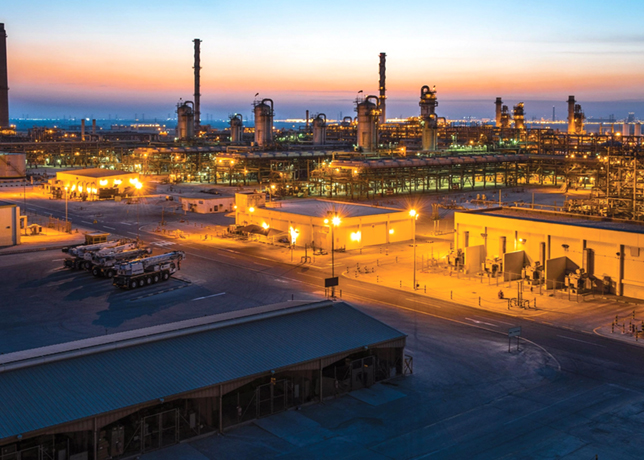






Big doesn’t even begin to describe Saudi Aramco’s Qatif and Abu Sa’fah Development Program.
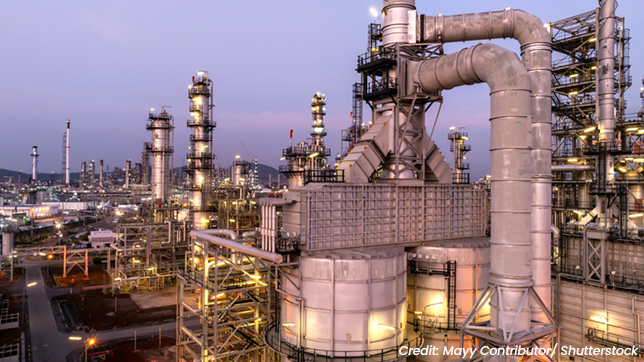
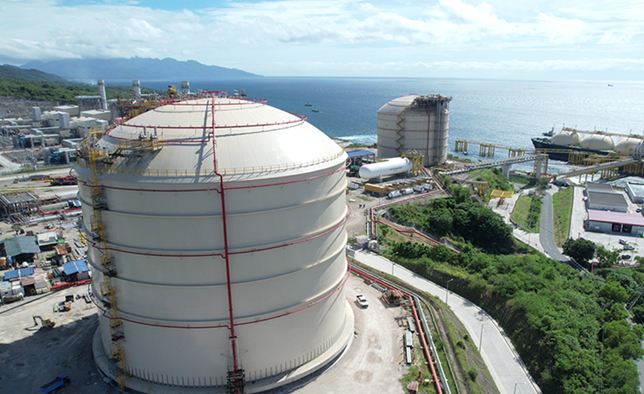
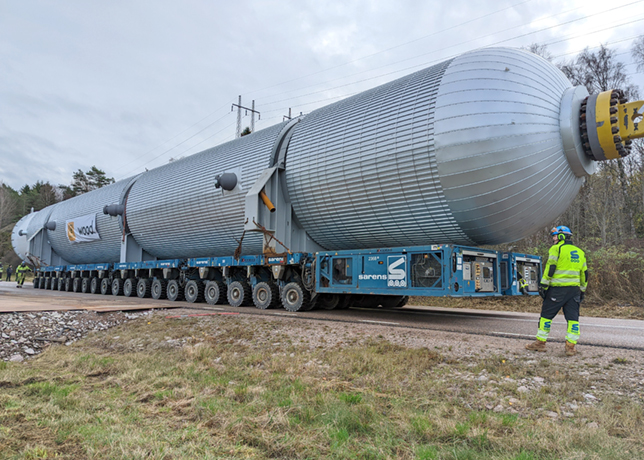
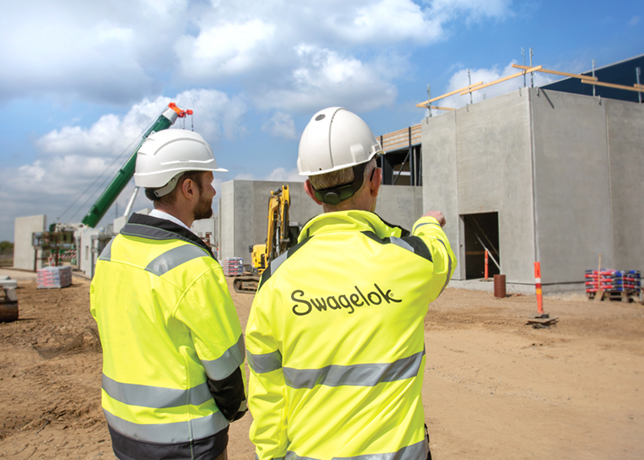
It’s enormous, even by Saudi Aramco’s standards. The pipe rack alone is 900 meters (2,953 feet, more than half a mile), and some process vessels are the size of nuclear submarines. It is the largest such project ever tackled by Italy’s well-regarded Snamprogetti, one of the main contractors on Qatif-Abu Sa’fah, and nearly 12,000 workers representing more than 20 nationalities are laboring on the project.
The dual project, which is developing the onshore Qatif and offshore Abu Sa’fah fields, will ultimately produce 800,000 barrels of crude oil and 370 million standard cubic feet of associated natural gas per day. That’s bigger than the giant 500,000-barrel-per-day Shaybah installation in the Rub‘ al-Khali desert.
Target completion date is October 2004, and the project is slated to come on-line ahead of that schedule.
Saudi Aramco president and chief executive officer Abdallah S. Jum’ah said at a recent meeting at the project site of managers and contractor CEOs that Qatif-Abu Sa’fah is not only important to Saudi Arabia’s people and economy but to the world’s.
“The oil reserves represented by this project are half those of Exxon Mobil, double those of Chevron Texaco and equal to Shell’s,” Jum’ah said. “The project will provide fuel for buses in China and create job opportunities in the world ... and it will help the Kingdom continue to play its fundamental role as the leading provider of energy to the world.”
Discovered in 1945 north of the company’s current headquarters in Dhahran on the Arabian Gulf coast, the onshore Qatif field is 50 kilometers (6.2 mi) wide and contains seven oilbearing reservoirs holding an estimated 8.4 billion barrels of oil. Offshore Abu Sa’fah measures 19 km (11mi)by10 km (6.2 mi) and holds an estimated 6.1 billion barrels.
Overall program manager Fahad E. AlHelal said the Qatif field will be the company’s first to produce Arab Light oil by blending Arab Extra Light and Arab Medium, and it will be the first to be self-sufficient in power and steam, through the construction of an on-site co-generation plant. In co-generation, exhaust from the power station is harnessed to produce steam for the plant, a costefficient and environmentally sound practice.
In the early stages of planning for the project, a multidisciplinary team, composed entirely of Saudis drawn from across the company, was formed to come up with innovative approaches to the project. The team worked closely with Foster Wheeler Engineering of the United Kingdom. The team produced cost-saving initiatives, such as a more efficient design of the fiber-optic networks, locating two gas-oil separation plants (GOSPs) at the same site so they can share common facilities, and relocating scraper facilities to minimise the need for special security fencing. These initiatives resulted in savings of $400 million in capital expense and $32 million in annual operating expenses.
The sprawling scope of the overall project includes three new gas-oil separation plants, five new and 10 upgraded offshore platforms, 34 drilling islands, 1,000 km (621 mi) of pipelines and in-plant piping, 3,000 km (1,863 mi) of fiber-optic cable, an electrical substation and transmission lines, and myriad support facilities.
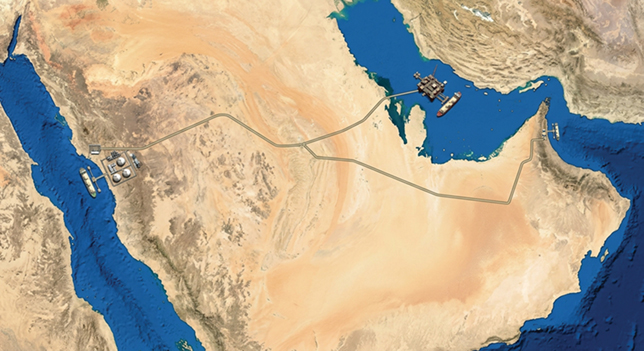
The Qatif field is composed of north and south domes. Qatif GOSP-2 will gather gas and 200,000 barrels of crude per day and send it all to the central processing facility in the north, where the crude is blended with 300,000 barrels per day from the north dome. All the crude is desalted, stabilized and processed, and then shipped to Ju’aymah and Ras Tanura. The gas will go to Berri Gas Plant.
Berri Gas Plant is being expanded to accommodate increased production from the Qatif-Abu Sa’fah grid, without affecting normal production. One of the key aims of the expansion project is, through enhanced sulfur recovery, to meet sulfur dioxide emissions requirements of the Saudi Meteorology and Environmental Protection Administration (MEPA). The new facilities are designed to recover 99 per cent of all sulphur feed, making Berri the cleanest-operating plant in the company.
Once the expansion is completed, Berri sulfur production will increase from the current 1,600 metric tonnes per day to 3,300 tonnes. The sulphur is processed into pellets for export at a plant in Jubail.
The Berri project began in March 2001 and is slated for completion in October 2005. More than 2,000 workers, directed by a 13-member, all-Saudi management team, are employed on the project, which includes installation of a new gas-sweetening train and two new sulfur-recovery units. The three existing sulfur-recovery units will be revamped to use cutting-edge Super Claus technology.
Berri project manager Taber Y. Al-Taher says the project is “an important part of the Kingdom’s objective to protect the environment. Saudi Aramco is committed to maintaining the highest standards in air-quality control.”
The Abu Sa’fah portion of the project, in addition to new and upgraded platforms, includes laying a new 42-inch trunkline to the Qatif central producing facility, flanklines to connect new offshore wells, and fiber-optic and power cables.
One hundred fifty-one development wells are planned in the onshore Qatif project, including producer, injector and water wells. For Abu Sa’fah, 29 new offshore wells and 61 workovers of existing wells are planned.
At a recent meeting with contractor CEOs at the project site, Saudi Aramco executives praised the effective cooperative relationship among the company and contractors.
“In partnering with (contractors), quality was a major contributing factor,” said Isam Al-Bayat, Saudi Aramco’s vice president of Project Management. “I am glad to report an average Project Quality Index of 93 per cent for the overall project. This is a very well-recognised performance and reflects an aggressive inspection program in place during construction.”
In addition to Snamprogetti, the main contractors in the project are: Technip, Italy; National Petroleum Construction Co, the United Arab Emirates; Chicago Bridge and Iron, United States; General Dynamics, USA; Construction and Contracting Enterprise (CCE), Saudi Arabia; and Suedrohrbau Saudi Arabia Ltd. (SRB).
Material provided courtesy of Dimensions magazine.


