






























The global pipe market is growing rapidly, driven by a constant demand for pipe.
However, the fibreglass pipe market has been expanding at an even higher rate as end-users for pipe systems realise that fibreglass is the material of choice.
The world needs pipe to survive and as the world grows, both in terms of population and infrastructure, so does the demand for pipe.
Overview
Pipe systems were first developed from clay and wood, but since the Industrial Revolution, materials such as steel, ductile iron, plastic and concrete have become more prevalent. Fibreglass followed in the 1950s with the development of downstream petrochemical products.
Today the world needs pipe to survive. We are reliant on water, gas, oil and electricity and pipes carry these materials from their source to their users. Pipes also carry away waste and sewage, from factories and homes.
Demand
Governments and municipal authorities must invest in pipe systems due to:
• The rising global population and greater urbanisation bringing increased need for housing, non-residential buildings and infrastructure;
• Accelerated economic growth of developing nations leading to increasing construction activity, infrastructure investment and industrial and residential water consumption;
• Old piping systems in established economies requiring replacement; and
• Growth in downstream petrochemical plants and infrastructure investment in the oil and gas industry.
The Fibreglass Advantage
Over the past five decades, fibreglass technology has evolved to produce a material which today offers a superior alternative specification for pipe systems to traditionally used pipe materials. A Fibreglass Pipe is a composite product made of glass fibers embedded in or surrounded by thermosetting resin which is subsequently cured. Fibreglass pipes include Glass Reinforced Polyester (GRP) pipes, Glass Reinforced Epoxy (GRE) pipes and Glass Reinforced Vinylester (GRV) pipes. Since the 1970s, fibreglass technology has evolved to enable fibreglass to be used as either the pipe material of choice or a feasible alternative for certain applications and across all end-markets, except gas transmission.
Fibreglass possesses certain physical qualities which we believe make it a superior alternative to traditionally used pipe materials. The competitive attributes of Fibreglass are: lightweight, durable, anti-corrosive, efficient carrier and a versatile material.
Leading the Fibreglass Revolution
Fibreglass has an extraordinary ability to service a wide array of applications within all end-markets. Our home market, the GCC, is the fastest growing fibreglass pipe market in the world and it is here that FPI has proved that fibreglass can be the pipe solution of choice.
The GCC is the fastest growing market for fibreglass pipe and Future Pipe Industries has been a driving force in the penetration of fibreglass here. This market growth has been supported by not only the strong growth in end-markets where fibreglass already enjoys a sizeable market presence, but also a wide acceptance in the region for fibreglass instead of traditional pipe materials.
The global fibreglass pipe market is forecasted to keep growing and Future Pipe is prepared to drive this growth:
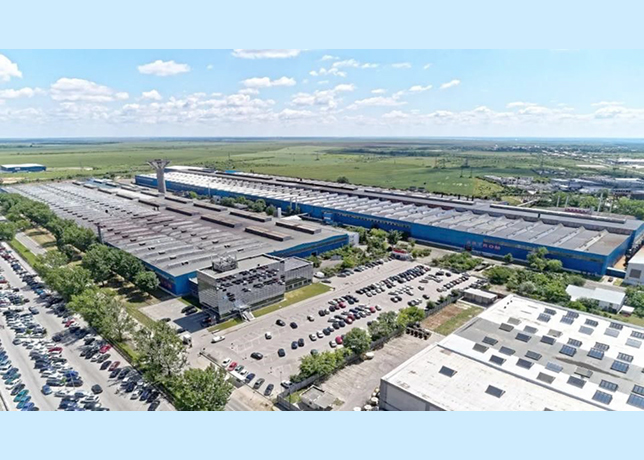
Future Pipe is already a market leader in the GCC with strategically located factories to service many of the world’s major pipe markets, including the United States and EMEA.
The company has the largest number of fibreglass pipe manufacturing machines and most comprehensive portfolio of fibreglass pipe systems worldwide. It boasts of in-house expertise and industry accreditations teamed with continual investment in Research and Development. It’s strong reputation and relationships with a diverse range of end-users and highly experienced management team leading approximately 3,500 employees worldwide makes it a unique company.


