



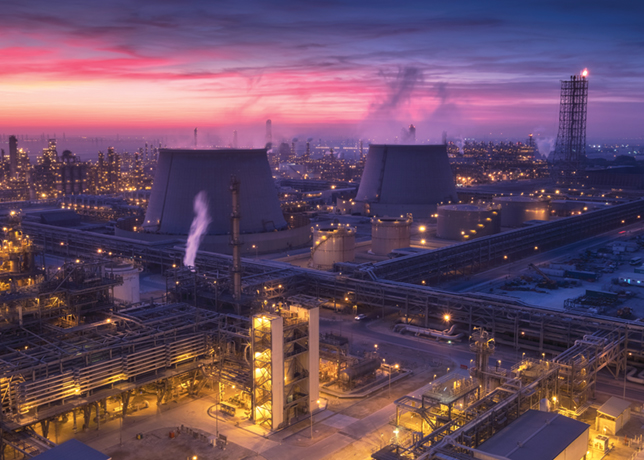
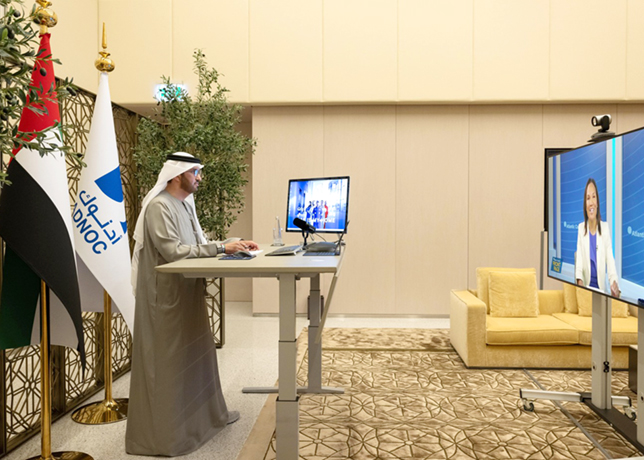

THE chairman of Saudi Arabia’s Royal Commission for Jubail and Yanbu has launched 29 industrial and development projects valued at $18.2 billion in Jubail while total investment at Yanbu Industrial City is expected to reach $43.6 billion within five years.
King Abdullah also laid the foundation for four Royal Commission projects involving a total investment of $1.9 billion.
Some investors have launched new development projects worth $5.4 million in the city of Jubail Albalad to mark the King’s visit.
These include development of Matrafiya residential area at a cost of $641.6 million which is designed to accommodate 11,000 people, development of the University City at a cost of $133.7 million to accommodate 18,000 students.
The second phase of the $374.2 million Jalmouda district project will include the establishment of 10,200 housing units, and the second phase of the $748.5 million Jubail-II are the other projects.
The Sabic projects launched by the King include expansion of the $350.2 million National Industrial Gas Company, expansion of the $935.6 million Saudi Methanol Company Saudi Iron & Steel Co, the Jubail United Petrochemical Company’s $320.8 million Linear Alpha Olefins plant and the $342.6 million National Gas Company’s expansion project.
King Abdullah also laid the foundation stone for a number of private sector projects. They are: Saudi Palermo Company (ChevronPhilips), expansion of Saudi Aramco Refinery, Bin Jarallah Group for Contracts Limited, Saudi Company for Solar Energy, Al-Khaleej (Gulf) Phosphates Factory, Al-Fanar Company, Al-Shargiya (Oriental) Petrochemicals Plant, Jubail Company for Energy Services, Saudi Company for Special Petrochemicals, and Trayomedi Plastic International Limited.
King Abdullah opened a number of projects affiliated to Saudi Arabian Basic Industries (Sabic) including phase II of Jubail 2, expansion of the Saudi Methanol Company (Al-Razi), expansion of the projects of the Saudi Company for Iron Ore and Steel (Hadeed), Jubail United Company for Petrochemicals, and expansion of the National Company for Industrial Gases (GAS – 6), GAS – 7 factory, an affiliate of Al-Razi. The King also opened a number of private sector projects. They are: Saudi Company for Ethylene and Polyethylene, Jubail Advanced Company (ChevronPhilips Propylene ), Methanol Chemicals, Nama for Petrochemicals (Hasad project), Al-Khaleej Factory for Packaging Limited, International Company for Pipes Limited and Mada Plant for Fibres.
Aqili Khawaji, the director general of the Royal Commission for Jubail and Yanbu, says investors were looking to pump around $20 billion into the petrochemical and metallurgy sectors at Yanbu 2, the new twin of the existing industrial city. The first phase of Yanbu 2 should be ready in 2010.
Jubail and Yanbu constitute a unique experiment in development which has proved outstandingly successful. These are two cities which were conceived on the drawing board and were planned to provide a purpose-built and highly efficient environment for modern industrial production.
These industrial complexes, built at Jubail on the Arabian Gulf and Yanbu on the Red Sea by the Royal Commission for Jubail and Yanbu, are the key to the kingdom’s national industrialisation plans. These two industrial cities provide the basis for the kingdom’s programme to develop hydrocarbon-based and energy intensive industries. The massive investment in these industrial cities has as its major objective a reduction in the kingdom’s dependence on oil revenues by gaining access to the world’s petrochemical markets. This route to industrialisation exploits the kingdom’s natural advantages, in terms of cheap energy and cheap raw materials for petrochemical manufacture.
The Royal Commission for Jubail and Yanbu was established for constructing and developing two industrial cities in Jubail and Yanbu and for planning, constructing and operating the necessary infrastructure facilities in the two industrial cities. Encouraging private sector to take part in the building process of the two cities and providing technical training for Saudi manpower for the diversification of income resources were also amongst the intended goals of the Royal Commission.
Motivated by the current and future trend of the government of the Kingdom of Saudi Arabia towards diversification of income resources by attracting foreign and national investments to develop a strong industrial sector that would provide job opportunities and consequently enhance citizens’ standards of living, the private sector is desirous of obtaining industrial land lots in Jubail Industrial City, but their needs for services and facilities exceed the present capability of the City. However, in response to the future industrial requirements, the Royal Commission has conducted studies and prepared the necessary plans to keep pace with the industries requirements on both, the short and long runs.
Accordingly, in the short run, the Royal Commission is developing the remaining areas in the Secondary Industries Park and is also reconsidering the areas allocated for the existing Primary Industries allocated areas to build new plants. In the long run, the Royal Commission has constructed a new industrial park (Jubail 2) to the west of the existing industrial park.
The preparatory construction work for Jubail Industrial City 2 is currently in full swing. This massive new undertaking in the kingdom is expected to attract over SR200 billion in investment mainly from international sources.
The development of Jubail Industrial City 2 is divided into four phases, which are to be undertaken during the next 22 years. The Phase I has been completed in 2007. Phase II will begin during 2008-2012, Phase III during 2013 to 2018, and finally Phase IV during 2019 to 2022. As with the original Jubail development, the Royal Commission for Jubail and Yanbu is undertaking the project under the supervision of Bechtel, which has played a key role in the development of Jubail during the last 30 years.
The total four phases of development for Jubail Industrial City 2 is expected to cost about SR14 billion allocated as follows: Phase I – SR4.7 to SR5 billion, Phase II – SR2.5 to SR3 billion, Phase III-SR1.8 to SR2 billion, and Phase IV – SR2.5 to SR3 billion.
Phase 1 will be composed of eight blocks of industries each with several industrial plants.
Phase II is expected to include four blocks of petrochemical industries plus areas to accommodate secondary and support industries. Phase III is planned to have an additional three blocks of petrochemical industries along with secondary and support industries. Phase IV is expected to have four industrial blocks for aluminum and other smelting plants, including additional areas for secondary industries. All the petrochemical industries planned for Jubail 2 are expected to receive their natural gas feedstock s from the Saudi Aramco Uthmaniyah project area.
The site preparation has been a monumental effort involving massive cut and fill operations for the rolling hills. Totally over 20 sq km, to prepare the site will require moving over 35 million cubic metres of earth. The four stages of site preparation have included clearing the sites, compacting of the land, adding first layers followed by subsequent fill layers to complete the required development platforms.
As part of the kingdom’s determination to optimise its energy resources, the Royal Commission for Jubail and Yanbu implemented a two-stage project to conserve and then exploit the kingdom’s enormous reserves of natural gas in the eastern region.
First, the Royal Commission established a vast network to gather and process natural gas in the industrial city of Jubail.
Then it proceeded with the construction of a double pipeline, running from east to west across the kingdom to transport oil and gas from Jubail to Yanbu in order to supply energy for the many industrial projects which Yanbu undertook and to facilitate the export of these energy products from the Red Sea coast.
Meanwhile, Saudi Aramco is likely to delay the development of one of two new refineries planned for Yanbu and Jubail, in the latest response to rising costs.
Costs on the Jubail complex have soared beyond $10 billion, while the cost of Yanbu is understood to have doubled to $12-13 billion.
Rather than develop both schemes in tandem, as was previously expected, senior industry sources expect Aramco to prioritise one of the facilities.
French energy contractor Technip, which is completing the front-end engineering and design on the Jubail plant, has confirmed that costs on the 400,000-barrel-a-day (bpd) refinery will now surpass $10 billion, from an initial budget of $6 billion.
“It is double-digit currently,” says Thierry Pilenko, president of Technip. “We have made a cost estimate and we are now fine-tuning it.”
Pilenko says because of the increase in costs, Aramco is likely to prioritise the development of one of the refineries rather than develop them at the same time.
“I think they will both go ahead but doubt they will (be developed) in parallel because of the capacity constraints in the industry,” he says. “It is going to be Saudi Aramco and the partners’ decision to see which refinery goes first, (but) the more you wait on these projects, the more expensive they are going to be.”
A joint investment decision on Jubail will be made this year by Total and Aramco.
One senior executive from Total, who is involved in making an investment decision with Aramco, says he has received an early indication from Aramco that Jubail will be prioritised ahead of Yanbu.
“As we get closer to the investment decision, there is a recognition within Saudi Aramco that trying to carry out two mega-projects of this size at pretty much the same time could cause more trouble than it is worth,” he says. “Jubail is currently seen as more advanced.”
According to the existing deadlines, the Jubail refinery, which is expected to process Arabian Heavy crude and a new grade of crude from the offshore Manifa field, is due to begin production in 2012. Yanbu is expected to begin production the same year.
The 400,000-bpd export refinery at Yanbu is being developed with the US’ ConocoPhillips, which could not be reached for comment on possible delays.
The cost of developing Yanbu is thought to have at least doubled from the initial estimate of $6 billion, when the memorandum of understanding was first signed by Conoco and Aramco in 2006.
Under the cost schedule, Conoco and Aramco’s rate of return is understood to be about half the 12-15 per cent band expected for a project of this size.
The kingdom’s refining capacity of 2.1 million bpd could be boosted by up to 1.6 million bpd under Saudi Aramco’s expansion plans.