


























COMPARED with the quick-paced developments of Saudi Arabia, Qatar and Iran over the past five years, Abu Dhabi has been a relative laggard in developing its petrochemicals industry.
This is a little surprising given the UAE’s substantial gas reserves of 214 trillion cubic feet (tcf), almost 200 tcf of which lie in Abu Dhabi.
This is 4 per cent of the global total, giving the federation the fifth-largest gas reserves in the world, and provides the ideal springboard for petrochemicals development.
With a small population and massive oil reserves, historically there has been little incentive to develop a local petrochemicals industry. Aside from the urea-based fertiliser production at Ruwais Fertiliser Industries (Fertil), set up in 1982, it was not until 1998 that Abu Dhabi entered the basic chemicals industry with the creation of Abu Dhabi Polymers Company (Borouge).
The first phase of Borouge, a joint venture of Vienna-based Borealis and state-owned Abu Dhabi National Oil Company (Adnoc), came on stream in 2002 and was an immediate success. Using cheap ethane feedstock to produce 450,000 tonnes per year (tpy) of polyethylene (PE), the complex was expanded in 2005 to increase production to 600,000 tpy.
In 2006, Borouge announced plans to build a second-phase complex that will produce polypropylene (PP) in addition to two further PE units. The facility is due to come on stream in 2010, and Borouge recently announced plans for a third cracker to start production in 2013.
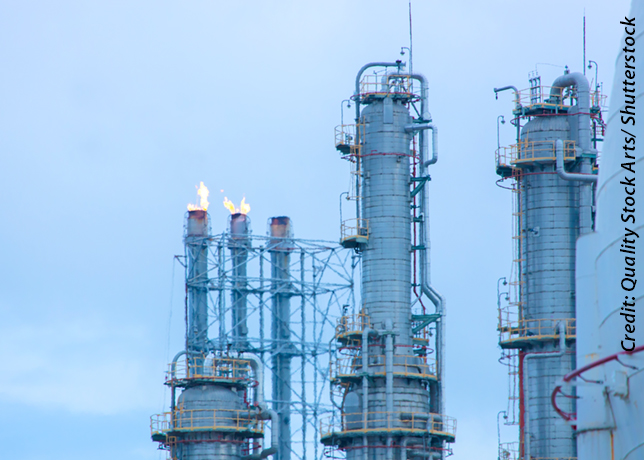
Despite Borouge’s success, Abu Dhabi’s petrochemicals production is still lower than any other Gulf state except Bahrain. All this will change over the next five years however, following the launch in April of what has been described by its sponsors as “the largest integrated petrochemicals complex ever built”.
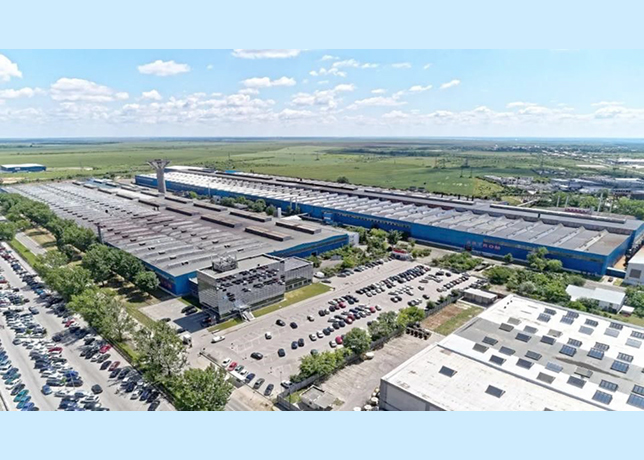
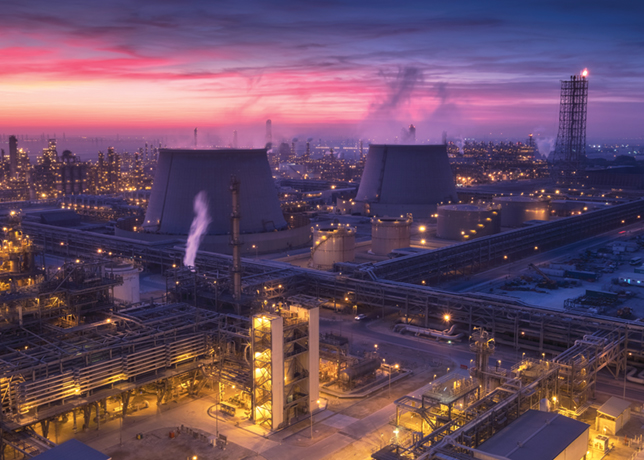
The $20 billion-plus complex will be built at the industrial area of Taweelah, equidistant from Abu Dhabi and Dubai. It will be developed by Chemaweyaat, a joint venture of Borealis and two Abu Dhabi state-linked entities: International Petroleum Investment Corporation (Ipic) and Abu Dhabi Investment Council (Adic).
The facility will be one of the few in the world to combine olefins, aromatics and fertiliser production in one complex. It will produce more than 7 million tpy of products ranging from basic commodity polymers such as PE and PP to advanced plastics such as polycarbonate and acetone.
The complex will have three main elements: a 1.4 million-tpy aromatics plant fed with nearly 3 million tpy of heavy and medium naphtha, a 1.4 million tpy cracker also supplied with 3 million tpy of light naphtha and a 520,000-tpy urea plant. A range of 18 different products will be produced in total, making it far larger than the estimated $10 billion Saudi Kayan Petrochemical Company complex in Jubail, currently the largest single-phase chemicals complex in the world.
The most crucial decision for the Taweelah project has been the use of crude-derived naphtha as chosen feedstock. Traditionally, the region has used the ethane feedstock formula. Ethane is supplied to Gulf developers at subsidised prices as low as $0.75 a million British thermal units (Btus), compared with costs as high as $7-8 a million Btus in Europe and the US.
This gives Gulf producers an unbeatable cash-cost advantage over their international competitors and is one of the main reasons the region is quickly becoming the dominant player in the industry.
While ethane has been supplied to Borouge, the rising demand for gas in power generation has meant Adnoc could not guarantee ethane supply for Taweelah. Just 1.1 million tpy of ethane is understood to be available in future once Abu Dhabi’s $5 billion integrated gas development (IGD) comes on stream in 2011. The vast majority of this has been allocated for Borouge’s third cracker. Conversely, Abu Dhabi has no shortage of naphtha, exporting about 8 million tonnes in 2007. The advent of IGD and the 400,000-barrel-per-day (bpd) refinery at Ruwais, planned by Abu Dhabi Oil Refining Company (Takreer), will increase that by 50 per cent.
Naphtha has the added benefit of opening up production to aromatic and advanced chemical products that cannot be derived from ethane alone.
But because naphtha is produced from crude in the refining process, its cost is linked to the price of oil. As this reaches record prices so does the price of naphtha, making it more expensive than using ethane, essentially wiping out the cash-cost advantage over non-regional competition.
One answer, as with ethane, is for the state to subsidise the feedstock supply. But unlike ethane, naphtha is exported globally, and trade rules make it difficult to allow subsidies.
For example, following its World Trade Organisation (WTO) accession in 2006, Saudi Arabia is understood to have been compelled to phase out its natural gas liquid feedstocks discount from 2012.
Moreover, Abu Dhabi’s principal naphtha source is Takreer’s Ruwais refinery, about 350 kilometres west of Taweelah. To deliver the feedstock, a dedicated pipeline will have to be built at considerable cost.
So why not develop the complex at Ruwais alongside Borouge? Abu Dhabi wants to develop Taweelah as a strategic alternative to Ruwais. A major port and one of the world’s largest aluminium smelters are being built there. There are also plans to develop a plastics conversion park at Taweelah to attract downstream manufacturers.