





























BASF’s oil and gas unit Wintershall Holding plans to explore for crude in the UAE as part of a plan to challenge rival oil majors for access to Gulf reserves.
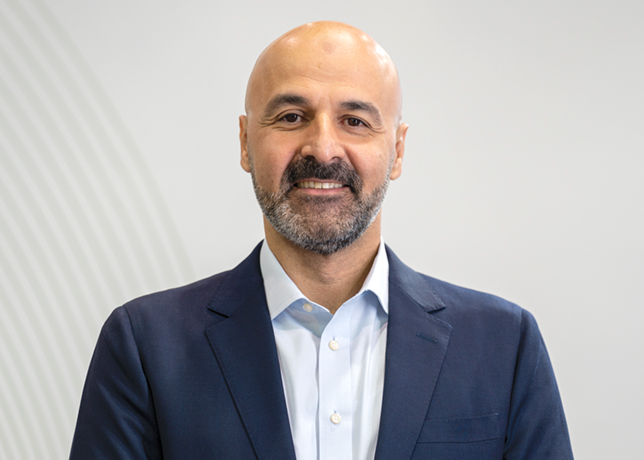
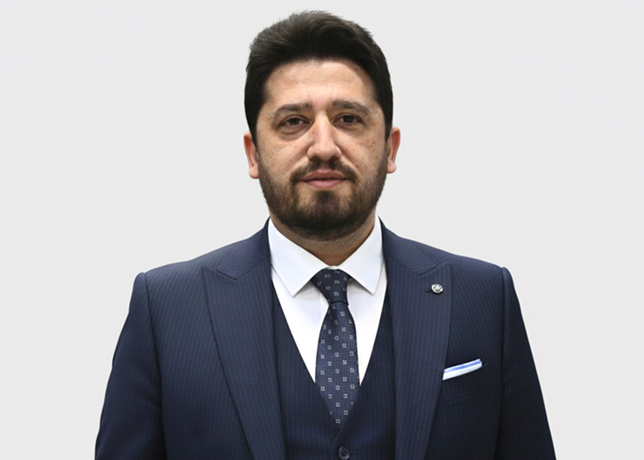
Bernhard Schmidt, a board member, says that the German oil giant is discussing projects with Abu Dhabi’s International Petroleum Investment Co (Ipic) that could happen as early as 2009.
Wintershall, which has already signed a preliminary agreement with Ipic, plans for the Gulf region to “significantly” contribute to its revenues in the future, Schmidt says.
Wintershall is a relative newcomer to the Gulf where it will have to scrap with the likes of Royal Dutch Shell, ExxonMobil and Total for rare access to some of the world’s largest oil deposits.
“When we enter a region, we enter to establish it as a core region,” Schmidt says.
Shares in BASF, the world’s largest chemical maker, have taken a battering this year. Wintershall has provided one of the few bright spots. Still, the stock traded down 0.97 per cent, down from highs.
In Abu Dhabi, which accounts for almost all the UAE’s crude production of about 2.6 million barrels per day (bpd), first announcements of joint activities with Ipic are “realistic” in 2009, he adds.
“We’re in the process of evaluating first opportunities, with focus on Abu Dhabi,” Schmidt says. Ipic at present manages global energy investments worth about $13 billion for the Abu Dhabi government.
Wintershall lost out to US oil major ConocoPhillips for Abu Dhabi’s estimated $10 billion Shah sour gas development, considered one of the most complex projects in the Middle East.
The company also wants to participate in exploration and production projects in Qatar, Iraq and Egypt, Schmidt says.
Wintershall, Germany’s largest oil and gas company, with an estimated production of 120 million barrels of oil equivalent this year, is already involved in Libya but has little exposure in the Gulf.
It lost its 5 per cent stake in Dubai Petroleum Co, a consortium led by ConocoPhillips, in 2006 after the Dubai government took over control of its offshore oil resources.
In Libya it has invested as much as $1.3 billion since 1958 and produces more than 120,000 bpd in the country, which holds Africa’s largest proved oil reserves at 41.5 billion barrels.
“We had a presence in the region but we never really managed to do what we have achieved in Russia or Libya. Now is a good time,” Schmidt says.
Last year, Wintershall spent €142 million on exploration and production and acquisitions in North Africa and the Middle East – compared with €250 million in Europe and €1.83 billion in Wintershall’s core areas, Russia and the Caspian, where it works with Gazprom.
Schmidt, who sits on Wintershall’s board of five executive directors, wants this to increase as Wintershall aims to broaden its Mideast operations.
Restricted access to resources in Saudi Arabia and Kuwait has left oil firms seeking access elsewhere in Libya, Egypt, Iraq and Qatar where exploration and production sharing contracts are on offer.
In the Gulf region Wintershall is only present in Qatar where it’s bidding for more contracts after winning two offshore concessions, block 3 and block 11, as operator.
“Block 3, which we were awarded last year, is in the evaluation phase. We have to do seismic now together with our partners Cosmo Energy and Pertamina. In block 11, we’re following up on our appraisal work. We’re also looking at other blocks,” Schmidt says.