




























SAUDI Aramco’s oil and gas reserves are contained in more than 104 fields, only 23 of which were in production in 2008, encompassing 354 different reservoirs.
Overall, Saudi Arabia has more than 742 billion barrels of discovered oil resources, including proved, probable and possible reserves and contingent resources (oil-in-place that requires new methods and technologies to be produced).
The remaining proved reserves compose roughly 260 billion barrels of the total. In 2008, its exploration programme discovered two gas fields and one oil field and also struck six new reservoirs in existing fields, says the company’s Annual Review 2008.
The gas discoveries were both offshore. The Rabib field is located 125 km northeast of Dhahran where gas was discovered in the pre-Khuff Devonian zone. The Arabiyah field is 185 km northeast of Dhahran.
The Niyashin oil field was discovered 450 km northwest of Dhahran. Oil was struck at a depth of 3,619 metres in the Upper Fadhili reservoir and flowed 36.9 degree API crude oil at a rate of 2,000 barrels per day (bpd). In addition, Aramco added to its oil and gas reserves by finding new reservoirs and delineating extensions of existing fields. It found additional reserves in the Arab D reservoir in the Niban structure, 37 km east of its Tinat gas field. It also added new reservoirs in the Rimthan, Manifa and Khursaniyah fields.
Offshore, in the Jurayd field, Aramco tested oil from the Hith stringers and the Shu’aiba and Upper Khafji reservoirs. In its Hasbah gas field, Aramco tested gas from the Khuff B reservoir. Gas delineation wells in the southern part of the Midrikah and Nujayman gas fields resulted in significant extension of the fields.
The likelihood of discovering additional reserves is high, with more than half of Saudi Arabia’s potential hydrocarbon-bearing areas still relatively unexplored.
Aramco supports an aggressive and wide-ranging exploration programme, with three new seismic crews commencing work in 2008. One 3-D seismic crew was operating in the Arabian Gulf and one 2-D seismic crew in the Red Sea, and a 2-D seismic operation in the Manifa field that started in August acquired more than 1,000 km of data. As its exploration activities expand, so too does Aramco’s seismic processing environment. The computer centre of its Expec organisation uses PC cluster technology, and in 2008, it added quad core processor technology, expanding storage capacity for seismic processing by 600 terabytes, bringing its overall storage capacity to roughly 2,000 terabytes.
Even more critical than the deployment of new technology is the development of the people who will use these advanced tools. Aramco continues to make substantial investments in its exploration and producing talent pool, including a project to build a 13,000-sq m Upstream Professional Development Centre to promote hands-on learning in an intensive, immersive and integrated setting. When completed in 2010, the centre will feature 3-D visualisation rooms, drilling and intelligent-field simulators, and other learning facilities designed to keep Aramco geoscientists and petroleum engineers on top of the latest developments in their fields.
The project was launched last November with the signing of a construction contract with a local company. Saudi Aramco’s patented GeoMorph system provides a better ‘’road map’’ for petroleum reservoirs.
The continuing advancement of oil exploration technologies means it can grow reserves in known fields by delineating additional oil and gas pockets, as well as exploring for new fields. To this end, Aramco has challenged its earth scientists and engineers to add nearly 200 billion more barrels of oil-in-place to its resource base – in the past five years, it has already added more than 35 billion barrels – and to recover up to 70 per cent of the original oil-in-place from its major producing fields.
At Saudi Aramco, two organisations are devoted to original research, introducing new technologies and providing specialised technical services. Research in surface upstream and downstream operations is undertaken by the Research and Development Centre. Research in subsurface upstream activities is conducted by the Advanced Research Centre of the company’s Exploration and Petroleum Engineering Centre, or Expec Arc. In the field of exploration technology, the strategic goals are to increase reserves and improve recovery rates.
 |
|
Expec ... attaining strategic goals |
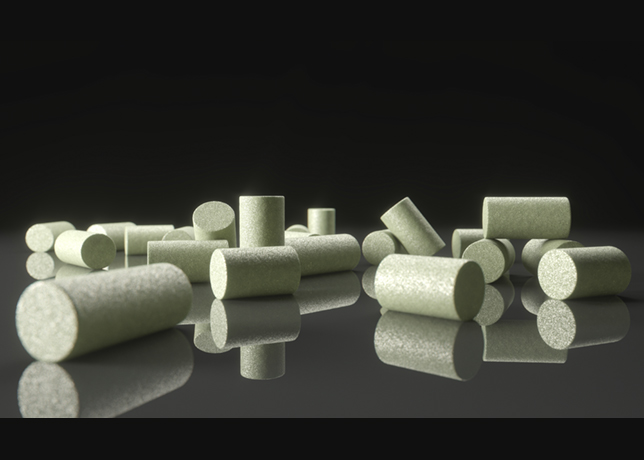
Two years ago, Expec Arc introduced the concept of Reservoir Nano-robots, known as Resbots. Nano scale Resbots would be deployed with the fluids injected into a hydrocarbon reservoir to record reservoir pressure, temperature and fluid type, storing the information in on-board memory that can be retrieved to better manage the reservoir and pave the way for increased recovery rates.
Resbots may help delineate the extent of the reservoir, map fractures and faults in the rock, define areas of higher permeability, identify bypassed oil, optimise well placement and help Aramco design even more precise geological models of the reservoir.
Since the introduction of the concept, the company has researched several important aspects necessary for Resbots to be realised, including size, concentration, chemistry, interactions with rock surfaces, pore scale movement and speed of transport in the reservoir.
Research in 2008 culminated with the first successful laboratory demonstration of the injection of nano-particles into reservoir rocks and the recovery of the nano-particles at rates comparable to field conditions and at low concentration. The next phase will focus on adding sensing capabilities to the Resbots.
For the Resbots concept, Expec Arc won the prestigious New Horizons Idea Award at the 2008 World Oil Awards. Aramco’s Event Solution Centre focuses the collective skills of multi-disciplinary teams to solve reservoir production issues. Their work has significantly reduced completion time for studies, compressed major decision cycles and reduced uncertainty.
One of the most important tools in the petroleum engineering toolbox is reservoir simulation, which is used to calculate the number of wells to be drilled to develop a field, select well locations, estimate facility requirements, calculate reserves depletion, and develop and optimise reservoir management strategies.
In 2000, the company developed its first parallel reservoir simulator, Powers, a mega-cell simulator capable of using millions of cell grid blocks. At the time, Powers provided a 10-fold increase in computing capacity and speed. However, since then, the growing use of 3-D seismic data and sophisticated modelling algorithms has resulted in high resolution reservoir models. Most of that detail is lost when the models are used for reservoir simulation because current simulators have to upscale the models, which significantly reduces image resolution.
On November 1, 2008, the company completed its first giga-cell (billion cell) reservoir simulation run. The achievement was made using GigaPowers, the next generation parallel reservoir simulator. To aid in the development of the simulator, we deployed a new 256 CPU Symmetric Multi Processor (SMP) system and a 512 node PC cluster using quad core processors. The new GigaPowers simulator, in prototype, has produced a full field model of the Safaniya reservoir, covering the entire 50-year history of the field and 500 wells. Results of the tests show improved accuracy and resolution.
Overall, in 2008 Aramco developed a total of 90 reservoir simulation models, essentially covering all of its major oil and gas assets.
The interpretation of reservoir geology is key to geosteering drill bits into the most productive areas of the reservoir.


