









SAUDI Basic Industries Corporation (Sabic), which has established its credentials as the first genuine Saudi multinational and the world’s largest chemical firm by market value, is not content with a top-five placing. By 2015, the company wants to become the world’s largest petrochemicals producer.
The industrial giant is prepared to use its strong financial position to consolidate its recent growth spurt with a far wider footprint, both in terms of its product portfolio and its geographical positioning.
The move downstream is a necessity. With ethane in such short supply in the Gulf, polymer and base chemical production are likely to peak in 2010, leaving the strongest growth in the plastics sector, though it also means Sabic must market directly to the consumer. Sabic will have to adopt a whole new skills set, and fast, if it is to meet its ambitious targets.
Sabic does not have to grow through acquisitions to extend its reach further down the value chain. Some of its ventures, such as the $9 billion Saudi Kayan petrochemicals complex, will extend its product slate to take in poly-carbonates and phenols.
It is also forging strategic relations with other Saudi corporates – for example, moving into the mining sector via a $3.5 billion joint venture with the Saudi Arabian Mining Company (Maaden) to produce phosphate fertilisers.
Sabic has met all the targets set out at its inception in the mid-1970s.
In the past five years, it has emerged as one of the world’s top 10 petrochemicals producers, and significantly grown its foreign presence with intelligent acquisitions in high-growth markets. By the end of 2009, when two petrochemicals complexes – Yanbu National Petrochemical Company (Yansab) and Eastern Petrochemical Company (Sharq), of which it owns 50 per cent – came on stream, it entered the top five.
Though numerous domestic private players are competing for feedstock, these are unlikely to dent Sabic’s regional dominance. Indeed, Sabic is widening the gap between itself and its nearest Gulf competitor. According to a recent analysis, Sabic enjoys a total production capacity of nearly eight times its nearest rival, Qatar Fertiliser Company (Qafco).
 |
|
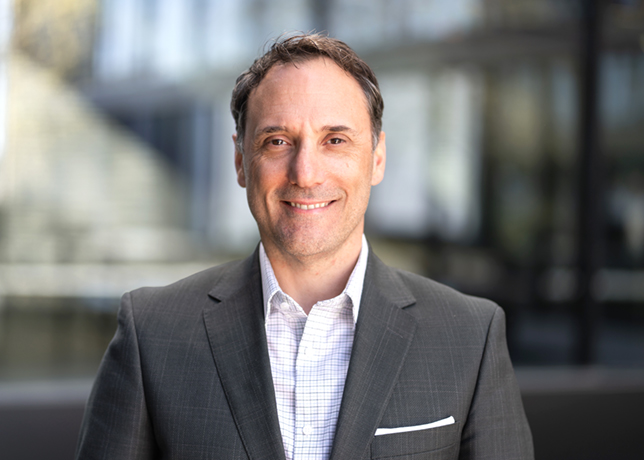
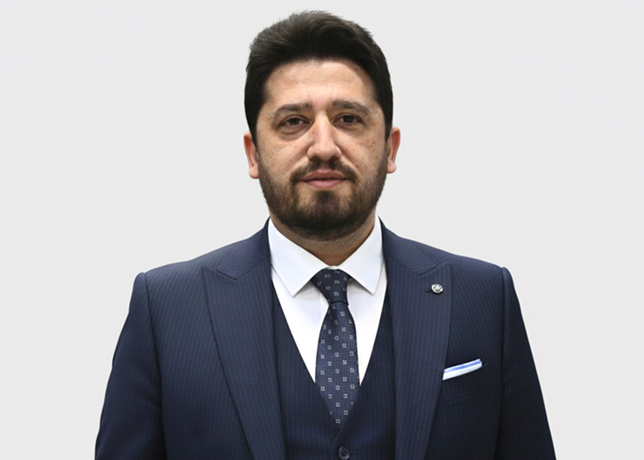
Al Mady ... aligning Sabic’s interests |
Sabic will press ahead with plans to secure new markets and access new technology, but its plans may be undermined by international financial markets. Ratings agency Moody’s Investors Service weighed in with a potential ratings downgrade for Sabic Innovative Plastics in December 2007, out of concern that Sabic had used a highly leveraged funding structure, which put added pressure on the business.
These concerns may prove well-founded, given that Sabic has to deal with rising costs, For example, the Sabic-Maaden phosphate project costs have risen by 62 per cent to $5.6 billion. But it has sufficient financial reserves to support all its overseas businesses.
Still, there will be some concern at Sabic over the impact of the anticipated tailing off of petrochemicals prices in the second half of 2009, which may put further production increases in doubt.
If there is one thing that has defined Sabic’s corporate strategy in recent years, it is its increasingly bold moves into the international market.
In 2002, when oil prices began to gain momentum, Sabic bought the Dutch DSM Chemicals for $2 billion. In late 2006, it acquired the UK’s Huntsman Petrochemicals for $685 milion, renaming it Sabic UK Petrochemicals. In May 2007, it picked up GE Plastics, the global plastics division of the US’ GE, for $11.6 billion.
 |
|
Sabic is succeeding in compensating |
With hindsight, it timed the GE deal well, coming a few months ahead of the global credit crunch, raising the money at attractive rates on the back of strong financial performance.
What has subsequently taken place in financial markets means that it would not be so easy to raise that finance now.
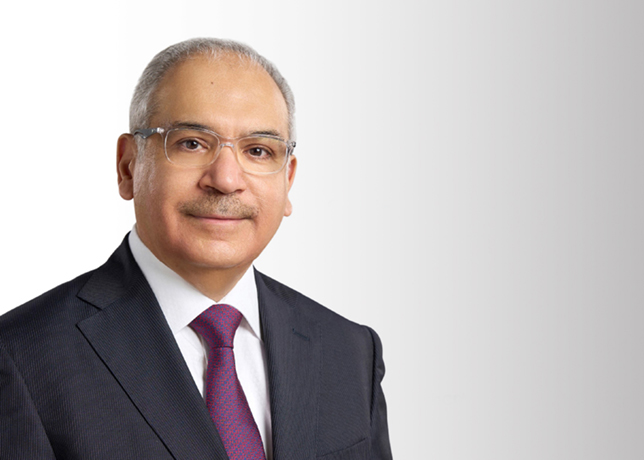
The burgeoning asset haul is not a hasty deployment of surplus liquidity. Under chief executive officer Mohamed Al Mady, Sabic has evolved a strategy that is geared to aligning its commercial interests with those of the host region. Sabic recognises that opportunities for growth will not be limited to Saudi Arabia. To maintain its growth rate, it needs to look at other areas.
The acquisition of GE’s plastics division highlights Sabic’s move downstream.
The company was prepared to pay an estimated 10 times historic earnings to pick up the company, in the belief that the long-term strategic pay-off would dwarf the high one-off cost.
Though Sabic has forged a competitive lead in commodity chemicals, it needs to diversify into higher-value products – downstream chemicals and plastics – that are nearer to the final customer. In Sabic’s view, it has little option but to venture into speciality products if it is to maintain its market lead.
The DSM deal in 2002 granted Sabic a valuable toehold in the European market, as well as a more diverse array of products and access to new technologies. Similarly, the well-timed GE purchase has secured the Saudi player a more diverse product array in the US, as well as access to capabilities needed in Saudi Arabia.
According to Al Mady, Sabic has acquired technologies that might have taken more than 50 years to develop on its own. US chemicals groups, boasting extensive retail networks and technological capabilities, present ideal candidates.
The globalisation thrust extends beyond the chemicals sector. In 2007, Sabic agreed to take a 35 per cent stake, worth $262 million, in an iron ore project in Mauritania. The global acquisition drive offers other benefits.
A widening geographic footprint prevents overexposure to a single area, besides providing a platform for further organic growth in these new markets.
To continue to penetrate in these new markets, Sabic says it must build a global marketing and supply chain, which in turn necessitates having the vessels, terminals and marketing personnel around the world to operate and manage the network.
Having planted its flag in Europe, Africa and North America, Sabic could make a bigger splash in Asia, where it needs to stay ahead of local competition. It is considering two opportunities in China, and is likely to be receive approaches from Asian players to form joint ventures. China is the market with the biggest potential for Saudi Arabia, so some kind of linkage between the two countries might be prudent.
If Sabic does succeed in the Far East, its long-term aim of becoming the world’s biggest petrochemicals producer will become increasingly achievable, and Saudi Arabia’s vaunted ambition of diversifying its industry base could be realised.
Saudi Basic Industries Corporation’s (Sabic) origins go back 32 years, to when the government embarked on a strategic push to use associated gas from its oil production as the key feedstock for the production of chemicals, polymers and fertilisers. With a $80 billion market cap, Sabic is now the largest public company in the Middle East, though the government still owns 70 per cent of its shares.
As one of the world’s top 10 petrochemicals manufacturers, Sabic produces a large and expanding range of products, and is among the world’s market leaders in the production of polyethylene, polypropylene, glycols, methanol and fertilisers. Overall production capacity has grown from 27 million tonnes in 2001 to 49.1 million tonnes in 2006. In the first nine months of 2007, Sabic reported a 13 per cent increase in output to 40.9 million tonnes.
Sabic beat forecasts with a 46 per cent rise in 2010 third-quarter profit on higher plastic and petrochemical sales, and looked set for at least the same profit level in the fourth quarter.
The world’s largest chemical firm by market value made a net profit of SR5.33 billion ($1.42 billion) in the three months to September 30, up from SR3.65 billion a year earlier, and SR5.02 billion in the second quarter. Sabic’s earnings are a yardstick for rivals such as Dow Chemical and Germany’s BASF.
The earnings exceeded by close to 5 per cent the SR5.09 billion average forecast from six analysts surveyed by Reuters. “We benefited from a rise in prices in the second quarter and the first month of the third quarter ... Prices rose in the last two months of the third quarter as oil prices rose ... Demand was stable on a global level,” Al Mady says.
High oil prices are positive for petrochemical firms because they increase petrochemical product prices, and Sabic usually does better in terms of profitability than rivals because it purchases feedstock at lower prices.
A drop in the dollar against the euro helped profitability, Sabic executives say.
An increase in production and sales as well as an improvement in prices of most petrochemical and plastic products fuelled the profit rise. Ibrahim Al Alwan, deputy chief executive at private investment bank KSB Capital, says the earnings would please investors as they give the stock a PE ratio slightly below 13 times 2010 earnings.
The company’s third-quarter sales were up 5 per cent from SR38.86 billion in the second quarter. This year, Sabic benefited from higher production after the addition of new capacity under its Saudi-based affiliates Yansab and Sharq and under its Tianjin joint-venture with Sinopec.
Before the global crisis started taking its toll on global chemical firms in 2009, Sabic was making quarterly profits of between SR6.4 billion and SR7.5 billion.
“Sabic is succeeding in compensating a drop in global prices with a rise in production volumes. This output is set to increase as its affiliate Yansab and Tianjin reach optimal productivity and production levels,” Alwan says.