


























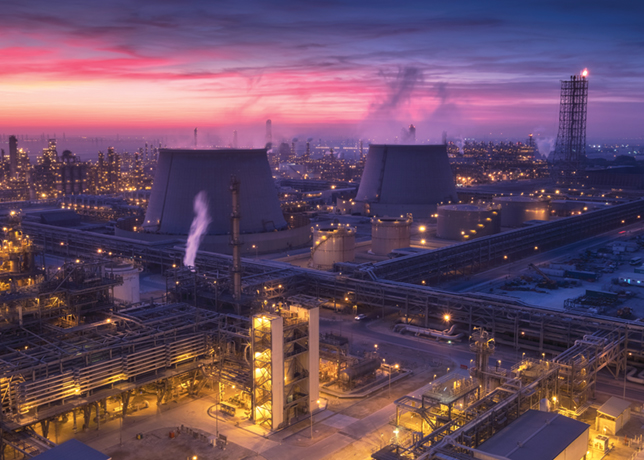

The Abu Dhabi Government is going ahead with its plans to invest as much as $20 billion (Dh74 billion) by 2010 to increase its crude output capacity by 30 per cent to 3.5 million barrels per day (mbpd) and also pump in $25 billion over the coming five to six years into its gas industry.
The emirate’s current oil production capacity is 2.7 mbpd, the report said. Abu Dhabi’s production accounts for nearly 94 per cent of the UAE’s crude output. The UAE’s oil output currently is about 2.66 mbpd.
The country’s proven oil reserves of 97.8 billion barrels make up 7.9 per cent of the world’s total reserves.
The funds will mainly be channelled into two new major gas-processing plants and about 10 new onshore gas pipelines extending over 1,500 kilometres, to spread the access to gas across the emirate. The funds will be channelled by state-controlled Abu Dhabi Gas Industries (Gasco), which is 68 per cent owned by Abu Dhabi National Oil Co (Adnoc).
Shell and Total each have a 15 per cent stake in the company, with Partex holding the remaining 2 per cent. No additional details were available about the investment programme, except that the two planned gas-processing plants were planned in Habshan and Maqta.
The extension programme comes after Qatari and Abu Dhabi dignitaries officially inaugurated the Qatar-Abu Dhabi Dolphin integrated gas pipeline venture.
The Dolphin project, owned 51 per cent by Abu Dhabi’s Mubadala and 24.5 per cent each by Occidental of the US and France’s Total, has successfully brought gas deliveries up to around 2 billion cubic feet per day (bcf/d) from Qatar’s North Field, after having started early production in mid-2007.
Abu Dhabi and the rest of the UAE are experiencing an increasingly problematic gas crunch, as booming economic growth raises demand much more rapidly than supply has been growing. As a result, Abu Dhabi, Dubai, and the northern emirates are all increasingly looking to imports as a solution, although Abu Dhabi still has some gas production growth opportunities to pursue.
Most of the emirate’s gas resources are quite sour, but development of its sour gas project at the Bab field through a development deal with ConocoPhillips has facilitated planning for additional future production capacity, as well as, in the mid-term, more realistic expansions of associated gas at its oilfields.
The official selling price (OSP) of Abu Dhabi crude oil grades from January to June this year averaged $108.32 per barrel, a whopping 73.6 per cent rise on the year and in line with soaring global oil prices. The average price of Adnoc’s crude grades for January-June 2007 was $62.39.
“Revenues from oil and gas and oil products constitute 35 per cent of Abu Dhabi’s gross domestic product, 80 per cent of the government’s revenues and 90 per cent of the total exports,” according to the Abu Dhabi Economic and Social Report 2008.
According to the Abu National Oil Company (Adnoc), the official selling price of its crude grades – Murban, Lower Zakum, Umm Shaif and Upper Zakum – averaged $135.68 for July 2008 on the back of a record performance that peaked on July 11 when prices on the international market touched of $147.27 a barrel.
Since then, prices have fallen sharply as an economic downturn in the US, the world’s biggest oil importer, has slowed consumer demand.
Estimates by McKinsey & Company show that Abu Dhabi is likely to accumulate an investible surplus of $800 billion by 2020 due to massive inflows of oil revenues. This is based on an estimated average price of $50 per barrel between 2005 and 2020.
According to the UAE Central Bank, the country’s oil exports in 2007 were valued at Dh261.42 billion, up 22.5 per cent on year. The average price of the UAE’s crude in 2007 was $71.70 per barrel, 12.9 per cent higher than the 2006 price of $63.53.
The UAE’s oil will last 92 years at current production levels, estimates show. Estimates of International Energy Agency show the UAE’s sustainable crude production capacity could rise 9.12 per cent to 3.11 mbpd by 2013.
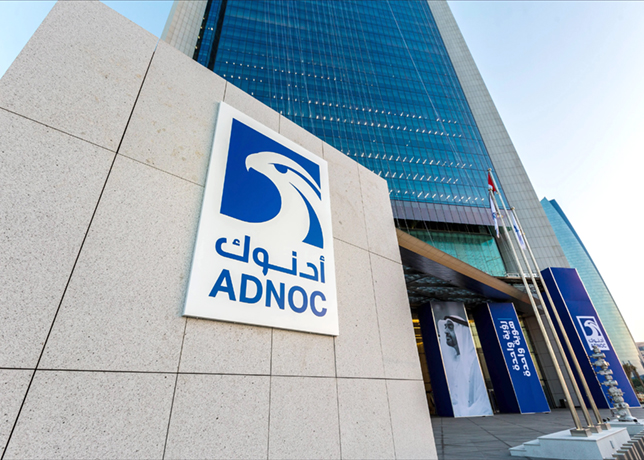
Adnoc has one of the most multi-faceted plans of all the National Oil Companies (NOCs) in the region. With aims to achieve a crude production capacity of 3.5 million barrels per day (bpd) by 2015, plus an ambitious gas, downstream and overseas programme, the NOC is also one of the most active.
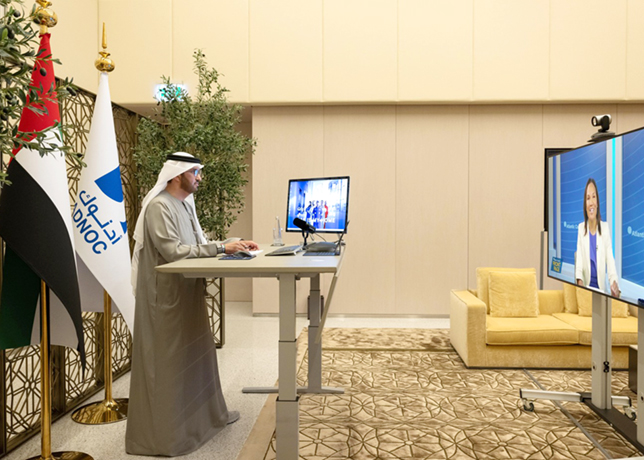
Adnoc is one of the most private of the region’s NOCs, and rarely makes public statements about its future plans. But this has not stopped it from moving forward on several fronts that could transform it into one of the world’s most significant oil companies.
Unlike some other regional NOCs, Adnoc has retained its partnerships with international oil companies that hold minority stakes in its various operating firms, such as Zakum Development Company (Zadco), Abu Dhabi Company for Onshore Oil Operations (Adco) and Abu Dhabi Gas Industries Company (Gasco).
This has served Abu Dhabi well, enabling it to retain advanced oil and gas production technologies and managerial expertise, and to share risk.
In turn, this has helped it develop relationships that have proved useful in international and downstream ventures.
Adnoc differs from other regional NOCs because a substantial portion of its oil and gas production is from offshore fields. Offshore production is key to its growth plans. Through Zadco, Adnoc is engaged in a five-year crude increment plan to increase production capacity to 750,000 barrels per day (bpd) from 500,000 bpd. The scheme will be implemented with the assistance of ExxonMobil Corporation, which took a stake in Zadco two years ago.
Offshore gas is a critical element of the multi-billion-dollar integrated gas development to produce an additional 720 million cubic feet per day (mmcfd) of gas from the Umm Shaif field.
Onshore, crude output increases are centred on two major projects: the full-field development of the Sahil, Asab, Shah (Sas) reservoirs, and the 1.8 million scheme to raise production from several different fields.
But it is gas that has taken the spotlight, thanks to the tight competition among IOCs for the Shah sour gas concession to produce up to 1 bcf/d of sour gas from the field.
After a slow start overseas, Abu Dhabi is making up for lost time on several fronts. Through its International Petroleum Investment Company (Ipic), it is investing in refineries in Morocco, Pakistan and Fujairah, and has bought a large stake in Japan’s Cosmo Oil.
Abu Dhabi National Energy Company (Taqa) has invested in upstream production companies and assets in Canada and Europe, while Mubadala also has regional oil and gas assets.
Adnoc is praised for its overall performance, production capacity and international partnering as strong points.
On the contracting side, Adnoc has been less keen to innovate than other NOCs in the region, sticking to the standard lump-sum formula. Until now, this does not seem to have negatively affected it too much, with most major projects remaining competitive.
This conservatism is transferred to prequalification lists, with the sector still largely the domain of the traditional US, European and Japanese engineering, procurement and construction (EPC) contractors. South Korean firms, which have made major inroads into other countries, still find it difficult to win work in the emirate.
As with most other NOCs Adnoc has reported delays in the contracting process of one to five months. Reasons for the delays range from bureaucracy and a lack of bids, to labour procurement difficulties and cost issues.
Downstream, Adnoc does not have the same kind of large-scale investment programme as Aramco, Qatar Petroleum (QP) or Kuwait Petroleum Corporation (KPC). Its ambitions are restricted to the 400,000-bpd grassroots expansion of its Ruwais refinery through Abu Dhabi Oil Refining Company (Takreer).
However, the same cannot be said for petrochemicals. At Taweelah, the emirate is planning the largest petrochemicals complex ever built, as well as further expansions of the Abu Dhabi Polymers Company (Borouge) olefins complex at Ruwais and the Ruwais Fertiliser Industries (Fertil) urea complex. Adnoc is also planning a lube oil plant with Finland’s Neste.
The development of human resources has been aided by the sustained presence of IOCs in the domestic sector. Adnoc employees are continually seconded to its partners, providing them with valuable expertise.
The NOC’s staff are highly regarded and are often put in other senior jobs in the emirate’s non-oil sector. However, some respondents say the quality of staff and inter-departmental co-ordination are areas where the company could most improve.
The NOC is also known for being highly politicised, with decision-making regularly outside its control and in the hands of external figures, who often take time to form a consensus.
The environment and health and safety issues will be paramount, especially as Adnoc gears up for sour gas production. Sour gas is extremely volatile and needs to be handled carefully to avoid explosion. Its production also creates the problem of how to handle its sulphur by-products.
The sour gas scheme highlights Adnoc’s willingness to enter areas in which regional NOCs have been reluctant to operate.
Nothing better exemplifies this than its plan to buy carbon dioxide and use the gas for reinjection processes, freeing up gas currently used for the purpose to be used in cleaner-burning power generation.
Adnoc’s formation of a joint venture firm for the production of nitrogen, also to be used for gas reinjection, highlights a similar innovation.