










ABU Dhabi Future Energy Company (Adfec), a government owned entity, has launched the Masdar Initiative with the double aim of creating a whole new economic sector in clean energy technology and reducing carbon emissions by 40 per cent from the current level of 76 million tonnes per year (tpy).
At the core of the Masdar Initiative are four projects:
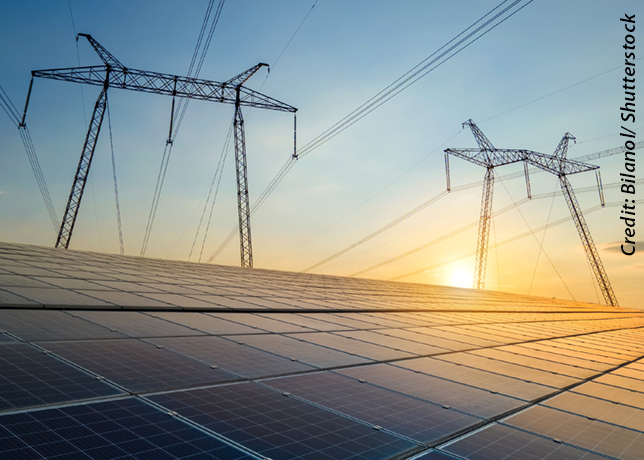
• The creation of Masdar City, reportedly the world’s first zero-carbon, zero-waste, car-free city. To be built by 2016, the 6 sq km walled city of 50,000 residents will get its water from a solar powered desalination plant and its electricity from solar energy harnessed from photovoltaic (PV) panels as well as a 20 MW wind farm;
• The construction of concentrating solar power (CSP) plants which will become grid connected. Abu Dhabi’s first solar plant, the 100-MW Shams 1 CSP plant, will be built at Madina Zayad. It will use parabolic trough technology and is expected to come online by 2011;
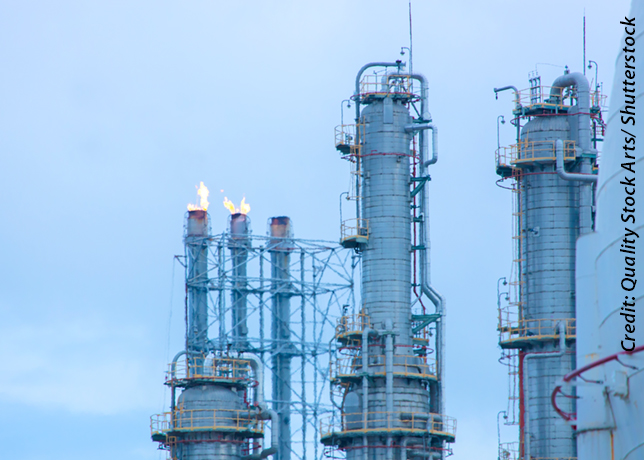
• The construction of a $2 billion, 500-MW industrial scale hydrogen-fired power generation plant (HPP) with carbon capture and storage (CCS). A detailed front-end engineering and design (Feed) study by Hydrogen Energy (a joint venture of BP Alternative Energy and Rio-Tinto) is to be completed by the end of 2008; and
• The construction of a $2 billion to $3 billion nationwide CCS network for carbon emissions reduction and enhanced oil recovery (EOR). The aim is to increase oil production by 10 per cent by 2012. According to Sam Nader, Director for Carbon Management at Adfec, some 20 million tpy of carbon dioxide (CO2) will be captured by 2020 through between 10 and 15 CCS projects.
The project comes with a price tag of $22 billion, of which Adfec will commit $4 billion to the construction of infrastructure in Masdar City. Direct foreign investment and revenue generated from the export of the new technologies, as well as the carbon financing mechanism (CDM) devised under the Kyoto agreement, will also provide some of the required investment.
According to Abu Dhabi Department of Planning and Economy, GDP in 2008 is expected to be $105 billion, 58 per cent of which will come from oil. Therefore, from a financial point of view, Abu Dhabi has the means to implement the Masdar Initiative as another one of its mega projects. However, since Masdar has taken on the mantle of global leadership in green and renewable technologies, Abu Dhabi has to show that these projects are commercially viable on their own merit.
The UAE has the second fastest growth in demand for electricity in the Arab world, following Saudi Arabia, in a region that in 2000-2006 saw annual power growth rates three times that of the world as a whole. Over the next 10 years, demand for electricity and water in the UAE is expected to double. According to Abu Dhabi Water and Electricity Company (Adwec), peak system demand in Abu Dhabi emirate is expected to increase by 7.6 per cent per year up to 2012, excluding mega project requirements; and by 14.8 per cent per year if these mega projects are taken into account. At the same time, in the short to medium term, gas production is expected to lag behind demand in power generation. Masdar comes at a time when the country is in search of alternative energy strategies.