































SAUDI Aramco, the biggest oil corporation in the world with the largest proven crude oil reserves and production, has announced an effective cut in its predicted project spending through 2014 to $60 billion, down from previous targets of $120-130 billion.
This does not mean that the national oil company is cancelling any of its long-term projects. It only indicates that funds would be used prudently till such time as the world recovers from the slump and oil demand picks up.
Endorsing this, Saudi Arabia’s Minister of Petroleum and Mineral reserves Ali Al Naimi says he sees no need now for the kingdom to develop its Manifa heavy oil field, which would add 900,000 barrels per day (bpd) of new capacity, saying the project could wait for demand to pick up again.
The state-owned petroleum giant has published its projected oil and gas investments in the upstream and downstream sectors from 2009 through 2014, cutting its expected spending by more than half, compared to expectations in early 2008.
Saudi Aramco’s investment cuts are a reaction to the current global economic downturn, but have not so far been accompanied by major project cancellations. Saudi Aramco expects project costs to continue to fall sharply during the period, leading to lower investment needs at its projects, and secondly, faltering global demand is likely to make it continue its strategy of delaying projects, pushing some of them out of the coming five-year plan.
Saudi Arabia’s overall spending had been expected to come down, after Finance Minister Ibrahim Al-Assaf was reported last year to have spoken about $100 billion of projected investment by Saudi Aramco in the coming five-year plan. The sharp cut now announced, however, indicates that more project delays are likely to be on the cards.
Saudi Aramco is now reported to have cut its energy project spending budget sharply between now and 2014, from peak expectations of $120-130 billion over 2009-13, set in the first half of 2008, down to an expected $60-billion spend between this year and 2014.
The news comes from one of Saudi Aramco’s main local contractors, which has been informed by the company of the new five-year budget allocations, meaning that there may still be some uncertainty over exact figures, as Saudi Aramco itself has yet to publish them.
The cut was not confirmed by Saudi Aramco itself, but indicated that the government and the company saw its investment needs shrinking, in synch with a worsening global downturn and emerging information about the depth of energy-market demand destruction during the first half of 2008.
As the worldwide recession has deepened, it has become apparent that Saudi Aramco’s previous spending plans are rapidly becoming obsolete. To a certain extent, these plans had been forced by mounting political pressure from consumer markets on Saudi Arabia to demonstrate its long-term abilities to meet expected continued global demand growth by late 2007 and during the first half of 2008.
 |
|
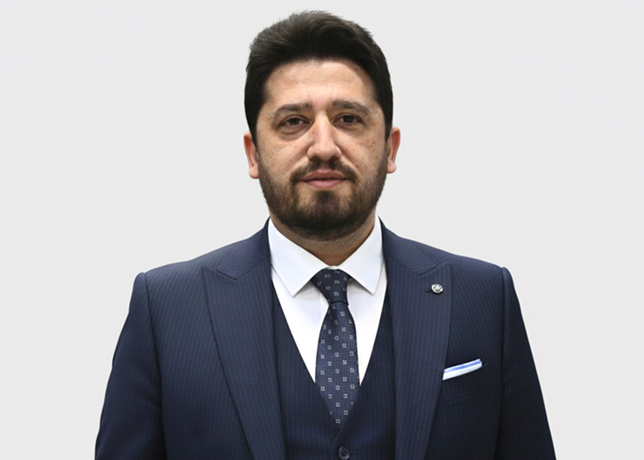
Falih ... thinking long term |
While actual projects — with only small and relatively insignificant exceptions — have not been cancelled, Saudi Aramco has been swift to react to the falling demand by delaying projects, partly so as not to bring them on stream in a weak market and partly to capture the falling construction costs that are a result of easing shortages of material, skills, and technology as projects are abandoned elsewhere.
However, Saudi Arabia has awarded nearly $21 billion in oil and gas deals in the first half of 2009, more than 20 times the value of hydrocarbon contracts in the final few months of 2008, says the Saudi American Bank Group (Samba).
The value of awards in the January-June period was around $21 billion, compared with less than $1 billion worth of contracts in the last quarter of 2008, Samba says.
Meanwhile, Saudi Arabia’s standing as the world’s largest oil exporter, oil-reserve holder, and the Organisation of the Petroleum Exporting Countries’ (Opec) swing producer has put it in a position where it can — and constantly has to — plan with a long-term view. Hence, the company is by now already assessing global demand growth and declines far beyond the rumoured five-year project spending plan, trying to assess when a global economic recovery will take place and how the ensuing demand growth will look.
Anticipating this, and with view to the numbers above, it is likely that Saudi Aramco sees the need to delay some of its later upstream mega-projects further, thus pushing most or all of their expected expenditure beyond the current five-year plan.
Saudi Aramco is also seeing much of the spending foreseen in early to mid-2008 shrinking away due to the deceleration in project cost inflation, from which the industry had suffered globally, especially after 2005-06.
With chronic material, skilled labour, technology and machinery shortages plaguing the worldwide oil and gas industry as oil prices shot up and more and more demanding hydrocarbon ventures looked economically feasible, Saudi Aramco was forced into consecutive increases in its planned spending in order to continue to demonstrate its ability to deliver sufficient quantities of oil to the world markets over the long term.
With material costs and shortages now falling sharply, Saudi Aramco has already made savings of up to 15 to 20 per cent on projects held back during the second half of 2008 and early 2009, indicating that cost deceleration could already by now have lowered Saudi Aramco’s projected spending needs by about half the cut from the finance minister’s November $100 billion remark, to today’s reported number.
Saudi Aramco has not given any indication of impending project cancellations, preferring instead to hold back projects temporarily, in order to delay their completion till such time as global demand is expected to rebound, while at the same time capturing rapidly falling project costs.
Meanwhile, Saudi Aramco’s oil output capacity reached 12 million barrels per day (mbpd) in June when three new oilfield projects started.
One of those projects was the 250,000 barrels per day (bpd) Shaybah oilfield expansion, Saudi Aramco CEO Khalid Al-Falih says.
The company had not previously announced the start of output from the project, the last of an expansion plan to boost the country’s total capacity to 12.5 mbpd.
“Production capacity of the company was 12 mbpd in June, when output started from three fields which are Nuayyim, Khurais and Shaybah,” Falih says.
The kingdom had expected to be producing more than 10 million bpd of oil by the time it completed its crude capacity expansion plan, Falih says.


