




















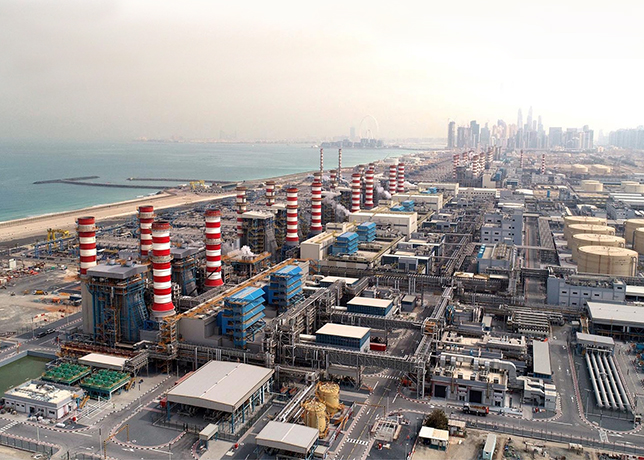











Across the Gulf region, water security has become one of the defining sustainability challenges shaping industrial development.
Countries across the GCC face severe natural water scarcity and rely heavily on desalination to meet municipal and industrial demand.
In the UAE, desalination supplies a significant share of national water needs, supporting population growth, energy production, and industrial operations.
Yet desalination is also highly energy-intensive, creating a direct relationship between water consumption, electricity demand, and emissions.
The country has more than 160 wastewater treatment plants with total capacity exceeding 3 million cu m per day, and its Water Security Strategy 2036 aims to reduce total water demand by 21 per cent and increase treated-water reuse to 95 per cent.
Saudi Arabia also illustrates the scale of the challenge across the region. The Kingdom is the world’s largest producer of desalinated water, supplying roughly 60 per cent of national water demand through desalination infrastructure.
In 2025, the Kingdom’s desalinated water supply capacity was reported to be over 12 million cu m per day, with a target of approximately 20 million by 2030, alongside $6.28 billion in ongoing water distribution, treatment, and wastewater projects.
According to the Food and Agriculture Organisation (FAO), desalinated seawater currently accounts for about 70 per cent of Saudi Arabia’s water supply, underscoring how closely water security is tied to infrastructure, energy use, and industrial continuity across the region.
And while these investments highlight the scale of the region’s response to water scarcity, at the same time, they underline a critical reality in the GCC.
Producing water requires energy, and large-scale desalination carries a substantial operational footprint.
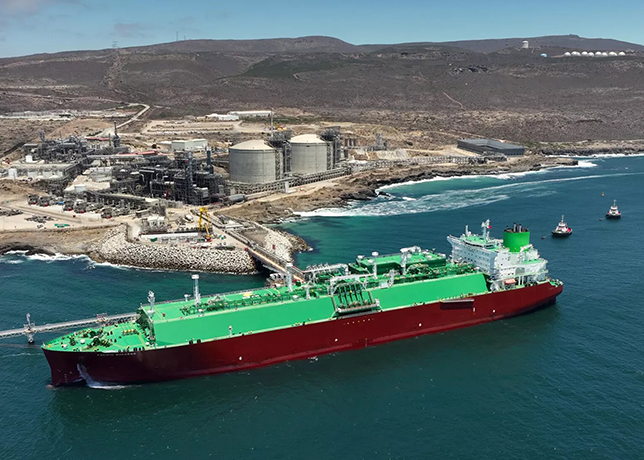
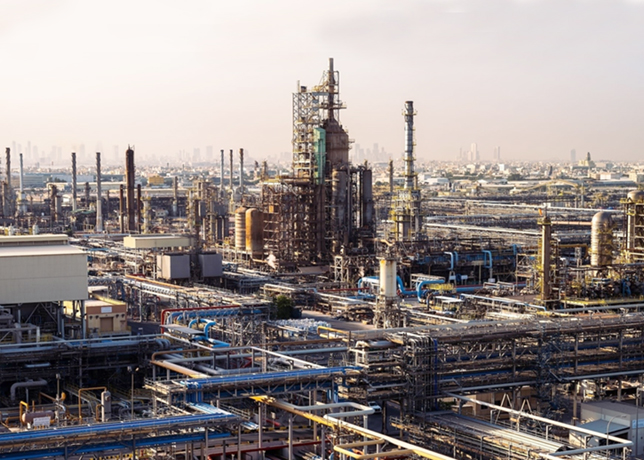
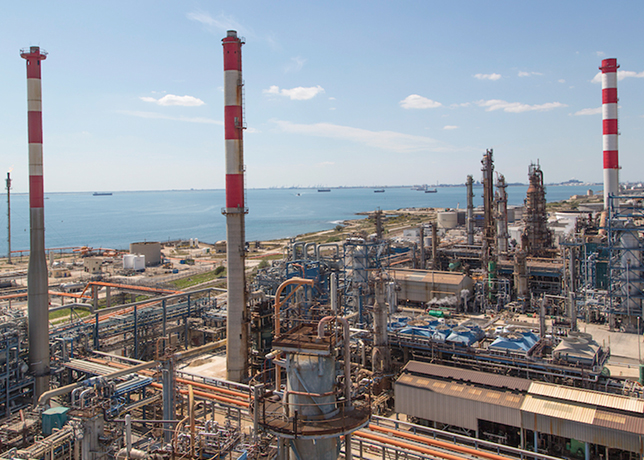
As industrial demand grows across sectors such as LNG, refining, gas processing, petrochemicals, and power generation, improving water efficiency is becoming both an environmental and operational priority.
Water plays a vital role in everyday operations in the energy and process industries, supporting cooling systems, steam systems, process handling, and equipment support systems across facilities that operate continuously under demanding conditions.
Even small improvements in water efficiency within these systems can translate into significant reductions in both water demand and energy consumption when applied across large industrial installations.
This is where engineering solutions become particularly important, linking sustainability objectives with operational performance and energy efficiency.
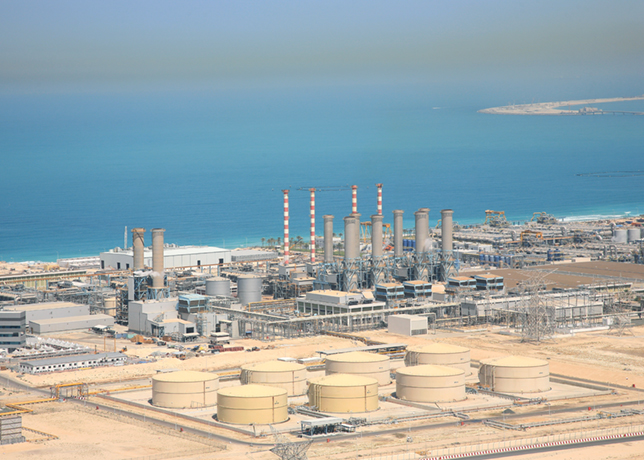
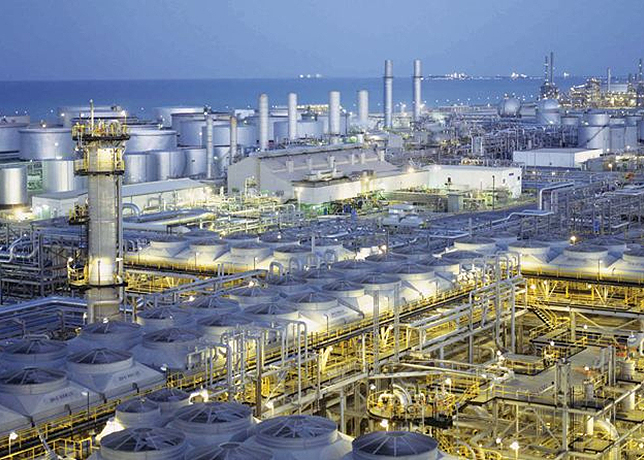
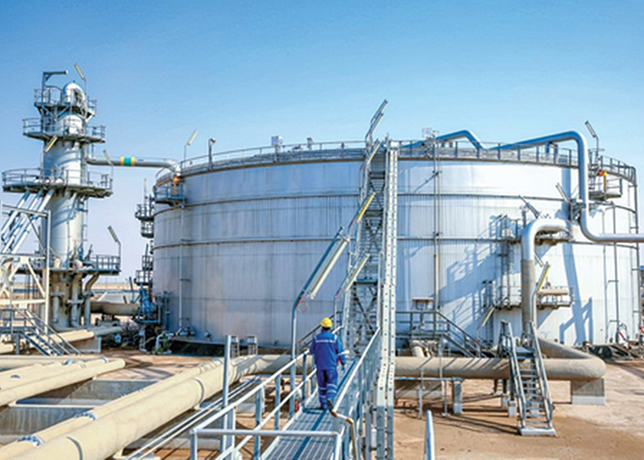
Large-scale desalination carries a substantial operational footprint
WATER EFFICIENCY AS PART OF RESOURCE EFFICIENCY
Industrial water conservation is often associated with large infrastructure investments or process redesign.
Yet meaningful improvements can also come from optimising the performance of existing equipment.
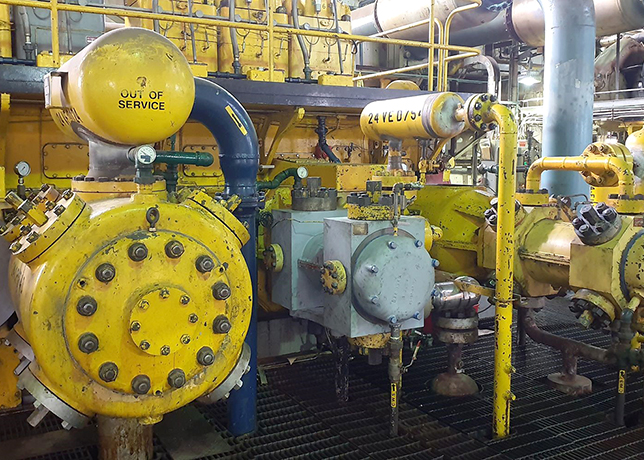
Rotating equipment, such as pumps and compressors, forms the backbone of industrial operations across LNG facilities, refineries, petrochemicals and gas processing plants.
Mechanical seals play a critical role in these systems by preventing fluid leakage and maintaining stable operating conditions.
In many traditional installations, water is used within seal support systems to cool and lubricate sealing surfaces.
And while this approach ensures reliable operation, however, it can also lead to continuous water consumption when applied across hundreds of pumps within a large industrial facility.
What appears to be a small design decision at the equipment level can become a significant resource issue at the plant level.
Modern sealing technologies are helping operators address this challenge through advances in seal face geometry, materials engineering, and application design.
These improvements allow sealing systems to operate with significantly reduced flushing requirements while maintaining stable performance under demanding process conditions.
By optimising fluid flow and thermal control at the seal interface, improved sealing designs can reduce leakage, support optimised flushing plans, and improve overall fluid management.
The result is lower water consumption, reduced waste volumes, and more reliable equipment performance.
RELIABILITY, SUSTAINABILITY & OPERATIONAL PERFORMANCE
The relationship between sealing performance and sustainability is particularly important in regions where water production depends heavily on desalination.
Every cubic metre of desalinated water requires significant energy for production and treatment.
As a result, reducing industrial water consumption indirectly reduces the energy required to supply that water.
Equipment reliability also plays a major role. Pumps and compressors operating outside optimal conditions often consume more energy and experience higher levels of wear.
A compromised sealing system can lead to leakage, unstable operation, and increased maintenance interventions.
However, when sealing systems perform consistently, facilities benefit from fewer shutdowns, improved operational stability, and more predictable maintenance schedules.
There are environmental benefits as well. Reduced flushing water means lower volumes of wastewater requiring treatment.
Stable sealing performance also reduces the risk of emissions and process losses.
Recent reports from the Saudi Water Authority (SWA) reinforce the broader regional focus on producing more water with less energy and at lower operating costs, which is exactly the kind of engineering mindset that industrial sites increasingly need to apply internally.
ADVANCES IN SEALING DESIGN
Recent innovations in sealing technology illustrate how engineering improvements can support both operational reliability and sustainability objectives.
Advances in seal face design and materials have enabled sealing systems that maintain stable performance while significantly reducing water consumption.
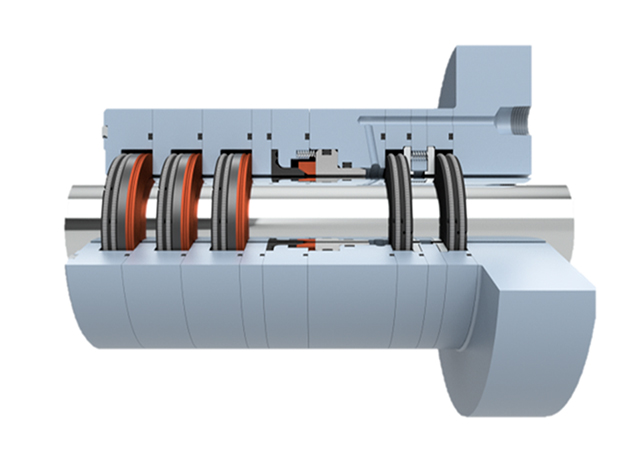
Technologies such as advanced mechanical seals, including designs like the Type SB2 USP seal, incorporate engineered sealing surfaces that allow operators to maintain reliability with lower flushing requirements.
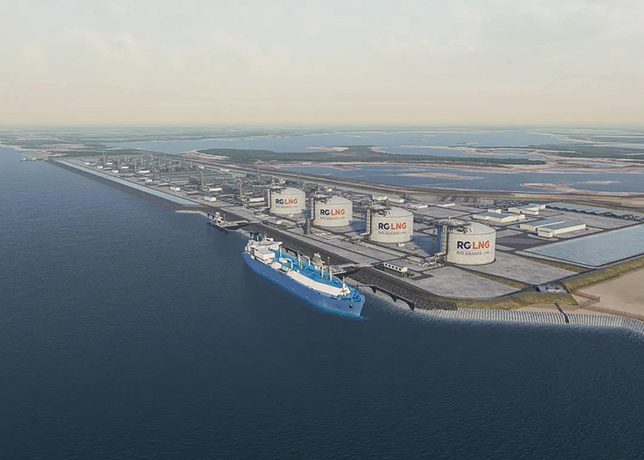
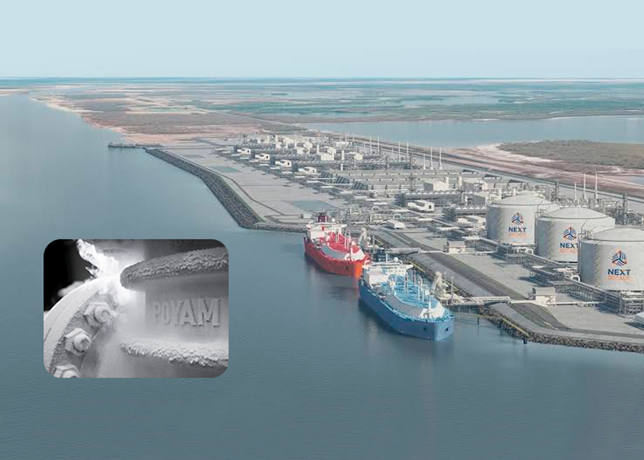
In 2026, an LNG export facility replaced a conventional API Plan 32 flush arrangement with a Type SB2 USP dual-cartridge seal, reducing water consumption by 99.8 per cent from approximately 2,000 gallons per day to just 3-4 gallons while maintaining reliable operation in high-temperature hot-well pump service.
In another 2026 application in a pulp and paper mill, a Type SB2 USP seal upgrade reduced water use by 90 per cent, extended the mean time between repairs from 3 weeks to more than 12 months, and lowered the total cost of ownership.
These examples show how modern seal design can deliver measurable gains in water efficiency, reliability, and maintenance performance.
UNLOCKING EFFICIENCY IN EXISTING ASSETS
For many operators across the GCC, improving sustainability performance does not require replacing existing infrastructure.
Significant gains can often be achieved by improving how existing systems operate. In many cases, sealing upgrades provide measurable improvements without major process redesign.
Retrofitting advanced sealing technologies into existing pump systems offers a relatively low-capital pathway to reduce water consumption, improve equipment reliability, and extend maintenance intervals.
This approach is particularly relevant in a region where many industrial facilities operate mature assets that remain operationally critical.
Digital monitoring and condition-based maintenance are also helping operators optimise resource use.
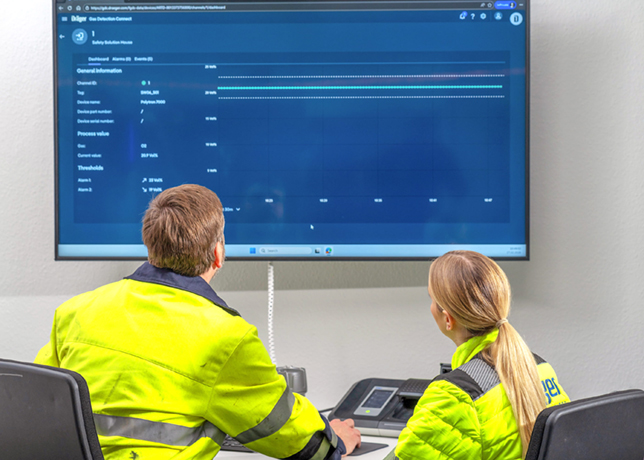
By tracking seal performance in real time, maintenance teams can detect early signs of degradation and adjust operating conditions accordingly.
Over time, this enables facilities to maintain optimal performance while reducing both water consumption and the need for maintenance interventions.
ENGINEERING EFFICIENCY FOR A WATER-CONSTRAINED FUTURE
Across the GCC, the relationship between water, energy, and industrial development will continue to shape sustainability priorities in the years ahead.
Improving how water is used within industrial operations represents one of the most practical ways to support regional water security while maintaining economic resilience.
Engineering-led improvements in sealing technologies demonstrate that meaningful resource savings can often be achieved through operational optimisation rather than large infrastructure investments.
By improving sealing reliability, reducing leakage, and optimising water use within industrial systems, operators across LNG, refining, petrochemicals, gas processing, and power generation can enhance operational performance while contributing to broader sustainability goals.
Improving water efficiency is not only about conservation.
It is about ensuring that critical industrial systems operate reliably and efficiently in a region where water remains one of the most valuable resources supporting economic growth and energy security.