





































In the context of the energy transition around the world, there are very few sectors that have seen such a process of optimism, doubt, and rethinking as the green hydrogen sector.
During the last eighteen months, changes in targets, delays in major projects, debates around subsidies, and problems in infrastructure development have all come together to form the perception that the sector is faltering.
However, the green hydrogen sector is not weakening; it is maturing, and what the market sees today is the shift from politically driven forecasts to more commercially focused action.
Future projects being launched will be done not only due to political ambition and momentum, but based on economic rationality, infrastructure feasibility, demand in industries, and geopolitics in the long run.
What really matters is which economies, firms, and industrial systems will take leadership positions in the buildout phase of the sector.
Various events from the hydrogen economy sector have created worries about slowing market momentum.
South Korea updated certain sections of its long-term hydrogen demand forecast, while France downgraded its goals for electrolyser installations.
Stricter RFNBO compliance guidelines in Europe caused more problems for project developers.
There have been delays in various notable hydrogen projects in Rotterdam, Spain, and Hungary due to issues with regulation, permitting, and execution.
The hydrogen projects progressing today are increasingly those with credible financing, infrastructure integration, renewable power access, policy clarity, and long-term industrial offtake potential.
That is not evidence of a collapsing market, but rather of a sector transitioning toward operational discipline.
The announcement era is ending; the execution era is beginning.
The green hydrogen sector is is maturing
EVERY MAJOR ENERGY TRANSITION HAS PASSED THROUGH THIS PHASE
Green hydrogen is not the first clean energy technology to experience a recalibration cycle.
Solar photovoltaics, electric vehicles, offshore wind and battery storage systems all followed a similar trajectory, moving from speculative optimism into industrial-scale deployment.
The difference between political ambition and investable execution is becoming increasingly visible.
According to the International Energy Agency (IEA), more than 200 low-emissions hydrogen projects globally are now approaching or reaching final investment decision stages.
The Hydrogen Council continues to track a broader pipeline exceeding 500 announced projects worldwide, with FID-level committed investment surpassing $110 billion.
The global green hydrogen market, valued at approximately $8 billion in 2024, is projected to expand significantly over the next decade as decarbonisation pressures intensify across refining, fertilisers, chemicals, steelmaking, mobility, and industrial heat applications.
The targets being revised today were often political. However, the investments moving forward now are increasingly commercial, and that distinction matters.
Energy price volatility, supply chain disruptions, and geopolitical instability have fundamentally reshaped how governments evaluate long-term energy security.
Dependence on imported fossil fuels is increasingly viewed as a structural vulnerability rather than simply an economic issue.
As a result, hydrogen is becoming as much an energy security strategy as a decarbonisation pathway.
South Korea offers one of the clearest examples: The country originally designed large portions of its hydrogen roadmap around imported supply, but that strategy is now evolving toward stronger domestic renewable integration and local hydrogen ecosystem development.
Europe is experiencing a similar shift: Germany, France, and the Netherlands are increasingly prioritising domestic hydrogen production while repositioning imports as supplementary rather than foundational supply sources.
Across the region, the projects advancing most aggressively are those backed by defined industrial demand, infrastructure integration, and direct financial support mechanisms.
India is simultaneously emerging as one of the most strategically important future hydrogen production hubs globally.
Through bilateral hydrogen diplomacy, large-scale renewable investments, and integrated industrial development, India is positioning itself as both a manufacturing base and export platform for the broader Asian hydrogen economy.
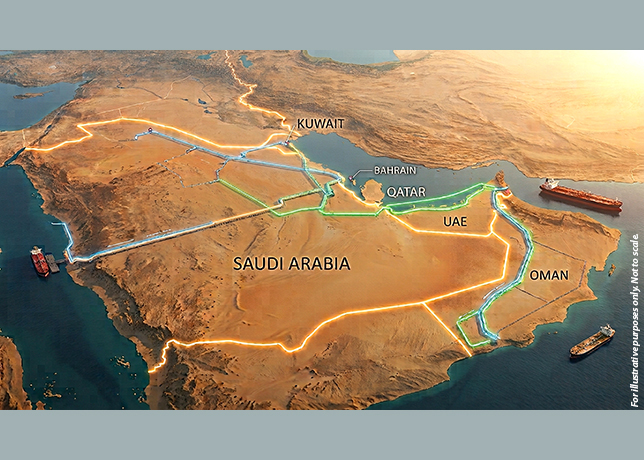
Meanwhile, Middle Eastern economies including Saudi Arabia and the UAE are leveraging abundant solar resources and coordinated state-backed investment strategies to secure long-term positioning within future hydrogen trade corridors.
The global energy map is being redrawn, and hydrogen is becoming central to that restructuring.
TECHNOLOGY IS ADVANCING FASTER THAN PUBLIC SENTIMENT
While policy debates dominate media coverage, the underlying technology curve continues improving.
Solid oxide electrolyser (SOEC) technologies are showing even greater efficiency potential in industrial heat-integrated environments.
At the same time, manufacturing scale continues reducing electrolyser costs across key production markets.
The economics are also improving through smarter system optimisation.
AI-driven renewable energy management, grid balancing systems, and integrated renewable-plus-hydrogen production architectures are beginning to enhance operational performance at the project level.
In markets, such as Brazil, integrated renewable hydrogen systems are already demonstrating how co-optimised infrastructure design can materially improve economics.
India remains one of the most important long-term cost reduction stories globally.
Current green hydrogen production costs remain within the approximate $4-6 per kg range, but long-term projections suggest costs could decline toward $2-3 per kg by 2030, as renewable electricity prices continue falling and electrolyser manufacturing scales further.
Infrastructure development is also beginning to move beyond planning stages.
Germany has already commissioned operational hydrogen pipeline infrastructure through repurposed natural gas networks linked to industrial-scale renewable hydrogen production.
Its broader hydrogen core network strategy, spanning approximately 9,700 km, represents one of the most advanced infrastructure commitments currently underway in Europe.
The future hydrogen economy is beginning to establish a clear geographic logic.
Regions with abundant low-cost renewable energy, industrial infrastructure access, supportive policy frameworks, and coordinated state backing are emerging as the strongest long-term production hubs.
One of the most commercially significant developments is the rise of green ammonia.
Ammonia is increasingly emerging as the preferred carrier for long-distance hydrogen transportation due to its established shipping infrastructure and lower transportation complexity compared to liquefied hydrogen.
As a result, future hydrogen trade corridors across Asia, Europe, and the Middle East are increasingly being designed around ammonia-linked supply chains.
This is particularly important for sectors including fertilisers, refining, chemicals, and maritime fuels, where ammonia already benefits from existing industrial infrastructure.
The countries securing infrastructure readiness and trade agreements during this phase will likely define the first generation of large-scale hydrogen trade leadership.
NEW GLOBAL HYDROGEN GEOGRAPHY IS EMERGING
The green hydrogen economy still faces major obstacles, with infrastructure bottlenecks remaining among the most significant barriers to scale.
Pipeline readiness, cross-border logistics systems, renewable grid integration, storage infrastructure, and permitting timelines continue slowing deployment across multiple major economies.
Regulatory inconsistency also remains a challenge, particularly around certification frameworks and lifecycle emissions accounting.
China presents another complex dynamic: The country continues investing aggressively in hydrogen deployment and fuel-cell ecosystems, yet storage limitations and certification transparency remain unresolved barriers for export competitiveness.
Subsidy dependence also remains elevated globally; however, historical context matters.
Solar, wind, EVs, and battery storage all relied heavily on public financial support during early commercialisation phases before scale economies reduced dependency levels.
Green hydrogen is still in the infrastructure-building stage of that transition curve, and perhaps the most urgent unresolved issue is standardisation.
A globally harmonised certification framework for green hydrogen remains incomplete.
Without universally accepted carbon accounting and traceability standards, cross-border trade development will continue facing friction.
Resolving that challenge is essential for large-scale international market growth.
The period between now and 2030 may ultimately become the defining strategic phase of the hydrogen transition.
Infrastructure systems are being developed, trade corridors are being negotiated, and technology costs continue declining.
Policy frameworks across Europe, the US, India, East Asia, and the Middle East are becoming increasingly structured and commercially focused.
The companies securing long-term offtake agreements, supply-chain positioning, infrastructure access, and technology partnerships during this window are likely to shape the competitive structure of the hydrogen economy over the next decade.
Those waiting for perfect market clarity may ultimately find the strongest positions already occupied.
The current recalibration phase should not be mistaken for decline.
It reflects a more sophisticated understanding of economics, infrastructure realities, industrial demand, and geopolitical strategy than existed during the sector’s earlier hype cycle.
The projects moving forward today are supported by stronger commercial logic.
The governments continuing to invest increasingly view hydrogen through the lens of industrial competitiveness, supply-chain resilience, and long-term energy security.
The technologies themselves continue advancing along cost and efficiency curves that remain fundamentally supportive of future scale.
The green hydrogen economy is no longer operating primarily in its announcement phase; it is entering its delivery phase.
And the companies, nations, investors, and industrial ecosystems positioning themselves during this transition period will likely define the structure of the sector for the remainder of the decade.