


























































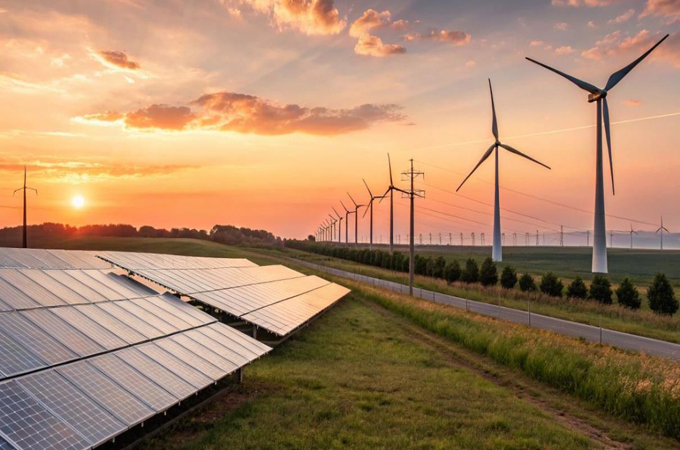
Renewable energy continued to be the most cost-competitive source of new electricity generation in 2025, with more than 90 per cent of newly added utility-scale renewable capacity proving cheaper than the lowest-cost new fossil fuel alternatives, according to the International Renewable Energy Agency’s (Irena) Renewable Power Generation Costs in 2025 report.
The cost gap between renewables and fossil fuels widened
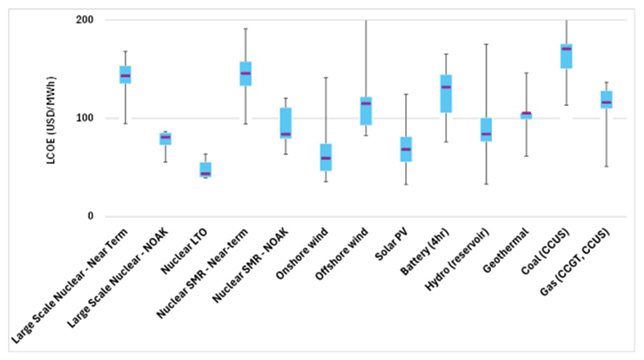
further, with solar photovoltaic (PV) maintaining its 2024 cost level at $44
per megawatt hour (MWh).
Onshore wind costs fell by 4 per cent to $33/MWh, while
offshore wind declined by 3 per cent to $78/MWh.
Meanwhile, new gas-fired power generation faced rising
costs, driven by turbine shortages and higher fuel prices.
In the US, the capital cost of new combined-cycle gas plants
nearly doubled, while generation costs approached $100/MWh in markets such as
Italy, Germany and Japan. Continued uncertainty in global energy markets is
expected to keep gas prices elevated.
Irena estimated that renewable power generation helped avoid
around $480 billion in fossil fuel costs in 2025, strengthening energy security
by reducing exposure to volatile fuel markets.
Renewable electricity also provided a financial buffer
during energy disruptions, including the Strait of Hormuz closure in early
2026, which caused energy import prices to rise across Asia and Europe.
In Southeast Asia, renewable generation in Indonesia,
Thailand and the Philippines avoided approximately $5.7 billion in coal and gas
purchases in 2025.
At peak crisis-era fuel prices between March and May 2026,
the value of those savings would have increased to $6.5 billion.
Across 20 major economies representing around 80 per cent of
global renewable generation, renewable energy avoided an estimated $377 billion
in fossil fuel purchases. China recorded the largest savings at $177 billion,
followed by the US with $35 billion, Brazil with $32 billion, India with $18
billion, Germany with $18 billion and Japan with $15 billion.
Irena highlighted that renewable energy costs have fallen
significantly since 2010, with solar PV declining by 89 per cent, concentrating
solar by 72 per cent, onshore wind by 71 per cent and offshore wind by 63 per
cent.
However, the period of rapid cost reductions is beginning to
slow due to rising commodity prices, shifting trade policies and changes in
clean technology manufacturing.
Investment in clean-tech manufacturing has declined from a
quarterly peak of $70 billion in 2023 to $35 billion by the end of 2025, while
the renewable industry undergoes restructuring, particularly in China.
Despite near-term cost pressures, Irena expects renewable
power costs to continue declining through 2035, although at a slower pace than
in previous years.
Francesco La Camera, Director-General, said: “For countries
that still rely heavily on fossil fuels, every additional megawatt of
renewables strengthens economic protection against fuel-price volatility,
shielding consumers, businesses and public finances from higher costs. Savings
generated by existing renewable assets grow, providing a built-in hedge against
future shocks. This energy crisis has shown yet again: expanding renewable
capacity is a strategic investment in resilience and competitiveness.”
DesignateMurat Kurum, COP31 President, said: “We now need to accelerate the deployment of renewable power generation and electrify daily life so that more can people benefit from these geopolitical shock absorbers.” -OGN/TradeArabia News Service