












































The International Energy Agency (IEA) has warned that global supply chains for critical minerals remain highly vulnerable despite growing efforts to diversify production, with rising geopolitical tensions and export restrictions posing significant risks to energy security and industrial growth.
In its 2026 Global Critical Minerals Outlook, the IEA said
critical minerals such as copper, lithium, nickel, cobalt, graphite and rare
earth elements have become central to countries' energy, economic and national
security strategies.
However, supply chains remain heavily concentrated among a
handful of producers, increasing exposure to disruptions.
The report noted that prices of critical minerals rebounded
in 2025 and early 2026 after previous declines, driven by tighter supply
conditions and a series of export restrictions introduced by major producing
nations.
At the same time, investment in critical minerals fell 9 per
cent in 2025, ending several years of growth as market uncertainty and
geopolitical tensions weighed on investor confidence.
The IEA said refining remains particularly concentrated.
Indonesia accounted for most growth in global nickel
refining, while China dominated refining of other key energy minerals, together
representing more than three-quarters of total growth in refined supply over
the past two years.
In markets including manganese, nickel and graphite, nearly
all new supply originated from a single dominant supplier.
Despite these challenges, the report highlighted progress in
government efforts to strengthen supply security.
Public financial commitments to critical mineral projects
more than quadrupled between 2023 and 2025, reaching $65 billion.
New rare earth refining projects in the US and increased
production in Malaysia reduced the leading supplier's share of global refining
capacity from more than 90 per cent in 2023 to 85 per cent in 2025.
If planned projects
proceed as scheduled, this share could decline to around 70 per cent by 2035.
The IEA also said expanding copper and lithium projects have
narrowed the projected supply gap over the next decade.
However, investment remains heavily focused on mining rather
than refining and downstream processing, creating structural weaknesses in
diversification efforts.
Planned rare earth refining capacity is expected to meet
only about two-thirds of anticipated mine output by 2035, while planned magnet
production would cover just one-third.
The report warned that expanding export controls have
transformed supply concentration into an immediate economic security concern.
China's rare earth export restrictions introduced in April
2025 forced some automakers to reduce production or temporarily halt
operations.
Expanded controls announced later in 2025, although delayed
by one year, could place an estimated $6.5 trillion in annual downstream
manufacturing outside China at risk if fully implemented.
The IEA also urged policymakers to pay greater attention to
strategic minor minerals, noting that while their markets are relatively small,
supply disruptions could have disproportionate economic consequences.
It added that the cost of diversifying supply chains would
have only a limited impact on consumers, as critical minerals account for a
relatively small share of the final price of products such as electric
vehicles.
The agency concluded that strengthening supply resilience
will require not only new mining projects but also greater investment in
refining capacity, specialised technology, processing equipment, workforce
development and international policy coordination.
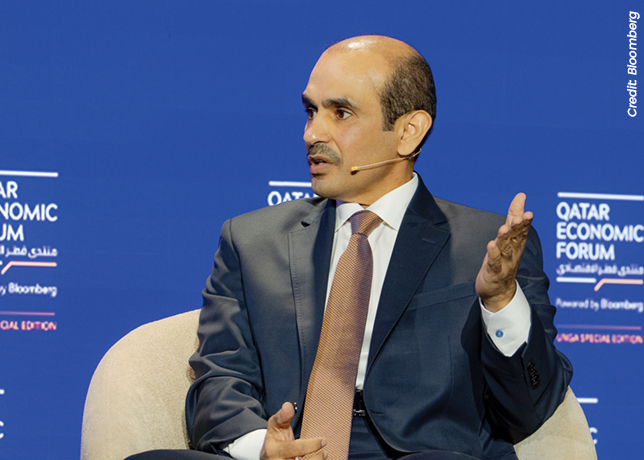
“Our latest analysis shows that vast amounts of economic
value depend on relatively small volumes of critical minerals, whose supply
chains remain highly concentrated and are therefore vulnerable,” said IEA
Executive Director Fatih Birol. “Yet there are encouraging signs of progress –
including in rare earth supply chains – where we see targeted policies and
investment support starting to make a difference. And while diversified supply
can come at a higher cost, this can be viewed as a mineral security premium in
a time of geopolitical uncertainty – a form of economic insurance against major
supply risks.”
Dr Birol said: “The IEA will continue to support governments
as they look to bolster the security of critical mineral supplies. The latest
data and analysis, included in our new Global Critical Minerals Outlook,
are an important part of this effort. Our Critical Minerals Security Programme
is also playing a key role in enhancing emergency preparedness and accelerating
supply chain diversification globally.” -OGN/TradeArabia News Service