



























































Mining operations are more automated, digitised, and artificial intelligence (AI)-driven than ever before, yet catastrophic incidents re-emerged in 2025 for the first time since the 2019 Brumadinho dam collapse, claiming 13 lives.
According to the International Council on Mining and Metals (ICMM) annual safety benchmark report, global mining operations achieved a historic milestone in overall site safety, recording an all-time low in total recordable injury frequency rate (TRIFR) alongside 6,183 total recordable injuries.
However, this broader decline in lower-consequence workplace injuries stands in stark contrast to persistent site mortality, where 39 workers lost their lives across global operations throughout the year.
The persistence of fatal outcomes despite widespread digital transformation underscores a growing operational divergence between everyday injury reduction and high-consequence fatal risk management.
While overall total recordable injury indicators suggest an improving workplace baseline, catastrophic events and critical control breakdowns continue to expose site workforces to fatal hazards.
OPERATIONAL & GEOGRAPHICAL RISK PROFILES
A deeper examination of the site-level data reveals significant operational and geographical concentrations of fatal hazards.
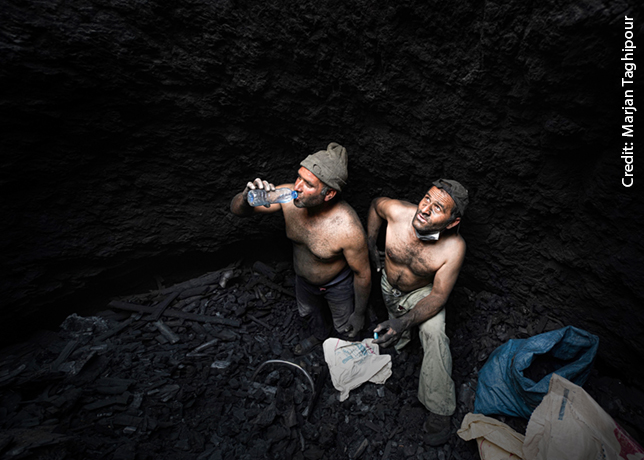
Underground mining operations and processing facilities accounted for 92 per cent of all recorded worker fatalities during the period.
In terms of regional distribution, South America and Africa recorded the highest absolute loss of life, each reporting 11 fatalities.
Conversely, operations across Oceania logged the industry’s highest regional fatality frequency rate (FFR) at 0.020 per million hours worked.
The re-emergence of multi-fatality events was driven primarily by specific underground hazards, notably fall-of-ground incidents and water or gas inrush and outburst events.
Together, these two catastrophic risk categories accounted for 33.3 per cent of all recorded deaths across single and multi-fatality events.
Ground support failures and fluid management in underground settings remain among the most severe hazards facing operational personnel, demanding continuous physical verification rather than reliance on digital monitoring systems alone.
CONTRACTOR OVERSIGHT & EXECUTION GAPS
Contracted personnel face disproportionate exposure to lethal hazards compared to direct corporate employees.
Contractors accounted for 27 of the 39 total recorded fatalities, representing 69 per cent of overall deaths, despite performing only 59 per cent of total worked hours.
Consequently, the FFR for contractor workforces reached 0.016 per million hours worked, significantly exceeding the 0.011 rate recorded for full-time direct employees.
This vulnerability gap highlights ongoing challenges in third-party oversight, temporary workforce integration, and site-level supervision during high-risk task execution.
Furthermore, an evaluation of 26 fatal incidents revealed that 19 fatalities were caused directly by ineffective control execution, where established critical controls existed on paper but failed in frontline practice. In contrast, inadequate control design was identified as the root cause in only five fatal incidents.
This disparity emphasises that frontline procedural compliance, leadership verification, and active supervision fail more frequently than engineering design.
DISCONNECT BETWEEN METRIC BENCHMARKS & FATAL RISKS
The diverging trends between total injuries and site fatalities challenge the traditional reliance on injury frequency metrics as a proxy for comprehensive safety performance.
Across the benchmarked dataset, five member companies that reported zero fatalities simultaneously logged total recordable injury frequency rates well above the industry average.
Rather than indicating unsafe conditions, higher recordable injury reporting can reflect an active, transparent reporting culture where minor incidents are rigorously documented.
Conversely, low recordable injury figures can create a false sense of security while severe, high-consequence fatal hazards remain unchecked.
Relying solely on low recordable injury rates risks masking critical vulnerabilities in ground control, heavy machinery isolation, and underground environmental management.
Eliminating operational fatalities requires site managers and safety leaders to decouple fatal risk protocols from general injury metrics, ensuring that critical controls receive dedicated field verification regardless of overall site performance indicators.