































































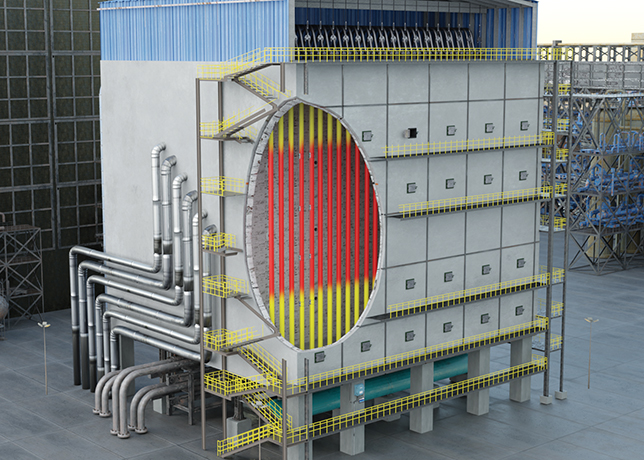
Steam methane reformers (SMRs; Figure 1) are the primary source of hydrogen for refinery hydroprocessing units, and their performance depends on maintaining tube-wall temperatures within a narrow operating window.
Excessive temperatures accelerate creep damage and shorten tube life, whereas lower temperatures reduce methane conversion and hydrogen yield.
For instance, a sustained 20 deg C increase above the design temperature can halve tube life, while operating 20 deg C below the optimum can reduce hydrogen production by about 2 per cent (Figure 2).
Most refineries rely on weekly gold-cup pyrometer inspections combined with a small number of weld-pad thermocouples.
These methods provide only snapshots of furnace conditions and often fail to identify localised hotspots or gradual temperature drift.
As a result, burner imbalance, uneven heat distribution, and tube degradation can remain undetected until significant damage has occurred.
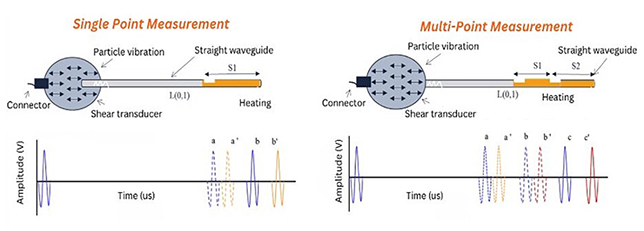
Figure 3 ... operating principle of single-point versus multi-point ultrasonic waveguide temperature measurement
TECHNOLOGY
The deployed system uses an ultrasonic waveguide clamped to the external surface of the reformer tube.
A piezoelectric transducer sends guided ultrasonic pulses through the waveguide (Figure 3).
Engineered reflector locations create multiple echoes whose travel time changes with temperature, allowing several temperature measurements from a single waveguide.
Each waveguide provides 6 to 12 independent measurement points while requiring only one sensor cable.
Unlike conventional thermocouples, the system requires no welding to pressure-containing components and can be installed during planned shutdowns using stainless-steel banding and a high-temperature thermal interface material (Figure 4).
The acquisition unit converts ultrasonic measurements into standard industrial outputs such as 4-20 mA, Modbus TCP and OPC-UA, allowing seamless integration with the plant DCS, historian and asset monitoring platforms.
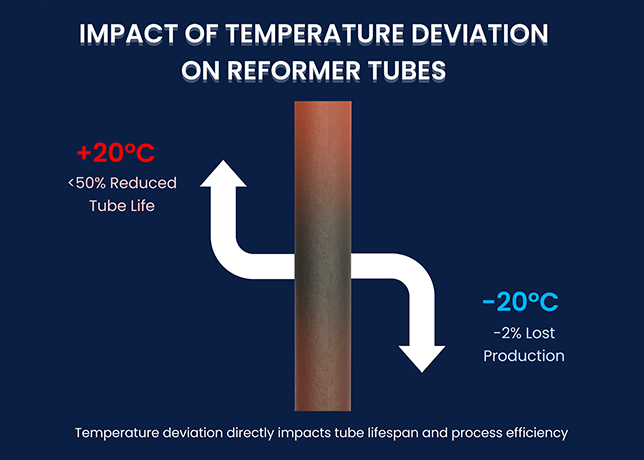
Figure 2 ... impact of tube wall temperature deviation on reformer tube
CASE STUDY
The field deployment was conducted on a 100,000 normal cu m per hour (Nm³/h) refinery hydrogen plant containing 240 vertically suspended catalyst tubes heated by 144 wall-mounted burners (Figure 5).
Before installation, continuous monitoring was limited to 12 weld-pad thermocouples supplemented by weekly pyrometer surveys.
.jpg)
Figure 5 ... field-mounted electronics unit (foreground)
Three operational concerns motivated the project:
• Accelerated creep damage on selected tubes.
• Production losses caused by isolated high-temperature alarms.
• Uneven burner ageing creating local heat imbalance.
During an 11-day shutdown, 36 tubes were instrumented using μSTMaps waveguides.
Each waveguide contained eight sensing locations, increasing continuous measurement coverage from 12 points to 288 temperature measurements.
Data from the sensors were integrated into the plant DCS through Modbus TCP. Operators received live heat maps displaying peak tube temperatures, historical trends and alarm conditions (Figure 6).
COMMISSIONING & RESULTS
The commissioning programme lasted four weeks during which initial operation established baseline data, followed by correlation against pyrometer measurements and testing at different feed rates.
The agreement between the ultrasonic system and pyrometer readings remained within approximately 6 deg C after emissivity correction.
A soft-sensor model developed using the I-PAMS platform combined physics-based calculations with real-time sensor data to estimate remaining tube life and identify coking and carburisation tendencies.
Continuous monitoring identified a tube reaching 928 deg C that had been missed by routine pyrometer surveys.
Investigation traced the hotspot to local flame impingement caused by a deteriorated burner tile, which was subsequently replaced.
The collected data also revealed substantial temperature variation across the furnace.
Tube-to-tube standard deviation measured 28 deg C, while average row-to-row variation reached 22 deg C.
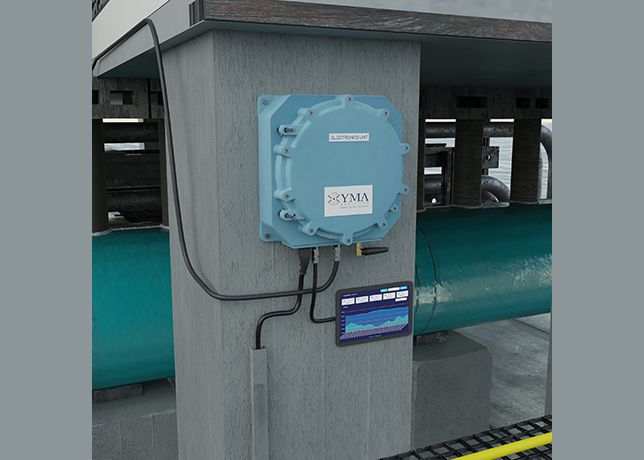
Figure 6 ... the acquisition unit feeds the DCS, the historian, and the I-PAMS platform in parallel
Using this information, operators carried out three optimisation steps:
• Burner trimming to improve heat distribution.
• Feed rebalancing across the inlet manifold.
• Reduction of excess oxygen from 2.4-1.7 per cent.
These actions reduced peak tube temperature from 928-904 deg C and lowered tube-to-tube variation from 28-12 deg C.
Average tube temperature increased from 872-880 deg C, allowing operation closer to optimum conditions without exceeding safe limits.
Hydrogen production increased from 98.6-100 per cent of design capacity while maintaining the same firing rate.
Specific energy consumption decreased from 13.4-12.8 GJ per tonne of hydrogen.
High-temperature exposure minutes declined by 87 per cent, and projected tube life increased by approximately 22 months.
Annual refinery carbon emissions were estimated to decrease by roughly 9,000 tonnes of CO₂ equivalent through improved efficiency.
Sensor availability exceeded 99 per cent during 18 months of operation, with downtime caused only by unrelated DCS communication interruptions.
The deployment transformed furnace operation from periodic inspection to continuous condition monitoring.
Instead of responding only to alarms, operators could identify gradual temperature drift, optimise burner performance and schedule maintenance proactively.
Although only 36 of 240 tubes were instrumented, the representative measurement network provided sufficient information for combustion optimisation and hotspot detection.
Wider deployment could further improve furnace visibility.
Successful implementation depends on maintaining good thermal contact between the waveguide and tube surface.
Soft-sensor models also require periodic retraining as catalyst activity, burner performance and feed composition evolve.
The same waveguide technology can be applied to fired heaters, FCC units, sulphur recovery units, hydroprocessing heaters and other high-temperature refinery assets.
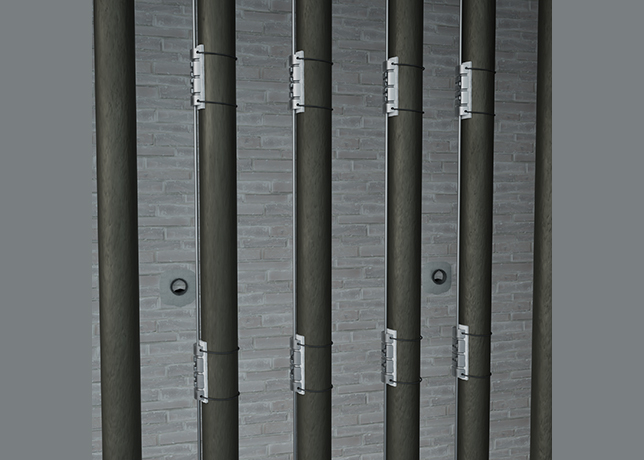
Figure 4 ... multi-point waveguides clamped to the external surface of tubes without welding
CONCLUSION
The retrofit deployment demonstrated that high-density ultrasonic temperature measurement significantly improves SMR operation.
Continuous multi-point monitoring detected hidden hotspots within days, enabled targeted burner optimisation and reduced temperature variability across the furnace.
These improvements increased hydrogen production by 1.4 per cent, reduced energy consumption, extended projected tube life by nearly two years and lowered carbon emissions.
The technology integrates easily with existing control systems, requires no welding to pressure-containing components and supports predictive maintenance through continuous data collection.
Multi-point ultrasonic waveguide sensing provides refinery operators with a practical method for improving reliability, efficiency and asset life in high-temperature process equipment.
* Dr Nishanth Raja is the CEO and Co-Founder of Xyma Analytics, an IIT Madras-incubated deep-tech company specializing in Industrial IoT (IIoT) and patented ultrasonic waveguide sensing technologies. He has extensive expertise in high-temperature process monitoring, non-destructive evaluation (NDE), and predictive maintenance for the process industries. His work focuses on developing innovative sensing solutions that enhance asset integrity, improve operational reliability, and enable continuous, real-time monitoring of critical industrial assets.