















By Abdulaziz Khattak
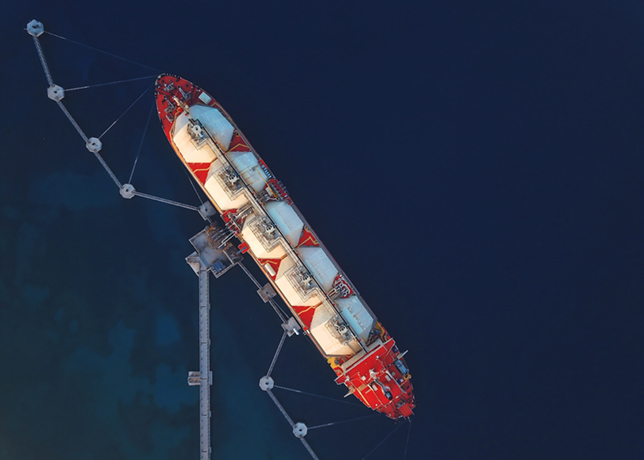
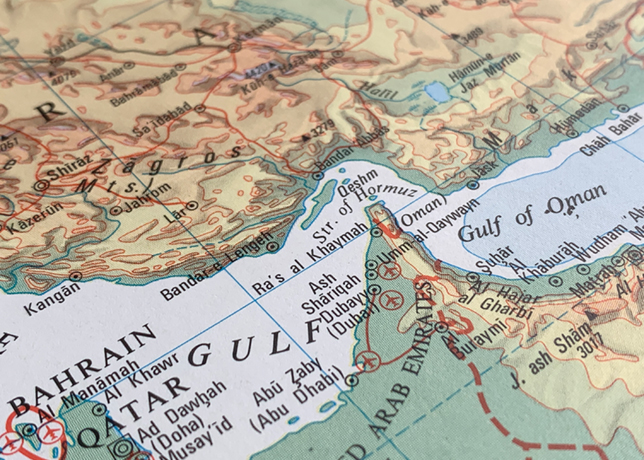
The prolonged military escalation between the US and Iran has delivered an unprecedented structural shock to global energy security by effectively choking off the Strait of Hormuz, the primary maritime artery through which roughly 20 per cent of the world’s liquefied natural gas (LNG) flows.
Unlike neighbouring Gulf Arab states that possess overland crude oil routes to alternative marine terminals, Qatar finds its primary export commodity completely landlocked within the Arabian Gulf.
The total interruption of maritime traffic through the chokepoint has brought Qatari LNG export volumes crashing down from roughly 20 million tonnes per quarter in 2025 to less than 2 million tonnes between April and June of 2026.
This dramatic drop in physical deliveries has triggered massive macroeconomic repercussions for the state, culminating in a record quarterly budget deficit of $5.8 billion, in Q2 2026.
This fiscal shortfall represents the largest quarterly gap recorded by the country in nearly a decade, bringing the cumulative H1 2026 deficit to $8.65 billion.
That six-month shortfall has already far outpaced the government’s original full-year projected deficit of $5.99 billion, forcing state planners to draw down reserves while managing a sharp 25.8 per cent year-on-year contraction in hydrocarbon gross domestic product.
According to market intelligence published by Bloomberg, natural gas revenue in Qatar has all but evaporated following the onset of regional hostilities in late February 2026.
The total financial impact of the export collapse is estimated by industry data providers to exceed $24 billion in lost energy sales over the first six months of the conflict.
The physical limitation of having no alternative export routes has severely exposed the vulnerability of Qatar’s monosectoral energy economy.
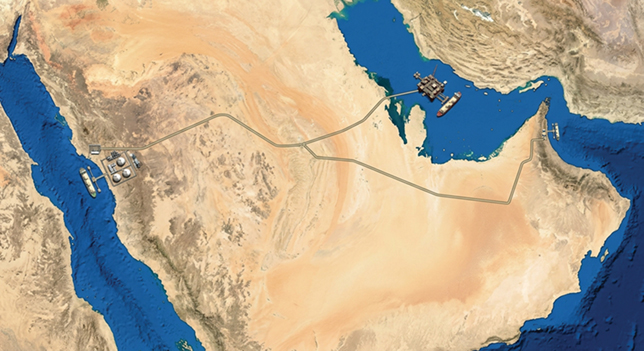
While Saudi Arabia continues operating its East-West Pipeline to transport crude oil to East Coast terminals on the Red Sea, and the UAE utilises its Habshan-Fujairah pipeline to access the Gulf of Oman, Qatar remains geographically reliant on maritime transit through the Strait of Hormuz.
Official economic figures published by the National Planning Council indicate that although non-hydrocarbon sector revenues surged five-fold quarter-on-quarter to $6.86 billion, partially mitigating the collapse in petroleum receipts, overall state revenues dropped by approximately 30 per cent to $7 billion against quarterly expenditures of $12.8 billion.
Consequently, the International Monetary Fund (IMF) has revised its macroeconomic forecast for Qatar, projecting an overall national economic contraction exceeding 8 per cent for the full year of 2026.
MULTI-YEAR INFRASTRUCTURE REPAIR SCHEDULES
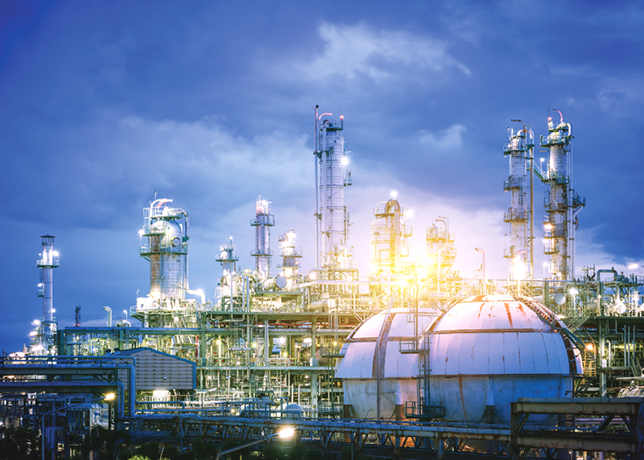
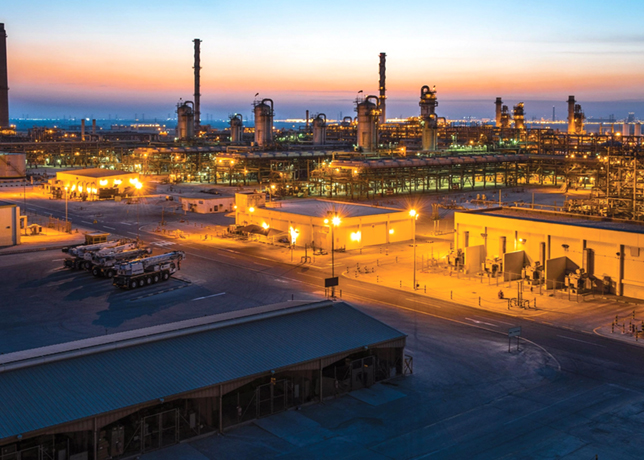
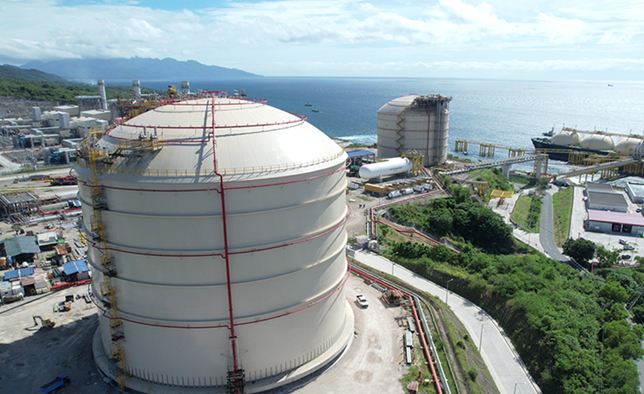
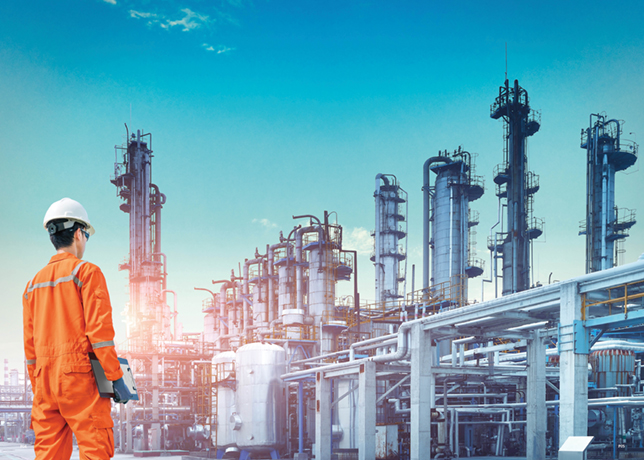
The operational crisis facing Qatar’s energy sector extends beyond shipping bottlenecks to include direct structural damage inflicted on its primary industrial hub at Ras Laffan.
Physical strikes occurring in late February and March forced QatarEnergy to shut down the massive Ras Laffan export facility for the first time in nearly thirty years of continuous operations.
Industry assessments from Wood Mackenzie estimate standalone infrastructure repair costs across damaged production units at $5.8 billion.
Detailed engineering damage surveys confirm that military strikes disabled two major LNG production trains and a gas-to-liquids facility, knocking out approximately 17 per cent of Qatar’s overall export capacity.
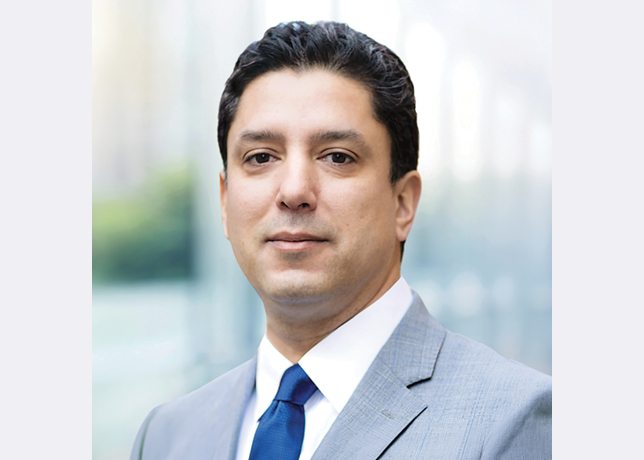
Speaking to Bloomberg, Sheikh Bandar bin Mohammed bin Saoud Al-Thani, Qatar Central Bank Governor and Qatar Investment Authority (QIA)Chairman, said initial estimations indicate the structural damage to these attacked facilities is huge and will take two to three years to repair.
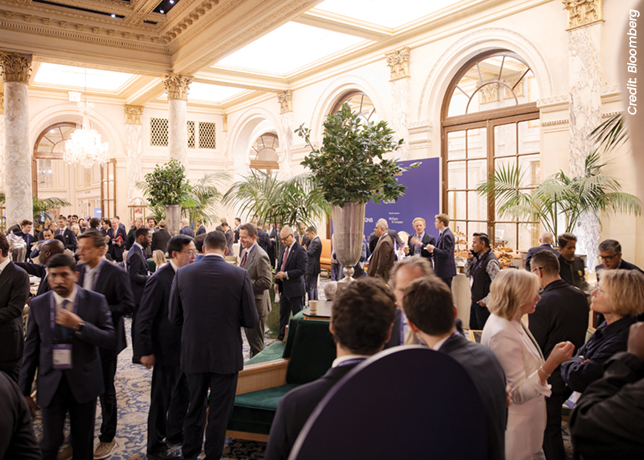
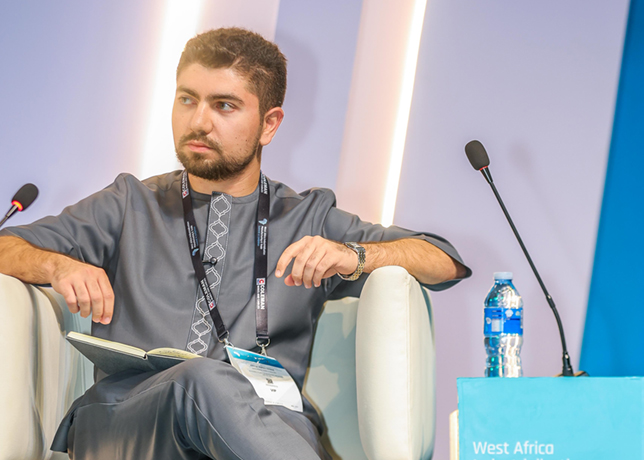
Delegates at the Qatar Economic Forum in New York
The loss of these facilities has severely restricted output, with Qatari gas production averaging just 6 billion cubic feet per day (bcfd) during the initial three months of the crisis, down from pre-war baseline levels of approximately 20 bcfd.
The remaining active gas production has been channelled entirely into meeting domestic power requirements and supplying roughly 2 bcfd of pipeline gas via the Dolphin pipeline to the UAE and Oman.
The restoration timeline for these world-scale processing facilities varies significantly depending on technical complexity.
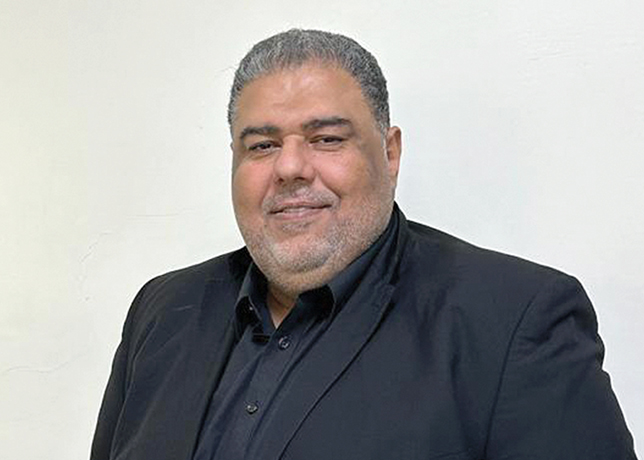
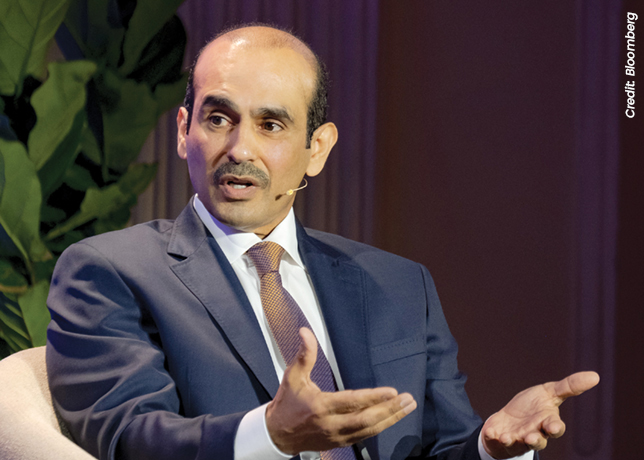
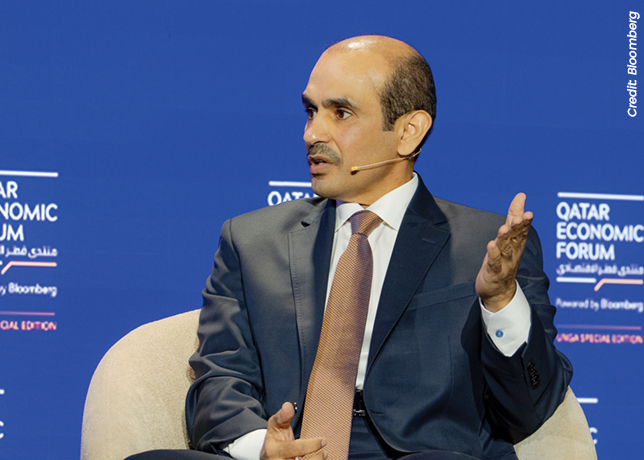
Saad Al-Kaabi, Qatar’s Energy Minister and QatarEnergy CEO, addressing delegates at the Qatar Economic Forum in New York, confirmed that repairs on the damaged Pearl gas-to-liquids plant, operated in partnership with Shell, are progressing steadily and are expected to conclude in Q1 2027.
Conversely, repairing the two damaged liquefaction trains at Ras Laffan represents a far more complex engineering challenge that will require up to three years to fully complete.
Nevertheless, Al-Kaabi emphasised that for undamaged portions of the Ras Laffan complex, Qatar stands ready to resume normal processing and export operations within a few weeks of the reopening of the Strait of Hormuz.
In the interim, Asian and European buyers face severe contractual disruptions.
Italian utility Edison reported that QatarEnergy extended force majeure declarations on contracted deliveries into early November 2026, affecting, at least, 29 scheduled cargoes under their long-term supply agreement.
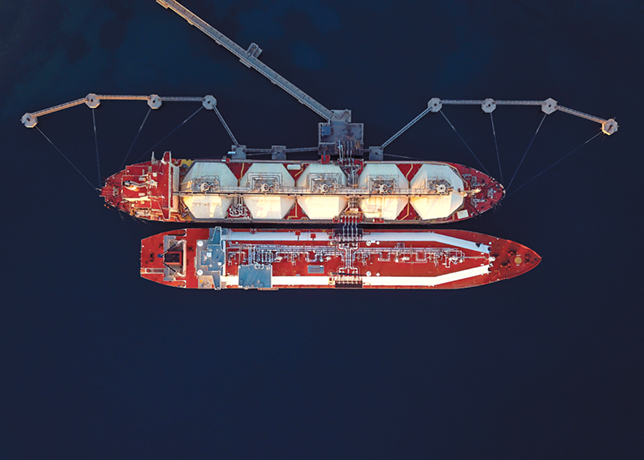
With over 15 loaded liquefied natural gas carriers remaining trapped inside the Gulf and international buyers scrambling for replacement spot cargoes, global spot gas prices have experienced heightened volatility, prompting buyers in Europe and Asia to seek alternative volumes from alternative suppliers.
STRATEGIC TRANSFORMATION THROUGH TRADING EXPANSION & GLOBAL PORTFOLIOS
To counter the physical constraints imposed on its domestic export hub, Qatar is accelerating a strategic pivot toward global liquefied natural gas trading and international asset optimisation.
Under the leadership of QatarEnergy, the state is building what it projects will become the world’s largest liquefied natural gas trading organisation.
This structural shift allows Qatar to maintain commercial market share and service global contract commitments by sourcing, arbitrating, and trading third-party cargoes originating outside the Arabian Gulf.
A central pillar of this international hedging strategy is Qatar’s joint venture investment in the US at the Golden Pass export facility in Texas.
Shipments have officially commenced from the first production train at Golden Pass, with QatarEnergy anticipating that both the second and third trains will reach full operational capacity by 2027.
Additionally, the state is advancing the commissioning process for the world’s largest ethane cracker at the Golden Triangle Polymers project in Texas, providing immediate non-Gulf revenue streams and operational diversification.
Concurrently, Qatar is adapting its shipping tactics within the Gulf to move isolated export volumes under high-risk conditions.
Tracking data provided by marine analytics firm Kpler shows a rising frequency of dark transits through the Strait of Hormuz, where QatarEnergy-operated vessels turn off their Automatic Identification System signals while transiting the waterway.
At least, 13 visible or unflagged transits were recorded during September 2026 alone, with vessels such as the 217,000-cu-m Al Shamal successfully navigating the chokepoint to deliver cargoes to price-sensitive Asian markets.
These isolated shipments have primarily targeted buyers in India and Pakistan, easing prompt delivery constraints and providing temporary relief to South Asian utilities.
However, trade analysts caution that these dark transits do not signal a structural resumption of full-scale export flows.
The broader global supply gap created by Qatar’s offline capacity has incentivised international buyers to advance negotiations for alternative supply agreements, injecting fresh momentum into greenfield and brownfield projects in Argentina, Timor-Leste, Tanzania, and the US.
SOVEREIGN CAPITAL DEPLOYMENT & FUTURE PROJECT HORIZONS
Despite the immediate fiscal strain, Qatar is leveraging its long-term financial reserves to maintain forward momentum across its upstream development and domestic economic programs.
As explained by Sheikh Bandar, the overall economy contracted by 7 per cent, yet non-hydrocarbon GDP grew by 3.5 per cent, supported by a fiscal stabilisation fund built from historical surpluses that cushions the state without drawing on sovereign wealth assets.
The country’s sovereign wealth fund, the QIA, which manages an estimated $580 billion in assets, continues to deploy capital globally while restructuring its domestic holdings.
To insulate the domestic economy from the multi-year energy slump and accelerate private sector participation, Qatar is establishing a dedicated domestic investment platform named Doha Investment.
This platform will consolidate and manage state holdings in major listed domestic entities, including Qatar National Bank and Ooredoo, while supporting a planned pipeline of $38.5 billion in new public-private partnership infrastructure projects over the next five years.
Furthermore, a parallel real estate and hospitality investment pipeline is targeted to attract $22.5 billion in private capital, providing an economic buffer against the 7 per cent national economic contraction reported in early 2026.
In the upstream sector, QatarEnergy is maintaining its long-term capex commitments to expand the North Field, the world’s largest non-associated gas field.
Although equipment delivery delays stemming from the Hormuz transit crisis have pushed back initial startup schedules, Al-Kaabi told confirmed at the Qatar Economic Forum that the first production train at North Field East is now slated to come online in the first half of 2027, followed by the North Field South expansion in 2028.
According to Sheikh Bandar, the state remains anchored by its long-term expansion goals to reach an overall production capacity of 145 million tonnes per annum by 2030.
Once fully operational, these projects will elevate Qatar’s total liquefaction capacity from 77 million tonnes per annum to 126 million tonnes per annum.
Offshore engineering activity also continues at a robust pace, underscored by China National Offshore Oil Engineering Company breaking ground on the $4-billion Bul Hanine engineering, procurement, installation, and commissioning project.
Involving over 130,000 tonnes of steel, 60 offshore facilities, and 40 subsea pipelines, the Bul Hanine project demonstrates that Qatar is actively upgrading its offshore production architecture.
By pairing disciplined infrastructure restoration at Ras Laffan with aggressive international trading and sovereign portfolio diversification, Qatar is structuring its energy sector to withstand short-term geopolitical shocks while securing its position in global gas markets.