


































































By Abdulaziz Khattak
Wialon’s launch of an in-country cloud data centre in Saudi Arabia has eliminated traditional infrastructure deployment delays and high capital expenditures for international operators managing commercial transport fleets across the Kingdom’s critical energy and industrial supply chains.
The localised cloud infrastructure ensures full compliance with Saudi Arabia’s stringent data sovereignty mandates, providing ISO/IEC 27001-certified security, high-uptime reliability, and native integration with the Transport General Authority’s mandatory WASL platform.
By supporting more than 4,100 device models, the hardware-agnostic system enables commercial fleet managers to onboard vehicles effortlessly without requiring costly tracking equipment replacements.
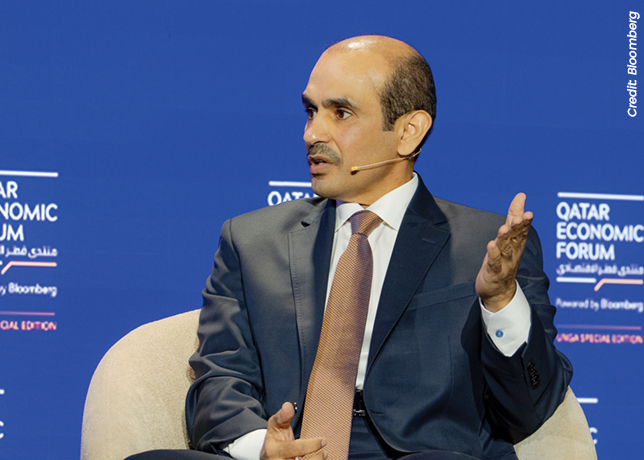
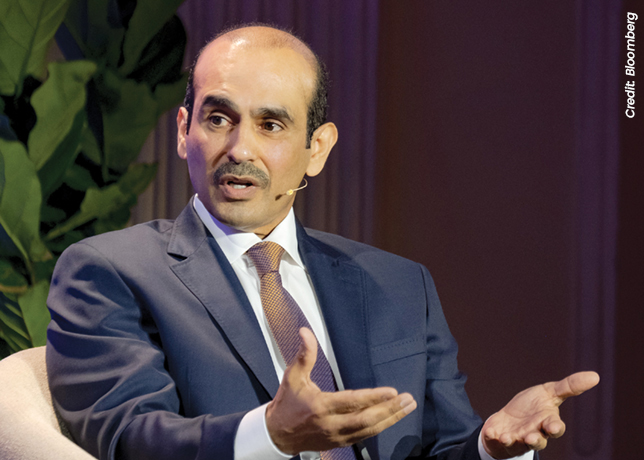
In an exclusive interview with OGN energy magazine, Aliaksandr Kuushynau, Head of Wialon, says: "A partner onboarding a 500-vehicle contract no longer builds infrastructure before the first vehicle goes live, which is where deployment timelines usually get lost."
Below are excerpts from the interview:
As major energy producers across the GCC push tier-one logistics providers to digitalise, how does local hosting remove technical friction for international operators seeking compliance in the market?
Start with the scale of what is being digitalised.
Saudi Arabia’s General Authority for Statistics put the Kingdom at nearly 16 million registered vehicles in its 2024 road transport figures, and roughly two million of those are commercial.
The giga-projects add more every year, because building infrastructure, moving supplies and connecting ports puts large fleets on the road daily.
Until August 2026, a partner serving a fleet that had to keep data inside Saudi Arabia had one route: Wialon Local, on-premise.
That option stays where full data ownership is the requirement, but someone has to procure the servers, secure them and own the uptime.
The in-country cloud removes that step, so a partner onboarding a 500-vehicle contract no longer builds infrastructure before the first vehicle goes live, which is where deployment timelines usually get lost.
Hardware is the other friction point.
Wialon supports over 4,100 device models from over 700 manufacturers, so a fleet arriving with tracking hardware already installed usually does not need to rip it out. That removes the single largest cost of switching platforms.

Wialon helps heavy industrial transport run on advanced telemetry systems
How will your in-country cloud infrastructure explicitly address data sovereignty and cybersecurity requirements for commercial fleets operating across Saudi Arabia’s critical energy and petrochemical supply chains?
On August 6, 2026, our new data centre in Saudi Arabia went live. Partners can now run Wialon Hosting and Wialon Lite with fleet data staying inside the Kingdom, which is what a project bound by Saudi Arabia’s Personal Data Protection Law needs from its infrastructure, alongside the on-premise Wialon Local option they already had.
On security, I would rather show the audit trail than the adjectives. ISO/IEC 27001 certification means independent auditors have checked our source code, server encryption and data-access policies.
We run in Tier III data centres, the tier banks and telecom operators use for systems that cannot go dark.
Our SLA commits to 99.5 per cent uptime; actual 2025 uptime was 99.984 per cent, under 1 hour 25 minutes of downtime for the whole year.
While partners in the Kingdom build the services on top of this, our job is to keep the foundation underneath them from moving.
What challenges do international telematics vendors face when integrating proprietary cloud architectures with government-operated digital infrastructure platforms like Elm’s WASL system?
WASL, developed by Elm and mandated by the Transport General Authority, is supported natively inside Wialon.
Without that, a partner has to build the connection to the government platform themselves and then maintain it every time something on either side changes.
In Wialon it is a setting they switch on for the vehicles that need it.
The underestimated challenge is what comes after.
A government platform sets expectations on data accuracy, formatting and continuity, and those expectations shape how a provider onboards vehicles, configures devices and watches data quality month after month.
If telemetry goes missing, arrives late or arrives in the wrong shape, the operator has a compliance problem.
That is where support decides the outcome.
Ours runs 24/7 in five languages with around 50 technical specialists behind it.
Real people, not a chatbot loop.
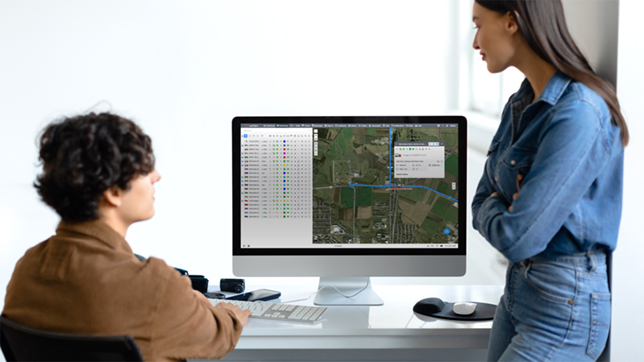
Operators monitor live telemetry data to reduce anomalies
Given the unified nature of GCC trade corridors, how will Wialon maintain seamless cross-border data continuity when fleets travel between differing national data residency regimes in the Gulf?
Continuity and residency are different problems, and separating them helps.
With suitable roaming or local connectivity and the right account configuration, a vehicle can continue reporting to the account that manages it as it crosses the border.
Where the data sits is a separate decision, taken before the fleet goes live rather than at the border, and a partner can host in the Kingdom, in Europe or in the US, or stay on-premise.
Governance is the harder half, and today it is more a legal and configuration question than a software one.
Which country’s rules apply to a load that starts in Dammam and finishes in Muscat is not something a platform decides.
Our regional office in Dubai exists partly so we are in the room for those conversations rather than reading about them.
How does shifting from server-based local deployments to an in-country cloud deployment reduce the total cost of ownership for telematics service providers in Saudi Arabia?
Three costs dominate, and they are the ones partners underestimate.
Hardware and hosting is capital spent before the first invoice goes out. Security and maintenance is a permanent staffing line rather than a project.
And capacity is a recurring guess: on your own servers, every new contract raises whether the machines can absorb another 2,000 vehicles, and the honest answer usually arrives the week the fleet goes live.
In-country cloud moves all three onto us.
A dedicated InfraOps team watches the infrastructure around the clock, which is not a line a single service provider can justify on its own payroll.
The commercial model matters as much as the infrastructure.
We chose a long time ago to stay a software development company rather than become a service provider, because that is where we add the most value.
Wialon is sold primarily through telematics service providers and resellers, so partners generally own the client relationship, pricing and service margin.
Our partner model is designed to leave service providers room to price their own services and retain the value they create.
Beyond mandatory WASL regulatory compliance, what tangible operational efficiencies and fuel savings are your telematics systems delivering to heavy industrial transport operators in the Kingdom?
WASL compliance is mandatory, so operators treat it as a cost. The return comes from what they do with the same data afterwards.
The clearest published example comes from Iraq rather than Saudi Arabia, though the operating problem is identical.
One of our partners there built a fleet management and security solution for one of the country’s largest oil products distributors: More than 25,000 tankers running 12,000 to 20,000 trips a day, with smuggling, theft and tampering in transit a constant risk.
Since implementation, the client has reported zero product theft, and security teams get an immediate alert with the full trip history instead of opening an investigation from scratch.
The project won the Grand Prix at IoT project of the year in 2024.
Fuel is usually the largest controllable cost after labour and vehicle ownership, and fuel level sensor data, consumption patterns and driving style are how operators find the anomalies.
Savings vary by fleet type and operating discipline, so we do not promise a universal percentage.
The strongest results come from operators who review the data weekly, not after an incident.
The operators who get the most out of telematics look at the data weekly, not after an incident.
How are you leveraging data from more than 100,000 connected vehicles in Saudi Arabia to build predictive maintenance models capable of withstanding the region’s severe climatic conditions?
The figure is right.
More than 40 local partner companies now run over 100,000 vehicles on Wialon in the Kingdom, and that installed base gives service providers a real picture of how commercial vehicles behave in summer heat approaching 50 deg C, in dust, under heavy payloads, on long desert corridors.
Let me be precise about terminology.
What telematics providers build on Wialon are maintenance rules and alerts driven by real operating data, not black-box predictive models.
The practical gain is that triggers follow local conditions instead of a manufacturer’s generic schedule: engine hours rather than calendar time, abnormal fuel consumption, repeated diagnostic events, temperature-related stress.
That matters in the Gulf, where a vehicle can accumulate severe wear while its odometer still says service is due next month.
The goal is simple: stop trucks failing between Riyadh and Dammam, where a breakdown costs a day and sometimes a contract.
With Saudi Vision 2030 placing stringent decarbonisation targets on heavy industry, how does your platform convert vehicle telemetry into actionable Scope 1 emissions reduction strategies for regional transport contractors?
The fastest emissions reductions do not require new vehicles. Idling, harsh acceleration, poor routing and underused trucks all show up in data on the fleet a contractor already owns, and every one of them burns diesel that never moves a load.
Scope 1 emissions from a transport fleet are, in practice, a fuel consumption question.
Wialon already measures consumption per vehicle from fuel level sensors and engine data, so the carbon figure comes from that same source rather than a separate estimate.
Local service providers produce CO₂ output per vehicle through the reporting system, and applying one consistent formula across the whole period is what makes the result defensible: someone outside the company can see exactly how the number was produced.
Then the measurement has to reach the person holding the steering wheel.
That is where I see contractors getting real reductions: an eco-driving score per driver, published monthly and tied to a bonus.
A driver can change idling, acceleration and speed inside a week, without waiting for a procurement cycle.
Our partners set up the scoring; the incentive scheme belongs to the contractor.
How is your platform evolving to track and optimise telemetry for alternative-fuel commercial fleets, including electric and hydrogen-powered heavy vehicles entering the regional market?
The first question operators face is not how to track an electric truck.
It is which vehicles to electrify at all.
That transition takes years, and in the meantime they need one system managing both.
Mileage and usage data show which vehicles are genuinely suited to replacement, and here that usually means short urban routes rather than long desert corridors.
Day to day, an electric vehicle is not a special case on Wialon.
Where the vehicle and tracker expose the parameters, partners monitor state of charge and energy consumption, generate battery reports and build charging into the operational workflow.
Maintenance shifts too: far fewer moving parts, so charge cycles and battery health matter more than calendar servicing.
The platform is hardware-agnostic by design, and that is the same mechanism that will absorb hydrogen vehicles, autonomous trucks or drones when they arrive.
Heat will decide the Gulf: ambient temperature affects range, cooling load and battery life in ways European figures will not predict, so operators here need local evidence before committing capital.
With Saudi Arabia leading regional transport regulation, do you anticipate neighbouring Middle Eastern nations adopting similar localised hosting and mandatory tracking mandates for commercial fleets?
Yes, I think that is where this is heading.
Saudi Arabia is one of the clearest regional examples of road-safety regulation, transport digitisation and data-governance requirements developing together, and from conversations with local service providers across the Gulf, the Saudi framework tends to be the reference point when this comes up elsewhere.
Mandatory tracking will likely expand first where the public-safety case is obvious: hazardous materials, fuel distribution, public and school transport, cold chain, cross-border logistics.
Each market will move at its own pace though, depending on national priorities and how mature the government digital platforms are.
There is a habit of describing regulation as a burden, and I think that misses what happened here.
Compliance is what turned telematics in the Gulf from an optional purchase into infrastructure, and it is a large part of why the number of vehicles connected to Wialon in Saudi Arabia grew by more than 50 per cent in a single year.
Wherever the next rules land, our part is to keep local compliance as close to a configuration task as possible, rather than forcing partners to build from scratch.