














































By Abdulaziz Khattak
Expanding metal trade tariffs, surging equipment costs, and multi-year lead times are compounding severe structural vulnerabilities across global energy supply chains, forcing operators to balance immediate cost pressures against growing geopolitical exposure.
Addressing these systemic threats requires a strategic shift toward targeted supply chain segmentation and local resilience, rather than broad reshoring initiatives or reliance on traditional global procurement models.
In an exclusive interview with OGN energy magazine, Enrique Glotzer, Managing Director, BRG, says: “The digital oilfield is genuinely vulnerable, and exposed on both ends,” pointing out that Asia controls hardware manufacturing whilst Western firms hold software intellectual property.
To mitigate execution delays and protect operational margins, operators are advised to lock in critical OEM turbine slots prior to final investment decisions and audit secondary suppliers based on proven capacity and provenance.
Below are excerpts from the interview:
While raw commodities such as crude oil are deliberately shielded from trade tariffs, why are the essential hardware and subsea technologies keeping these resources flowing left entirely unprotected?
This isn’t really an energy-sector decision.
It’s a broader policy choice.
The administration did not tariff crude oil or refined products because consumers would see the effect on fuel prices almost immediately, which is politically unpalatable.
The steel, aluminium, and copper tariffs are a separate policy lever aimed at incentivising domestic production of those metals; the fact that they raise costs for oilfield equipment, tubing, and downhole hardware is really an indirect effect rather than the intent.
The impact on E&P equipment varies widely by product and by where components are sourced, so there isn’t a single clean number that covers every case.
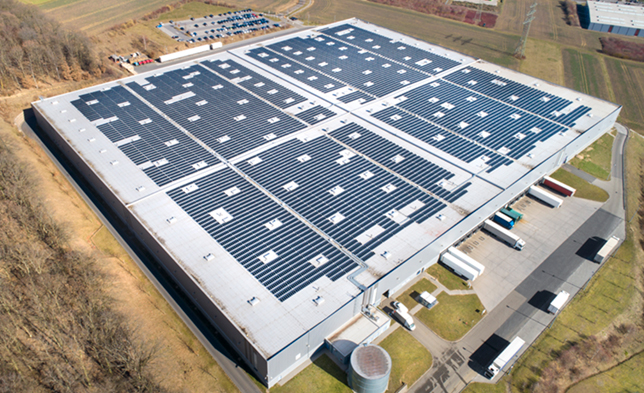
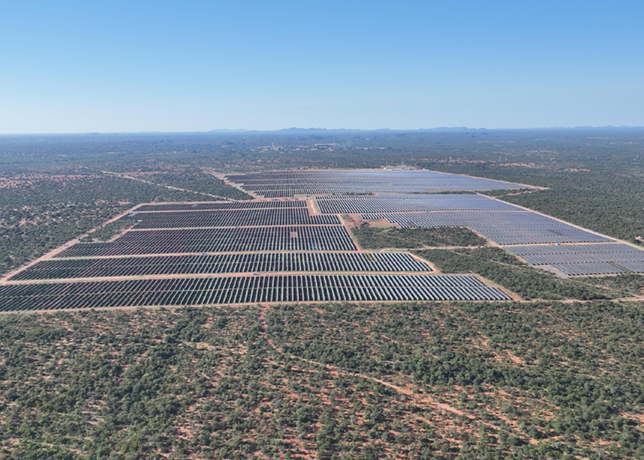
A large industrial building with solar panels
With steel, aluminium, and copper tariffs threatening to drive up capital equipment and services costs by up to 40 per cent, at what precise threshold does regional component finishing become more economical than absorbing global tariff penalties?
There isn’t a single threshold, since every commodity behaves differently.
But the general framework is straightforward: If the premium for finishing a component regionally is lower than the net tariff saving, regional finishing makes sense, and if it’s higher, absorbing the tariff is the better option.
The actual tariff impact on a finished product is often somewhat lower than the top of the range once material content and finishing costs are taken into account.
On its own, that impact is typically not enough to overcome the premium for regional finishing.
That means tariffs alone aren’t really the primary driver of regionalisation.
Lead time, local-content requirements, and supply risk matter more.
Building real domestic capacity for these materials is difficult regardless of tariff policy: Steel manufacturing requires enormous capital investment, aluminium production needs cheap electricity the US doesn’t have, and copper processing carries serious environmental constraints.
Some Gulf countries have already begun incentivising local content to work around these structural limits, and the US will likely need more of the same.
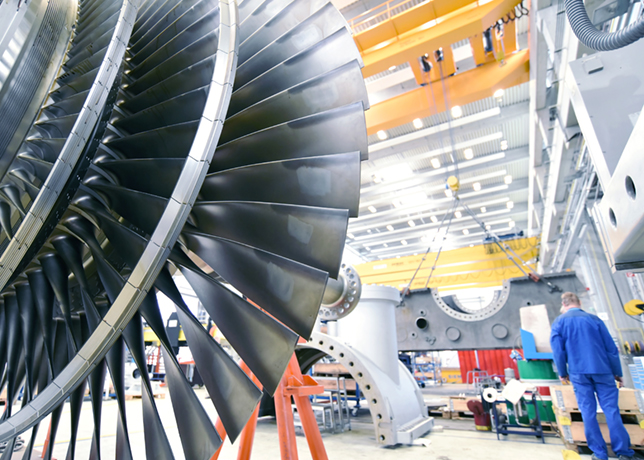
Workers at a turbine manufacturing facility
Since advanced oilfield technologies rely heavily on Western intellectual property while their underlying physical hardware stack remains concentrated in Asia, how vulnerable is the digital oilfield to escalating geopolitical friction?
The digital oilfield is genuinely vulnerable, and exposed on both ends.
The physical stack, chips, sensors, rare earth minerals, memory—that’s all heavily concentrated in Asia, while the software and intellectual property layer sits mostly in the US and Europe.
Of the two, the hardware concentration is probably the bigger risk, since it’s harder to substitute or bring in-house on short notice.
It’s a structural vulnerability the industry will need to watch closely as geopolitical tensions evolve, and one that’s likely to shape sourcing decisions for the digital oilfield well before it shows up as an outright disruption.
How should international energy companies prepare for the operational risks posed by sudden Western export controls or software licensing restrictions on US-developed AI and cloud infrastructure?
This is really a subset of the hardware and software concentration risk described above.
Licenses can be withdrawn, and that’s not hypothetical: a glimpse of it played out recently when a leading AI developer briefly suspended access to some of its newer models to comply with export controls before access was restored.
It’s a useful reminder that dependency on a single external AI or cloud provider carries real operational risk, even for sophisticated, well-resourced organisations.
One mitigation is building some internal capability using open-source AI models that a company’s own team can run and adapt in-house.
That won’t match the performance of the leading commercial models, but it provides a fallback if access to a preferred provider is ever restricted.
This isn’t an urgent, high-probability risk today, but it’s worth watching and worth some modest, forward-looking investment.
Given that gas turbine lead times now exceed four years and prices have surged nearly 200 per cent since 2019, how can energy operators realistically sequence final investment decisions (FID) without risking severe project execution delays?
Lead times vary significantly by category, and heavy-frame turbines, which utilities typically prefer for their size and efficiency, can carry wait times of five years or more, especially for buyers without the scale of large utilities.
Because smaller aeroderivative and reciprocating units are more available, many data centre developers are turning to them as bridging capacity.
The real constraint is securing a firm turbine slot from an OEM.
Developers need that slot locked in before they can responsibly move to FID, then build every other project milestone backward from the delivery date.
This could ease somewhat if manufacturers expand capacity, but they have been cautious about overbuilding in case demand cools, so operators should plan around today’s constraints rather than a hoped-for loosening.
How can operators justify adopting a regional, reliability-focused procurement layer for critical assets when cash-constrained boards remain predominantly focused on immediate unit-cost minimisation?
This comes down to the cost of failure.
Not having a critical part when it’s needed is far more expensive than paying a premium to secure it reliably, and that’s the framing boards tend to respond to.
The key is segmentation, not blanket reshoring.
Supply chains should be graded by operational criticality, availability of substitutes, and how long it would take to switch suppliers if something went wrong.
Doing so typically reveals that only a small share of the supply chain is genuinely critical, and that’s where a regional, reliability-focused layer belongs, not across the board.
Paying a premium on that small, critical slice of spend is a modest addition to total procurement costs.
It’s also not something that has to happen all at once: Working through critical suppliers in order of priority and shifting them over time is more realistic than rebuilding an entire procurement strategy in one step.
Considering that smaller regional operators lack the purchasing leverage to secure long-term global supply agreements, how can they implement a dual-speed procurement framework without damaging their operational margins?
Smaller operators shouldn’t try to compete head-on with supermajors on scale or purchasing power.
Instead, the goal is to shrink the problem.
Applying the same framework used for critical assets more broadly, ranking the supply chain by operational criticality, availability of substitutes, and how long it would take to switch suppliers, narrows the focus to a relatively small set of components that actually need a resilience-first approach.
Handled this way, the margin impact is more manageable, not the kind of hit that threatens the economics of the business.
Do you see smaller exploration and production companies being forced into buyer consortia or collaborative procurement pools to compete against supermajors for constrained manufacturing capacity?
Formal buyer consortia are unlikely, since the industry is too competitive for companies to pool resources that directly.
But collaboration is already happening in other forms.
Standardisation is the biggest one: the more equipment specifications are shared across projects rather than custom-built, the easier it is for smaller operators to access constrained manufacturing capacity, and that trend is already industry-wide.
Second, aggregation through service companies: operators can contract with a major oilfield service provider that owns and procures the equipment itself, effectively giving smaller players access under that provider’s umbrella.
Third, partnering with financial or investor players, some of whom are already acquiring turbine slots and other constrained capacity directly, gives operators another indirect route to the same equipment without needing to compete for it themselves.
In complex infrastructure projects where design occurs in the West, prototyping in South-East Asia, and assembly on site, which specific handoff point presents the single greatest point of failure under expanding tariff regimes?
The weakest link is the handoff between fabricated components and models and the actual project on site.
That’s where the greatest point of failure sits.
Addressing it requires a genuine understanding of the full supply chain: knowing exactly what’s exposed and where, then working overtime to regionalise the pieces that carry the most risk.
It also means building supply chain resilience into project design from the start, not just managing existing sourcing, but designing new projects with the future supply chain in mind from day one.
If the global equipment market is not ‘deglobalising’ but rather "reglobalising" around trust and geopolitical alignment, what criteria should procurement executives use to audit and qualify their secondary supplier networks?
That audit really rests on a handful of criteria.
Provenance and control come first: tracing materials back through a supplier’s own suppliers, understanding what jurisdiction those second- and third-tier players operate in, and flagging any sanctions or export-control exposure attached to the materials themselves.
Capacity commitment matters just as much.
A quote on paper isn’t the same as committed capacity, so the real question is whether a supplier has the plant and investment behind its promises, not simply an agreement to deliver.
Interchangeability is another piece worth building in: Suppliers that build to industry standards rather than custom specifications give procurement teams far more room to substitute if something goes wrong.
Beyond that, the fundamentals still hold.
Financial health, essentially a credit check, remains a baseline requirement, alongside a supplier’s cybersecurity posture.
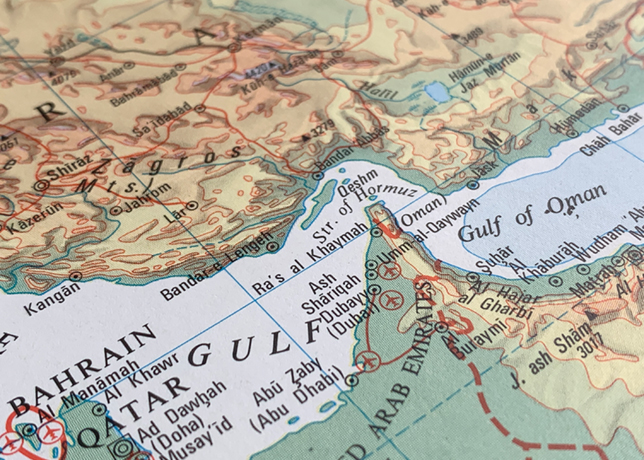
Logistics exposure deserves equal weight, particularly whether a supplier sits in a chokepoint region, the Gulf Coast being one example, where disruption risk runs higher than elsewhere.