












By Abdulaziz Khattak
Nigeria’s accelerating energy expansion, anchored by $50 billion in planned offshore developments and $57 billion in approved field development plans, is driving a surge in demand for high-capacity heavy lifting and specialised logistics.
To overcome severe port congestion and logistical constraints in Lagos and Port Harcourt, engineering contractors are deploying advanced marine solutions and high-tonnage assets directly to critical energy gateways.
To meet these operational demands, Sarens Buildwell has expanded its local footprint by introducing state-of-the-art machinery, including 500-tonne mobile and 800-tonne crawler cranes, alongside specialized multi-axle trailers.
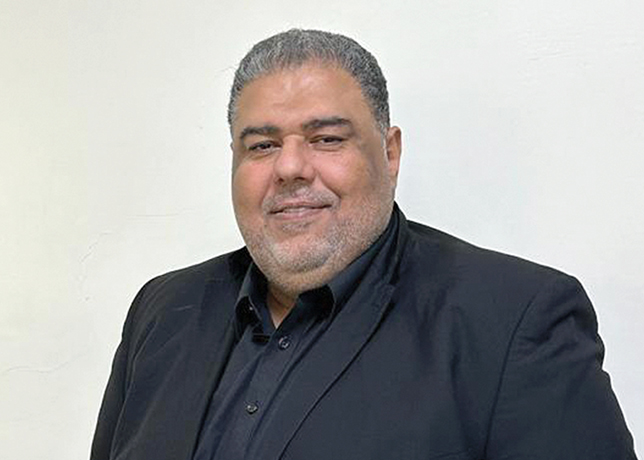
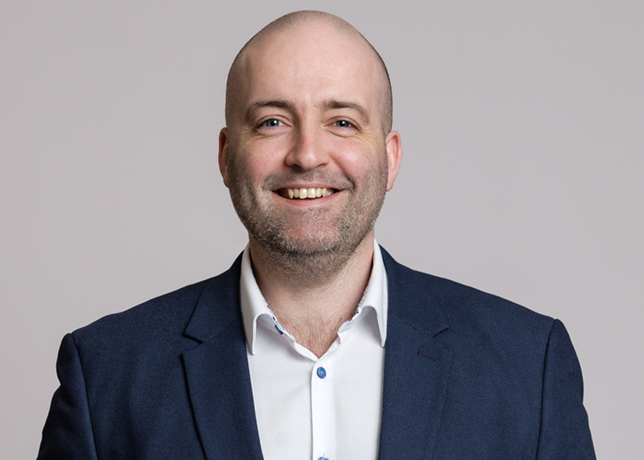
In an exclusive interview with OGN energy magazine, Emile Abou Habib, CEO, Sarens Buildwell, says: “To bypass inland logistical constraints and congested port facilities, we leverage advanced roll-on/roll-off (Ro-Ro) marine solutions and self-propelled modular trailers (SPMTs) that enable direct-from-barge to site transport and precise positioning of ultra-heavy modules.”
By combining dual self-sustained operational depots in Lagos and Port Harcourt with a continent-wide asset mobilisation network, the company provides turnkey engineering, route surveys, and emergency response capabilities.
This integrated operational structure reduces supply chain friction, minimises project turnaround times, and ensures strict adherence to global safety standards across deepwater and domestic gas developments.
Below are excerpts from the interview:
How will Sarens draw upon its extensive operational experience executing major energy and offshore infrastructure projects across Africa to streamline project delivery for Nigeria’s $50 billion investment push?
Sarens currently operates in over 70 countries with more than 100 entities worldwide, maintaining a deep and long-standing operational footprint across Africa.
This global network and continental reach allow us to bring world-class value engineering and global best practices directly into Nigeria’s energy landscape as the country targets $50 billion in offshore and field development investments through 2030.
Over the years, Sarens has established itself as an indispensable execution partner in some of Africa’s largest and most technically demanding energy and infrastructure mega-projects, building a wealth of regional expertise that directly benefits our client base in West Africa.
Within Nigeria, we have built a solid track record delivering critical downstream, gas, and offshore infrastructure projects.
A primary landmark was our active involvement in the construction of the Indorama Fertiliser Line III, where Sarens executed the heavy lifting and specialised transport of ultra-heavy heat exchanger, reactors, and high-tonnage columns.
Alongside this downstream milestone, we have consistently supported domestic gas expansion and upstream developments.
This includes transporting and installing components for BUA’s 700-tonne-per-day LNG plant in Ajaokuta, executing key heavy transport operations for the ELPS pipeline expansion project alongside with NNPC being the end client, and completing the Ro-Ro loadout of a 300-tonne jacket via SPMT barge transport for an offshore field development in the Niger Delta.
Beyond Nigeria’s borders, Sarens leverages vast continental experience across the broader energy spectrum to optimise supply chain delivery and mitigate execution risks.
Across North, East, and Southern Africa, our teams have managed complex heavy transport and lifting schemes for major LNG, petrochemical, and mining facilities, as well as flagship renewable energy developments such as the InnoVent Diaz wind farms in Namibia.
Supported by our regional equipment hubs and specialised training facilities across the continent, such as the Sarens Academy in South Africa, we cross-mobilise certified technical personnel, specialised engineering methodologies, and high-capacity assets effortlessly.
By transferring these proven operational insights and technical capabilities to Nigeria, Sarens Buildwell minimises interface risk, shortens project construction cycles, and ensures that major offshore and field developments are executed safely, on time, and strictly in line with international standards.
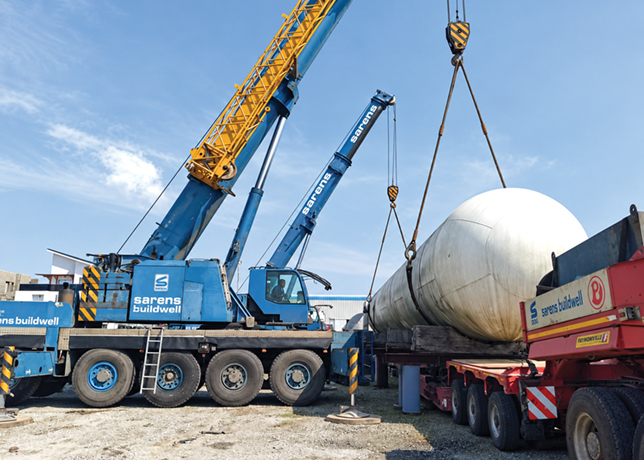
A transport project for Utorogu Gas Plant in Nigeria
How will Sarens Buildwell address the severe port and infrastructure bottlenecks in Port Harcourt and Lagos, as Nigeria attempts to deploy $50 billion into offshore and field development projects by 2030?
Addressing infrastructure and port bottlenecks requires a combination of strategic physical positioning, specialised transport technology and deep local expertise.
Sarens Buildwell operates two strategic, full-equipped depots in Lagos and Port Harcourt.
This local footprint places our engineering team and high-capacity equipment directly at the key gateways of Nigeria’s offshore activity, significantly reducing mobilisation lead times.
To bypass inland logistical constraints and congested port facilities, we leverage advanced Roll-on/Roll-off (Ro-Ro) marine solutions and Self-Propelled Modular Trailers (SPMTs) that enable direct-from-barge to site transport and precise positioning of ultra-heavy modules.
By combining our permanent local presence with Sarens’ global engineering network, we optimise transport routes, minimise transit risks and streamline supply chains for the projects we collaborate with.
With over $57 billion in Field Development Plans approved by the NUPRC, what specific capital investments is Sarens making to expand its high-capacity fleet to meet the unprecedented demand for ultra-heavy lifting?
Sarens Buildwell is actively executing a capital investment strategy to expand and modernise our local fleet.
We are continually introducing state-of-the-art, high tonnage assets directly into Nigeria.
A good example of this is the recent addition of both 500-tonne capacity XCA500L8_1 mobile crane, and 800-tonne crawler crane SCC8000A which significantly expands our local heavy-lifting capabilities.
Furthermore, we are increasing our inventory of heavy transport equipment, including multi-axle line SPMTs, auxiliary taxi cranes and specialised rigging systems.
These investments ensure that we can support long-term, large-scale projects as well as concurrent fast-track demands across the country without relying on lengthy international equipment imports.
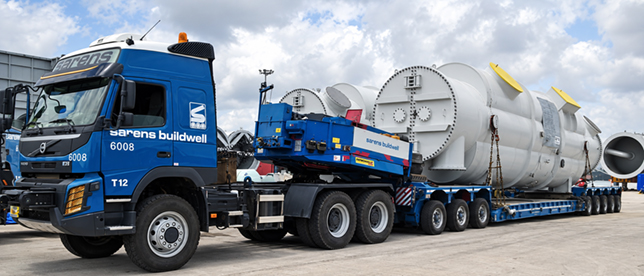
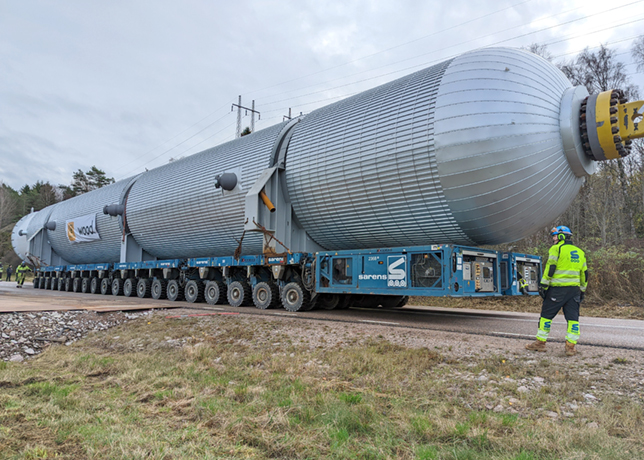
Transport of oversized tanks in Nigeria
What key factors led to the strategic decision to mobilise high-tonnage assets, such as the 500-tonne capacity XCA500L8_1 crane, specifically to the Nigerian market at this time?
The decision to mobilise assets like the 500-tonne XCA500L8_1 mobile crane to Nigeria directly aligns with the country’s accelerating energy expansion.
With crude oil and condensate production reaching 554.5 million barrels and gas production exceeding 7.5 billion cubic feet per day (bcfd), upstream operations and EPC contractors are undertaking complex refinery expansions, gas processing facilities and offshore support infrastructure.
Projects today demand higher lifting radii, heavier modular components and rapid setup times to minimise operational disruption.
The XCA500L8_1 crane offers exceptional lifting capacity combined with high mobility, making it the ideal asset for fast-track refinery turnarounds, gas plant upgrades and modular offshore installations across Nigeria.
Given Sarens' established network of regional equipment hubs across the continent, how will Sarens Buildwell cross-mobilise high-capacity fleet assets from other African markets to support unexpected demand spikes in Nigeria?
One of Sarens’ core strategic strengths is our global “operating without borders” philosophy, supported by a network of over 6,500 professionals and an extensive asset pool distributed across key African hubs.
While Sarens Buildwell maintains a permanent and growing fleet in Nigeria, unexpected demand spikes or requirements for specialised ultra-heavy lifting machinery can be seamlessly cross-mobilised from our regional equipment hubs in Southern, Central, and West Africa.
Similar cross-border fleet movements have been executed across the continent, including the recent deployment of high-tonnage assets such as the 1,300-tonne XLC18000M crawler crane to support energy, mining, and wind power projects in Southern Africa, as well as major heavy lifting operations in Ivory Coast, Angola, and Mozambique.
Our centralised asset management framework allows us to reallocate ultra-heavy assets dynamically across borders based on project timelines.
Backed by our strategic depots in Lagos and Port Harcourt, Sarens Buildwell manages customs clearance, port handling, and inland logistics efficiently, ensuring rapid deployment to support client emergency needs, tight turnaround windows, or sudden project scope expansions anywhere in Nigeria.
What engineering and logistical hurdles were encountered during the Ro-Ro loadout of the 300-tonne jacket via barge, and how will those operational insights inform future offshore module installations?
The loadout of the 300-tonne jacket highlighted the operational complexities inherent to riverine and marine environments.
The key technical hurdles involved managing tidal fluctuations, precise barge ballasting, ground bearing pressures at the quayside, and maintaining stability during the critical transition of weight from land to barge.
To overcome these challenges, our engineering team deployed 40 axle lines of SPMTs, allowing for millimetre-precision control and real-time hydraulic weight distribution.
We conducted extensive pre-loadout 3D simulation, tidal window mapping and strict structural stress calculations.
The insights gained from this successful operation have refined our standard operating procedures for future shallow-water and offshore module installations, proving our ability to execute complex Ro-Ro operations safely, efficiently and within tight environmental windows.
Given the tight execution timelines required for deepwater developments, how does your turnkey service model optimise supply chain schedules and lower total project delivery costs for major operators?
In deepwater and major hydrocarbon developments, interface risks between separate transport, lifting and installation contractors often leads to costly delays.
Sarens Buildwell eliminates this friction through a comprehensive turnkey service model.
We handle the complete lifecycle: from early-stage value engineering, route surveys and heavy cargo transport to Ro-Ro barge operations, heavy lifting and final mechanical alignment on site.
By acting as a single-source partner, we streamline project communication, optimise asset utilisation and ensure seamless coordination across all phases.
This integrated approach significantly reduces total project turnaround times, prevents costly downtime and provides operators with transparent, predictable project costs.
How do your strategic depots in Lagos and Port Harcourt mitigate localised supply chain disruptions and ensure rapid-response capabilities for critical infrastructure emergencies?
Logistical agility is crucial when supporting mission-critical energy infrastructure.
Having dual operational bases in Lagos (covering the Western industrial and port hubs) and Port Harcourt (in the heart of Niger Delta oil and gas complex) places our team and fleet in close proximity to major operating zones.
These depots serve as fully self-sustained operational hubs, housing certified technical crews, maintenance facilities, spare parts inventories and a wide range of mobile equipment, from heavy-duty taxi cranes to rig-move support fleets.
In the event of an unscheduled maintenance shutdown, emergency equipment requirement or critical supply disruption, our local presence allows us to respond, mobilise and execute on–site in hours rather than days.
As crude production rises alongside gas expansion exceeding 7.5 bcfd, how are your specialised response plans adapted to maintain zero-harm safety standards and environmental protection during high-risk lift operations?
At Sarens, safety and environmental stewardship are non-negotiable core values.
As activity scales across Nigeria’s oil and gas assets, we implement rigorous, specialised response and execution plans engineered to maintain our global “Zero-Harm” standard.
Every high-risk lift operation or ODC road transport undergoes comprehensive risk assessments, ground load-bearing analyses, detailed lift plans engineered by our technical departments, and strict safety briefings.
In sensitive environments such as the Niger Delta, our machinery is equipped with environmental protection controls, spill prevention systems and low-emission power packs.
Our personnel operate under strict international HSE guidelines, ensuring operational continuity while protecting local ecosystems and surrounding communities.