

























































 Image courtesy: Oman News Agency
The Middle East conflict is widening into an increasingly complex security, shipping and environmental crisis, with an oil slick from a grounded tanker reaching Oman's coastline just as Iran signals that it may be prepared to sustain its confrontation with the United States for years.
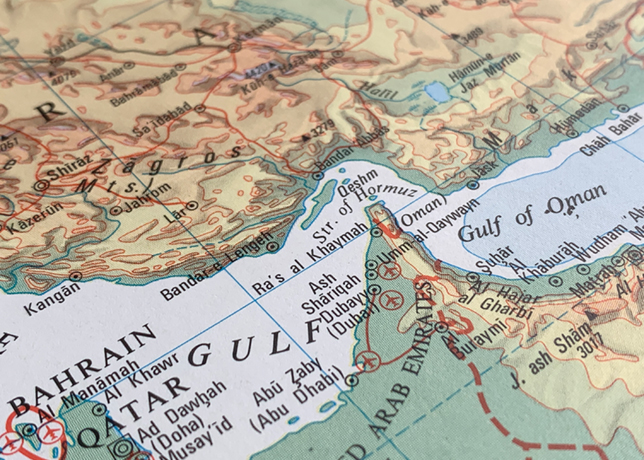
The developments are adding to concerns over the future of the Strait of Hormuz, where commercial traffic remains at a fraction of its pre-war level despite President Donald Trump's repeated assertion that the strategic waterway is open and under US control.
Only 14 vessels crossed the Strait of Hormuz on Tuesday, according to maritime intelligence firm Kpler, a modest increase from the weekend but still dramatically below the more than 130 vessels a day that normally used the waterway before the conflict. Most of the vessels that did cross used an Iran-approved route that Washington has warned commercial shipping against using.
The continuing disruption is keeping pressure on global oil supplies and inventories. The International Energy Agency has warned that the reopening of Hormuz is becoming increasingly urgent as countries draw down oil stocks to compensate for disrupted flows. The prolonged closure has already created a substantial cumulative supply deficit, while rebuilding strategic inventories could keep physical oil markets tight for months even after the waterway reopens.
Oil slick reaches Oman's beaches
The latest manifestation of the crisis is unfolding on Oman's southeastern coast.
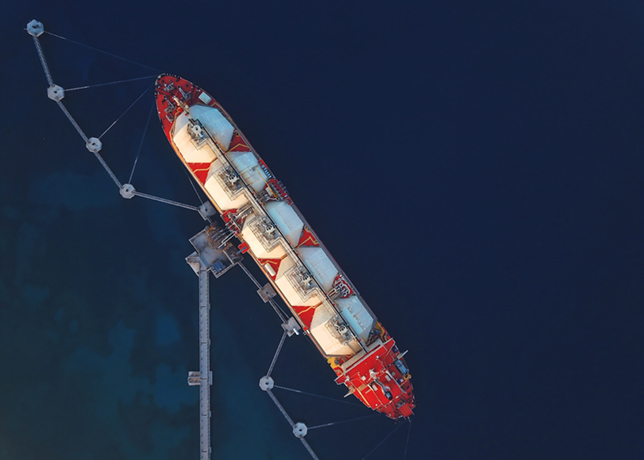
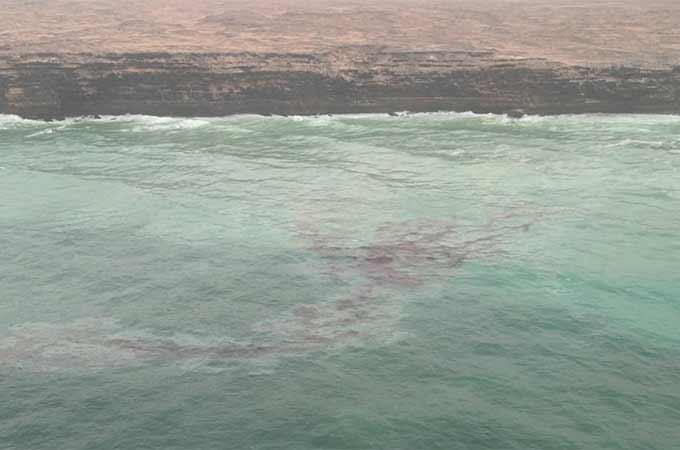
Oman's Environment Authority said an oil spill from the tanker Caroline Bezengi, a sanctioned vessel carrying Russian crude, has reached beaches around Ras Madrakah. Authorities said as much as 40 kilometres of coastline has been affected and warned that the slick could reach the southern beaches of Masirah Island.
Specialised teams have been deployed to monitor the spill and contain its spread. The affected coastline is environmentally sensitive, while Masirah Island and surrounding waters support important marine ecosystems and sea-turtle nesting grounds.
The scale of the offshore slick has expanded rapidly. Reuters reported that it had spread over more than 2,000 square kilometres, while the tanker is believed to have been carrying about 800,000 barrels of Russian crude. The 274-metre vessel is part of Russia's so-called shadow fleet and has been sanctioned by the European Union, Britain, Canada, Switzerland and Ukraine.
The vessel had earlier been reported in difficulty off Yemen before becoming stranded off Oman. Satellite imagery and environmental experts subsequently identified an oil slick around the vessel and nearby protected waters.
Oman's Environment Authority said it continues to monitor the repercussions of the vessel grounding incident near Al Qibliyah Island, part of the Al Hallaniyat Islands archipelago in the Governorate of Dhofar. Efforts are underway to conduct and execute monitoring, survey, and environmental handling operations in coordination with relevant entities, using technical monitoring means, satellite imagery, and numerical models to track the movement and spread of oil slicks and predict their potential landing sites.
"The Authority calls on fishermen, beachgoers, and members of the community not to approach any spotted materials or pollutants and to report them to the competent authorities, reaffirming its continued tracking of updates and announcing any developments through official channels," it said.
The spill comes as Tehran itself has sought to turn the environmental consequences of the conflict into another issue in negotiations over Hormuz. Iranian Foreign Ministry spokesman Esmaeil Baqaei said countries and companies benefiting from commercial shipping through the Strait of Hormuz had a "legal and moral obligation" to address environmental damage to the Persian Gulf and Sea of Oman.
Iran is demanding compensation for pollution it says has accumulated over decades and has argued that military operations and the disruption of shipping have intensified the damage.
An oil slick has also washed ashore on Iran's Qeshm Island near the Strait, underscoring the environmental risks facing both sides of the waterway.
The environmental dispute is therefore becoming intertwined with the broader political confrontation over reopening Hormuz. Tehran has continued to insist that normal shipping cannot resume without substantial concessions from Washington, including an end to the conflict, withdrawal of US forces and compensation.
Iran signals a strategy of attrition
Perhaps more significantly for the prospects of a near-term settlement, a senior adviser to the commander of Iran's Islamic Revolutionary Guard Corps has openly suggested that Tehran could seek to prolong the confrontation until Trump leaves office.
Mohammad Reza Naqdi, a senior IRGC adviser, told PBS that one possible strategy was to sustain the war into the next US presidential term and impose sufficient costs on Washington to create a lasting deterrent.
Ceasefire extension remains disputed
There was also no agreement between Tehran and Washington to extend the interim ceasefire, despite reports from Turkey's Anadolu agency, citing Pakistani sources, that the two sides had reached an understanding to prolong a 60-day arrangement.
A senior Iranian source told Reuters that no talks had taken place on extending the ceasefire. Tehran's position remains that Washington must first return to the existing pact and establish a timetable for implementing its commitments.
Hormuz remains the central pressure point
The impasse has left the Strait of Hormuz at the centre of the conflict's economic consequences.
The waterway normally handles a major share of global oil and LNG shipments, making its prolonged disruption one of the most serious threats to energy markets. Gulf oil exports were already running about 40% below pre-war levels in July, according to Reuters.
The market has so far avoided an extreme oil-price spike partly because alternative routes, additional production and strategic stock releases have cushioned the immediate impact. But the longer the disruption continues, the more difficult it becomes to maintain that buffer.
Brent crude recently surged above $90 a barrel before settling at $88.91, while the market remains highly sensitive to every development concerning Hormuz, the ceasefire and US-Iran negotiations.
The International Energy Agency's warning that inventories are being depleted adds another layer of urgency. Even if an agreement were reached, a formal reopening would not necessarily translate into an immediate return to normal shipping. Tankers, insurers and traders are likely to remain cautious until they are convinced that the security situation is durable. S&P Global has warned that the stop-start pattern of previous reopening attempts has undermined confidence among maritime operators.
That leaves the region facing a potentially dangerous feedback loop: the longer the war continues, the greater the pressure on oil stocks and prices; the greater the pressure on energy supplies, the more important Hormuz becomes; and the more strategically important the waterway becomes, the greater the leverage Iran has over any negotiations aimed at ending the conflict.
Oman's oil spill adds an environmental dimension to that crisis, turning the waters surrounding the Gulf and Arabian Sea into not only a battlefield and a global energy chokepoint, but also an increasingly vulnerable ecological zone.